Japanese Mall Bans Unaccompanied Middle Schoolers Over Noise, Mess, Outlet Theft
Bastillepost · 2 SOURCES1 day ago2 MIN
Summary
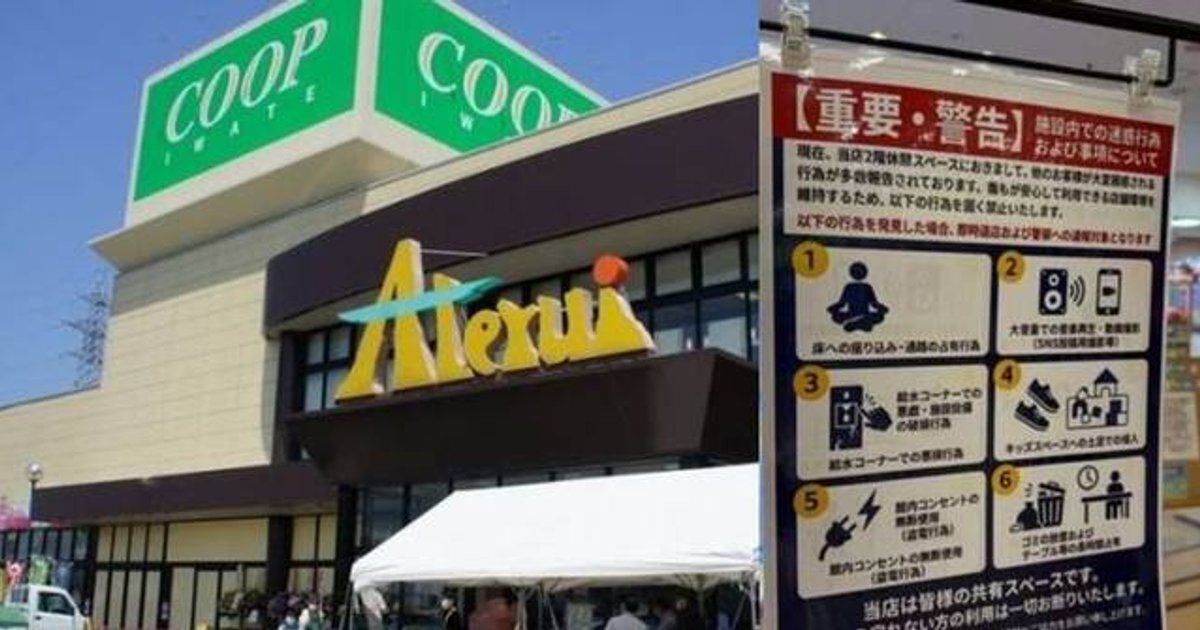
Co-op Aterui (Coop Aterui), a shopping mall operated by Iwate Seikyou (Iwate Consumer Co-operative) located in the Mizusawa-Sakura district of Oshu City, Iwate Prefecture, Japan, announced on August 10, 2026, a restriction prohibiting local middle school students from entering the premises without a parent or adult guardian. The measure, effective through March 31, 2027, came after approximately one year of escalating nuisance behaviour that store management described as having reached an untenable level .
Key Points
- The disturbances primarily occurred on the second-floor lounge area, where groups of dozens of students would sit on floors and block walkways during peak hours, particularly on weekends and public holidays .
- Listed disruptive behaviours included playing loud music and filming content for social media platforms, running in groups on escalators, leaving behind half-eaten food and garbage on tables, and occupying restroom sinks for extended periods .
- Store management reported that some students would respond with verbal abuse when other customers attempted to ask them to stop, with one customer stating, "I was afraid that if I spoke up, I would become their target" .
- Management had previously sought assistance from police and requested increased patrols, but the behaviour persisted, ultimately prompting the decision to restrict entry after consulting with the Oshu City Board of Education and seven local middle schools .
- Following the implementation of the ban, the mall confirmed that order has been restored, with the operator emphasising that the measure targets solo entry rather than a blanket prohibition on all middle school students .
Why It Matters
The incident illustrates the challenges faced by retail spaces in balancing accessibility with a comfortable environment for all customers, particularly when dealing with age groups whose behaviour falls into a legal and social grey area. This case may prompt other commercial establishments in Japan and beyond to review their policies on student gatherings and consider similar protective measures .
The incident illustrates the challenges faced by retail spaces in balancing accessibility with a comfortable environment for all customers, particularly when dealing with age groups whose behaviour falls into a legal and social grey area. This case may prompt other commercial establishments in Japan and beyond to review their policies on student gatherings and consider similar protective measures .