Study Shows Active X-ray Screening Boosts Breast Cancer Survival Rates
HK01 · 3 SOURCESabout 3 hours ago7 MIN
Summary
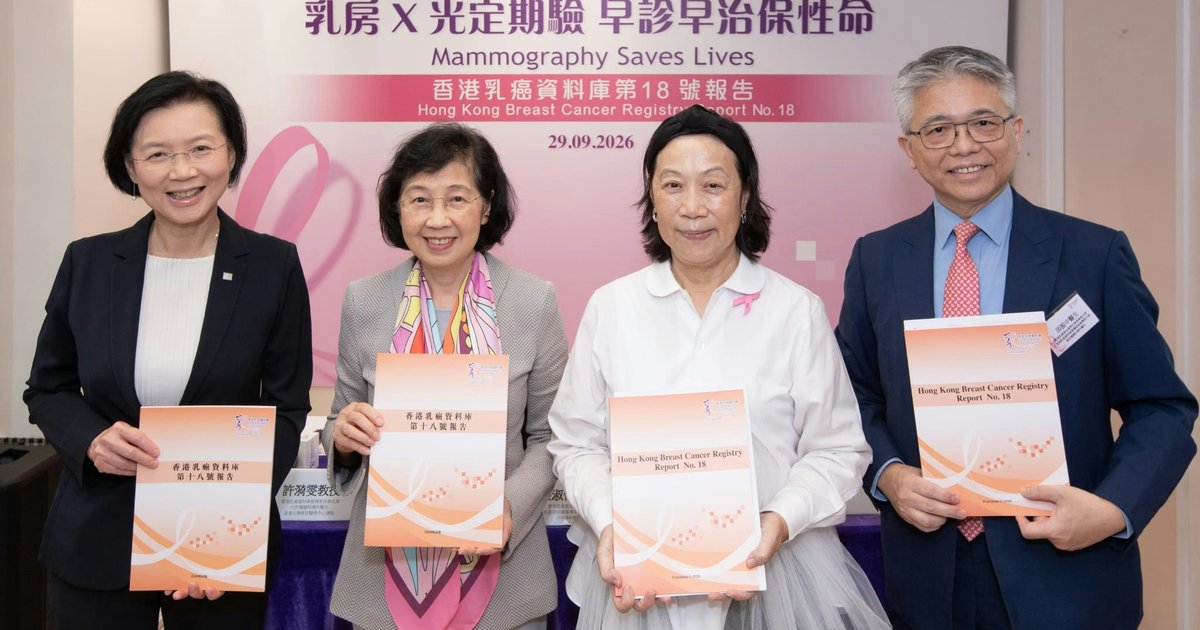
A comprehensive study by the Hong Kong Breast Cancer Foundation has demonstrated the life-saving benefits of proactive breast cancer screening. By analyzing data from the Hong Kong Breast Cancer Registry covering 2011 to 2015, researchers compared outcomes between 733 women diagnosed through routine X-ray screening and 6,209 women diagnosed after presenting symptoms such as palpable lumps. The findings reveal striking disparities in survival rates, treatment intensity, and disease progression, providing compelling evidence for broader screening implementation across Hong Kong.
Key Points
- The screening-detected group showed a ten-year overall survival rate of 88%, compared to 74.6% for the symptom-detected group—a difference of 13.4 percentage points
- Late-stage (Stage 3-4) breast cancer was found in only 3.3% of the screening group versus 21.1% of the symptom group, representing a gap of 17.8 percentage points
- Treatment patterns differed significantly: 25.3% of the screening group required chemotherapy compared to 65.7% of the symptom group, while 56.6% of the screening group underwent breast-conserving surgery versus 32.6%
- A retrospective analysis of 15,144 participants found that each patient diagnosed through mammography screening saved 28.4% in treatment costs, with an estimated HK$770 million in potential savings if 100,000 women began screening at age 40
- Dr. Cheung Suk-yee (張淑儀), the foundation's founding president and breast surgeon, emphasized that screening enables less invasive treatments while improving survival outcomes
- The Hong Kong government has only launched two phases of a pilot screening programme—in September 2021 and June 2025—despite over 40 countries worldwide implementing universal breast cancer screening with participation rates of 50-80%
- The foundation recommends that women aged 40 and above undergo clinical examination and mammography screening every two years
Why It Matters
These findings carry substantial implications for Hong Kong's public health policy and healthcare expenditure. With breast cancer remaining the most common cancer among Hong Kong women, the evidence strongly supports expanding the current pilot programme into a comprehensive territory-wide screening initiative. The dual benefit of improved survival outcomes and reduced treatment costs—stemming from earlier detection enabling less aggressive interventions—presents a compelling case for policy change. For individual women, particularly those in their forties and above, regular mammography screening could mean the difference between a manageable early-stage diagnosis and a potentially life-threatening advanced cancer.
These findings carry substantial implications for Hong Kong's public health policy and healthcare expenditure. With breast cancer remaining the most common cancer among Hong Kong women, the evidence strongly supports expanding the current pilot programme into a comprehensive territory-wide screening initiative. The dual benefit of improved survival outcomes and reduced treatment costs—stemming from earlier detection enabling less aggressive interventions—presents a compelling case for policy change. For individual women, particularly those in their forties and above, regular mammography screening could mean the difference between a manageable early-stage diagnosis and a potentially life-threatening advanced cancer.