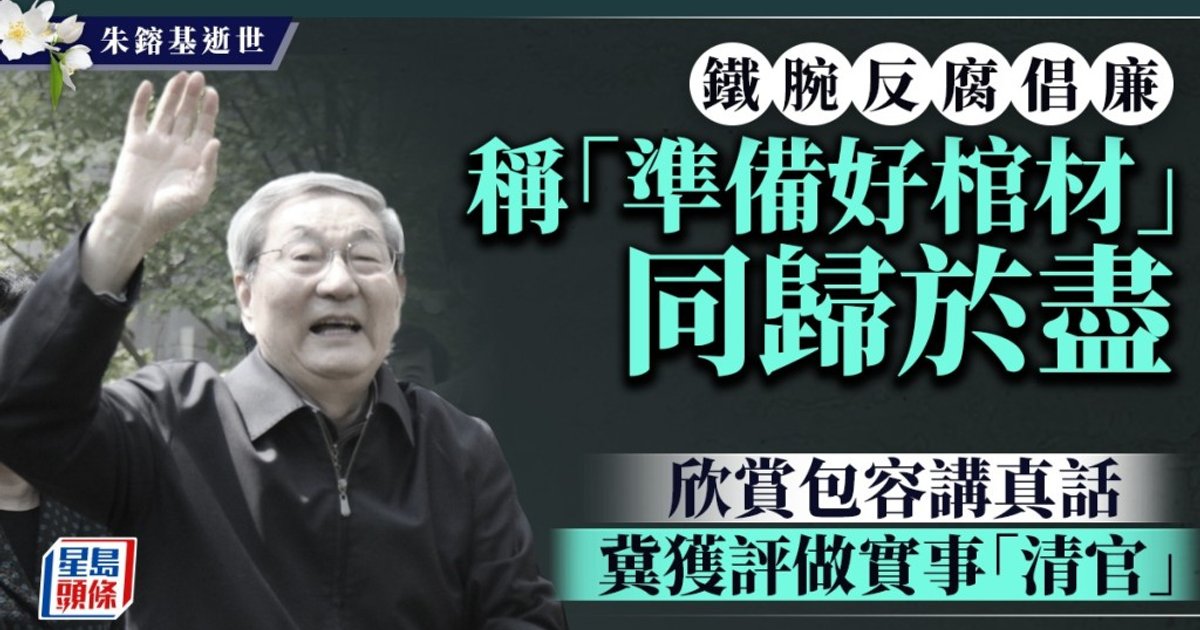
Zhu Rongji remembered for graft fight and WTO push
SingTao · 2 SOURCESabout 2 hours ago2 MIN
Summary
Former Chinese premier Zhu Rongji is being remembered for combining a hardline anti-corruption drive with major economic reforms during his years as vice premier and premier. He was also a central figure in China’s WTO accession and spoke repeatedly about Hong Kong’s recovery and long-term prospects during and after the Asian financial crisis
Key Points
- Zhu, born in 1928 in Changsha, Hunan, served as vice premier and premier from 1991 to 2003 after earlier leading Shanghai as mayor and party secretary
- At a 1998 press conference after becoming premier, he said he would press ahead regardless of “minefields or an abyss,” pledging to serve until death
- He became closely identified with anti-graft rhetoric, saying corrupt “tigers” must be hit first and that even among 100 coffins, one could be his.
- During the 1998 Yangtze floods in Jiujiang, Jiangxi, he angrily denounced a poorly built dike as a “tofu-dreg project,” blaming corruption and shoddy construction
- Zhu pushed state-owned enterprise and fiscal reforms, helped curb inflation and overheating, navigated the Asian financial crisis, and led negotiations for China’s WTO entry
Why It Matters
For Hong Kong readers, Zhu remains one of the mainland leaders most closely associated with direct comments on the city’s economy and governance, including his 2001 and 2002 remarks that Hong Kong’s future remained strong and that both Hong Kong and Beijing shared responsibility for its success. His legacy also links political discipline with the reform era that reshaped China’s ties with global markets and Hong Kong’s role within them.