Pakistan Astronaut to Become First Foreign Visitor to China's Tiangong Space Station
SingTao · 2 SOURCESabout 4 hours ago2 MIN
Summary
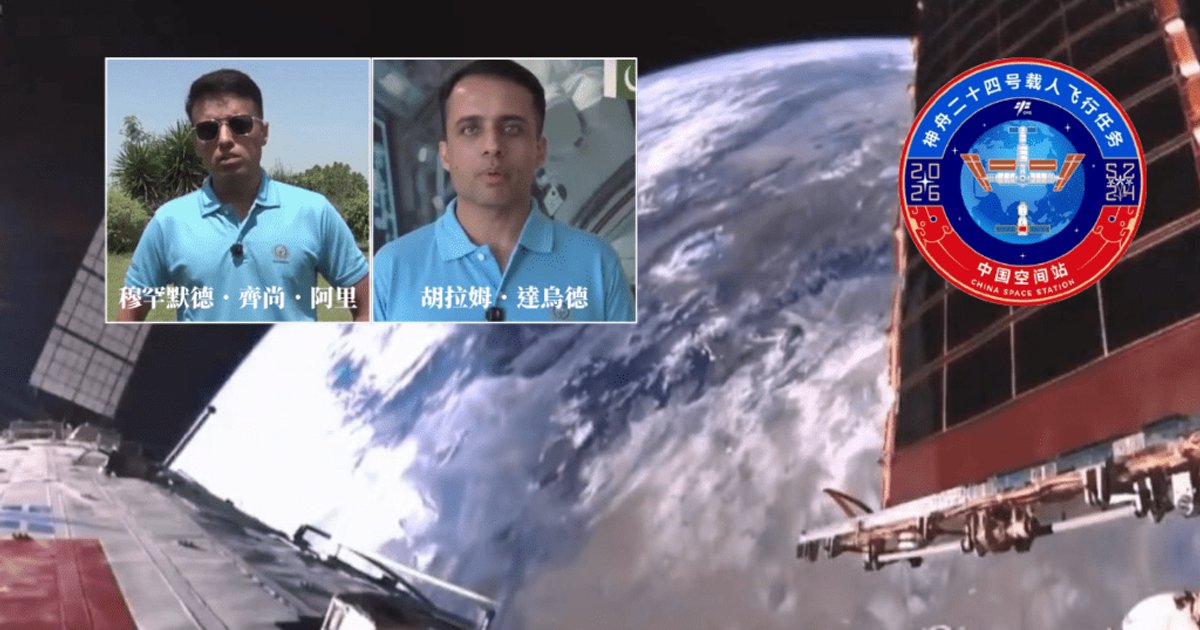
China's Tiangong Space Station is set to welcome its first international visitor as a Pakistani astronaut launches aboard Shenzhou-24 in mid-to-late November 2026. The payload specialist will spend approximately one week aboard the station before returning to Earth with the Shenzhou-23 crew, marking a historic milestone in China's manned spaceflight program. This joint mission represents the first China-foreign crewed flight in the nation's spaceflight history and signals deepening strategic ties between Beijing and Islamabad.
Key Points
- Shenzhou-24 will carry two Chinese astronauts plus one Pakistani payload specialist, launching in mid-to-late November 2026
- The Pakistani astronaut will remain aboard Tiangong for about one week before returning with the Shenzhou-23 crew members
- Two reserve Pakistani astronauts were selected through three-stage process: Muhammad Zeeshan Ali and Khurram Daud; one will fly, one serves as backup
- Selection was based on cooperation agreements signed between China and Pakistan in April 2019 and February 2025
- Foreign astronauts must learn Mandarin Chinese to communicate with crew and identify equipment labels inside the station
Why It Matters
The mission elevates China-Pakistan relations beyond traditional defense and infrastructure cooperation into cutting-edge space technology, positioning Pakistan among nations with human spaceflight capabilities. For Hong Kong, this development underscores China's growing role as a space power willing to share access to its orbital infrastructure with trusted partners, potentially reshaping the landscape of international space collaboration .
The mission elevates China-Pakistan relations beyond traditional defense and infrastructure cooperation into cutting-edge space technology, positioning Pakistan among nations with human spaceflight capabilities. For Hong Kong, this development underscores China's growing role as a space power willing to share access to its orbital infrastructure with trusted partners, potentially reshaping the landscape of international space collaboration .