Netizens Rank Hong Kong's 10 Chillest Malls as Heat Wave Breaks 140-Year Record
SingTao · 1 SOURCESabout 2 hours ago2 MIN
Summary
Hong Kong has been experiencing extreme heat in recent days, with temperatures last weekend reaching 36.9 degrees Celsius—the highest single-day temperature since records began in 1884. Seeking relief from the oppressive heat, netizens on Threads have compiled a list ranking Hong Kong's ten coldest air-conditioned malls, with some locations boasting indoor-outdoor temperature differences exceeding 10 degrees.
Key Points
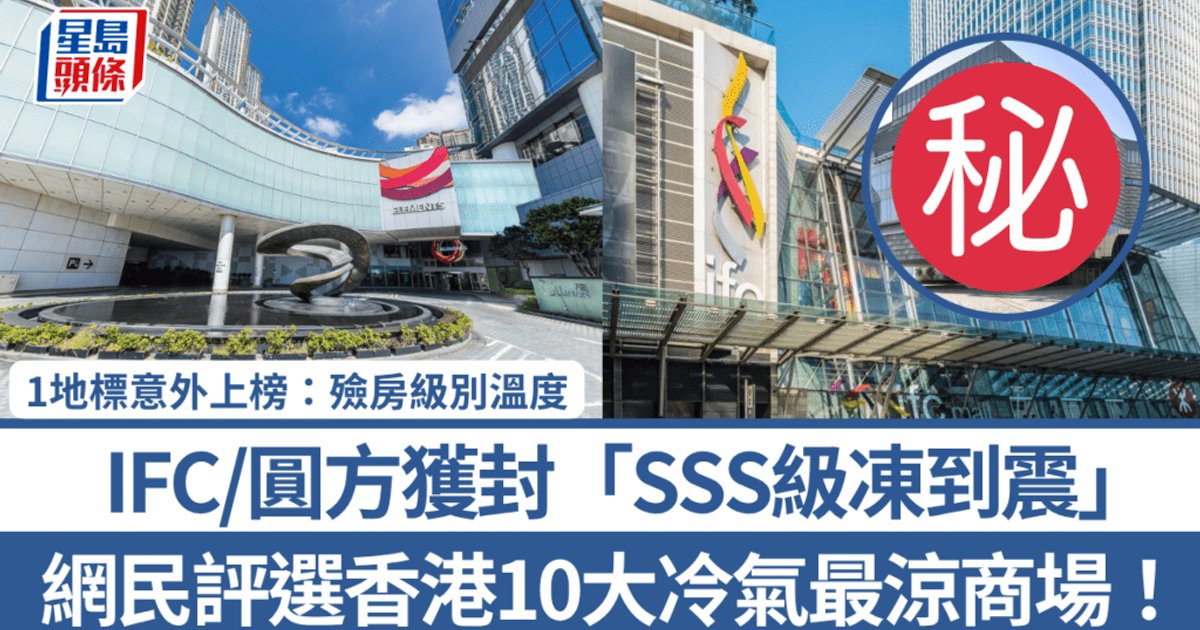
- The IFC mall in Central and Elements in Tsim Sha Tsui were awarded the highest "SSS-grade frozen solid" rating, with netizens describing them as "shaking from the cold"
- The Hong Kong Museum of Art in Tsim Sha Tsui unexpectedly made the list due to strict temperature controls needed to preserve artifacts, maintaining a constant 19 degrees—prompting one commenter to call it "SSS-grade mortuary level"
- On Hong Kong Island, Hysan Place in Causeway Bay was praised for strong air currents at its MTR connection, with shoppers reporting glasses fogging upon exiting
- SOGO department store in Causeway Bay was described as "ruthless with air conditioning," while Times Square and Pacific Place earned recognition for stable, abundant cooling
- In Kowloon, The ONE mall was dubbed the "Tsim Sha Tsui landmark air conditioner" and Harbour City was called a "massive refrigerator stretching several hundred meters"
Why It Matters
The ranking reflects how Hong Kong residents are adapting to increasingly extreme weather conditions, with well-air-conditioned public spaces becoming essential refuge during heat waves. This cultural phenomenon of "heat wave tourism" to malls highlights the growing importance of climate adaptation in urban planning and building design, as indoor cooling infrastructure becomes critical public infrastructure during periods of extreme weather.
The ranking reflects how Hong Kong residents are adapting to increasingly extreme weather conditions, with well-air-conditioned public spaces becoming essential refuge during heat waves. This cultural phenomenon of "heat wave tourism" to malls highlights the growing importance of climate adaptation in urban planning and building design, as indoor cooling infrastructure becomes critical public infrastructure during periods of extreme weather.