Greek Couple Welcomes Baby Girl from 22-Year-Old Frozen Embryo After Tragic Loss
SingTao · 2 SOURCESabout 1 hour ago2 MIN
Summary
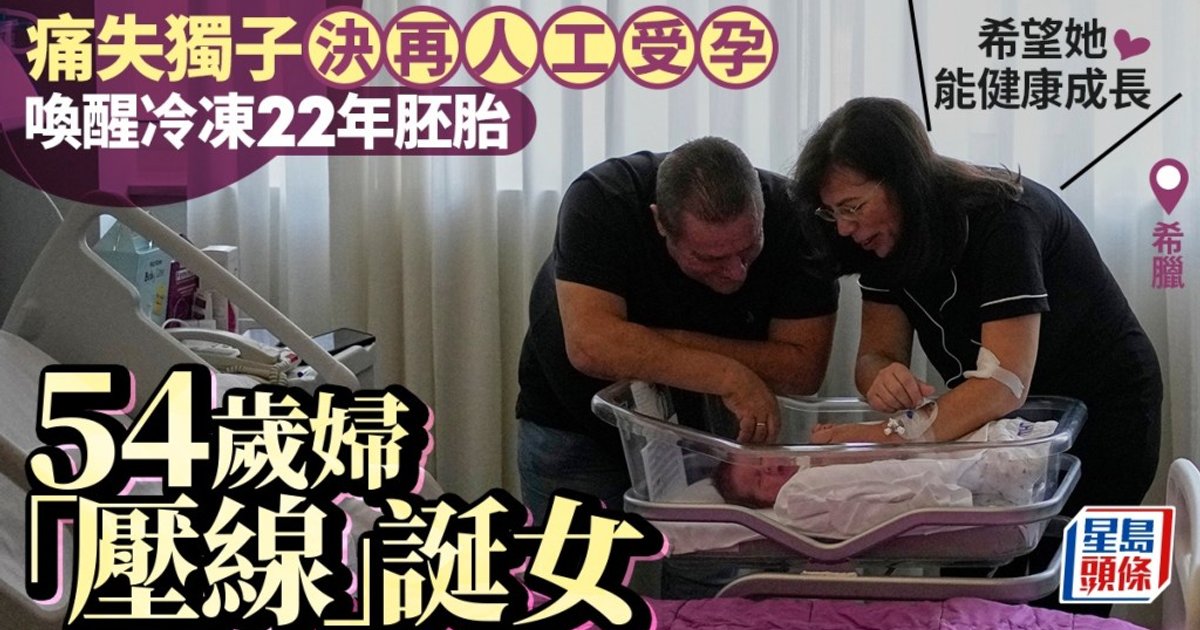
A Greek couple's remarkable journey through grief to hope has culminated in a medical miracle in Athens. Cristina Rapti-Tzelepi, 54, and her husband Constantinos Raptis, 60, welcomed their daughter Georgia on September 9, 2026, after using an embryo that had been frozen for 22 years. The couple, devastated by the loss of their 21-year-old son Giorgos in a car accident last October, made the difficult decision to pursue assisted reproduction using previously stored embryos. With Greece's strict law capping female IVF eligibility at age 54, Cristina had less than two and a half months to complete all medical procedures before her deadline. Under the care of Dr. Kostas Pantos, chairman of the Greek Society of Reproductive Medicine, the pregnancy proceeded successfully, resulting in the birth of a healthy 3.49-kilogram baby girl at a private clinic in Athens.
Key Points
- Cristina Rapti-Tzelepi, 54, and Constantinos Raptis, 60, lost their 21-year-old son Giorgos to a car accident last October in Greece
- The couple used an embryo frozen 22 years ago, achieving what doctors describe as an extremely rare successful pregnancy from long-term frozen storage
- Greece's law strictly prohibits IVF treatment for women after their 54th birthday, leaving Cristina less than 10 weeks to complete all medical procedures
- Baby Georgia was born on September 9, 2026, weighing 3.49 kilograms at a private Athens clinic
- The couple named their daughter Georgia in honor of her late brother Giorgos, who was also conceived via IVF
- Dr. Kostas Pantos, who heads the Greek Society of Reproductive Medicine, has urged the government to reconsider the rigid age limit given declining birth rates
Why It Matters
This case highlights the extraordinary resilience of human life preserved through cryopreservation and raises important questions about reproductive rights for older parents. It also underscores the need for balanced policies that consider both medical ethics and the fundamental right of individuals to build families, particularly in nations grappling with critically low birth rates .
This case highlights the extraordinary resilience of human life preserved through cryopreservation and raises important questions about reproductive rights for older parents. It also underscores the need for balanced policies that consider both medical ethics and the fundamental right of individuals to build families, particularly in nations grappling with critically low birth rates .