Rooftop Unauthorized Structures Haunt Shek Kip Mei Building for 20 Years
HK01 · 2 SOURCESabout 4 hours ago2 MIN
Summary
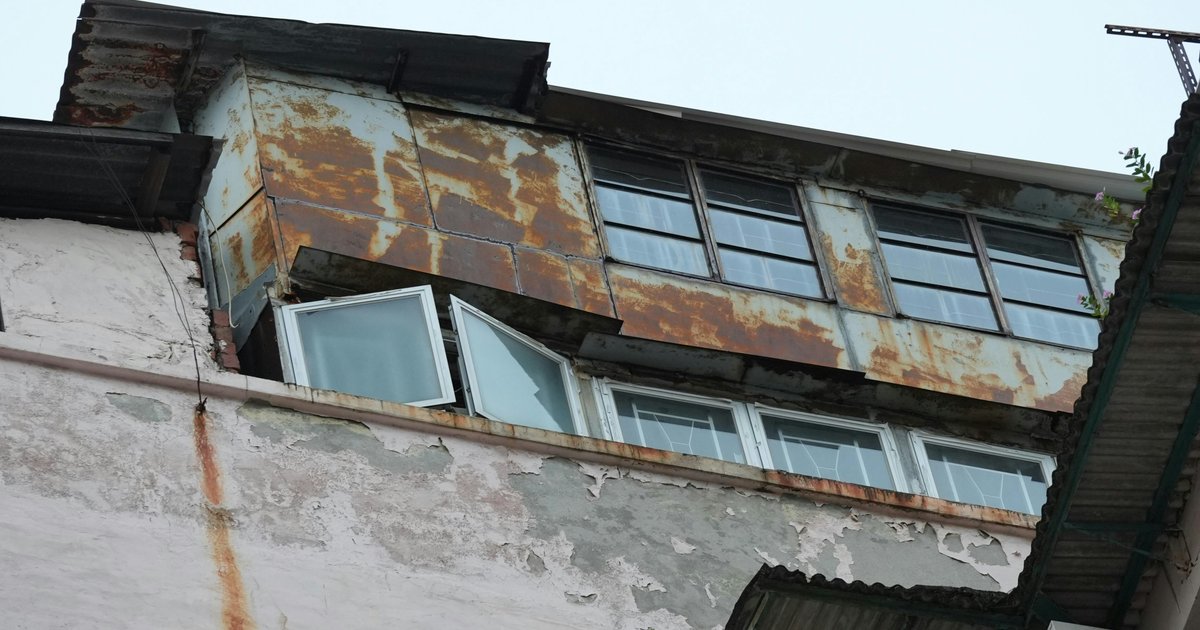
Residents at Fuk On Building in Shek Kip Mei have endured severe water seepage for years caused by unauthorized rooftop structures built atop the 1964 nine-story building. A demolition order issued by the Buildings Department in 2006 targeting the rooftop owner has never been carried out, with ownership disputes involving Sun Hung Kai Properties subsidiary Kwok Fook Holdings complicating enforcement. The Buildings Department is now considering using statutory powers to conduct the demolition and recover costs from the owner.
Key Points
- Fuk On Building at 35 Shek Kip Mei Street, built in 1964, has a rooftop entirely covered by zinc-roofed unauthorized structures, connected internally by a shared corridor with multiple security-locked doors
- A demolition order was issued to rooftop owner Kwok Fook Holdings in September 2006, but remains unexecuted for nearly two decades; the Buildings Department has twice sent warning letters and initiated prosecution proceedings
- Land Registry records show the rooftop was registered with 9E unit in 1961 but became separated from sales documentation after 1970, creating an ownership dispute Sun Hung Kai and the government interpret differently
- Kwok Fook Holdings became a Sun Hung Kai subsidiary in 1977; its directors at the time included Sun Hung Kai founder Kwok Tak-seng and former chairman Kwok Ping-kwong; the company entered voluntary liquidation in 1992 but never completed the process
- Resident Ho Tai on the floor below the rooftop has endured severe ceiling seepage for years, forcing her family to use plastic bags and containers to catch dripping water; attempted repairs with asphalt sealing have failed repeatedly
Why It Matters
The unresolved case exposes how outdated land records and complex corporate histories can paralyze government enforcement actions for decades, leaving ordinary residents to suffer the consequences of building defects they cannot fix themselves. As the Buildings Department moves toward exercising its statutory demolition powers, the outcome will set a precedent for how Hong Kong handles similar cases involving defunct companies and disputed property rights in aging buildings.
The unresolved case exposes how outdated land records and complex corporate histories can paralyze government enforcement actions for decades, leaving ordinary residents to suffer the consequences of building defects they cannot fix themselves. As the Buildings Department moves toward exercising its statutory demolition powers, the outcome will set a precedent for how Hong Kong handles similar cases involving defunct companies and disputed property rights in aging buildings.