When Children Are Abroad, End-of-Life Care Frays
HK01 · 1 SOURCESabout 4 hours ago6 MIN
Summary
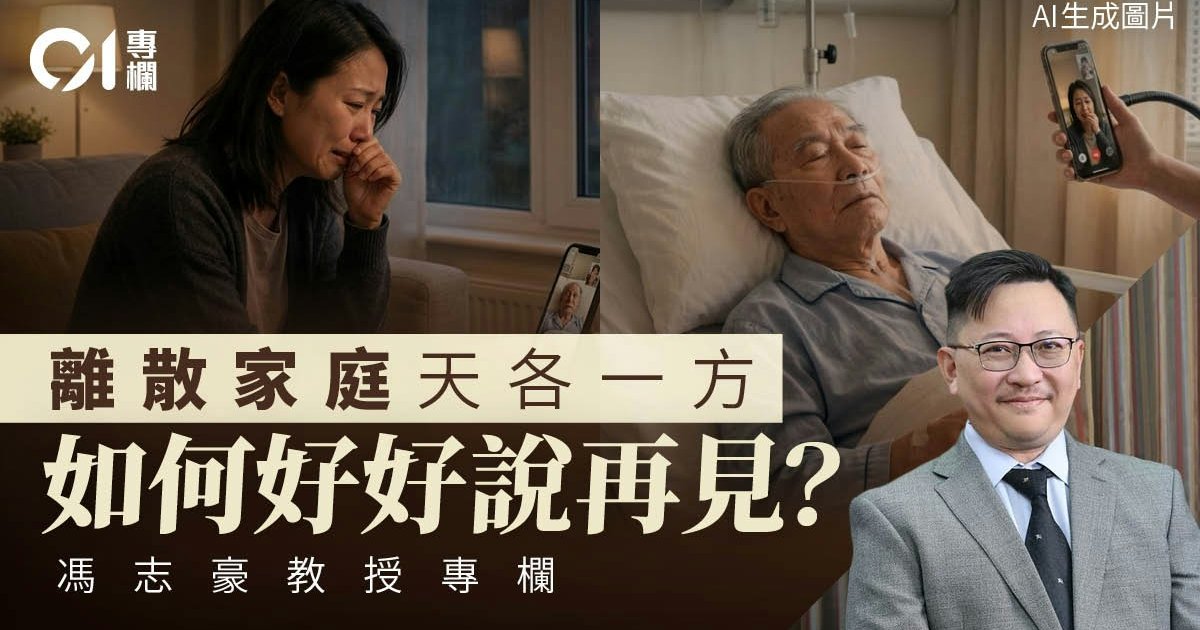
Professor Fung Chi-ho (馮志豪), writing in a Hong Kong column published on November 26, says public hospital wards, community care services and residential care homes are increasingly seeing fraught end-of-life disputes when elderly patients are in the final stage of cancer or organ failure, daily care is handled by a foreign domestic worker or one child in Hong Kong, and other children follow events from overseas through phone screens. He says conflict often peaks when a patient's condition suddenly worsens and medical teams recommend stopping invasive treatment in favour of comfort-focused care, only for distant relatives to insist that everything possible must still be done and to resist a do-not-attempt-resuscitation order
Key Points
- Fung says this pattern is sometimes referred to in palliative care practice as “Daughter from California Syndrome”, describing distant relatives who intervene forcefully in medical decisions shortly before a patient's death
- He argues the label can obscure the deeper issue, because hardline demands from overseas family members often arise from unspoken guilt over missing a parent's long decline, clinic visits and daily companionship
- The column uses the “SUGAR” framework: Surprised, Unrealistic expectation, Guilty feeling, Absent from care, and Reassert role as caregiver, to explain why distant children may push for more treatment
- Fung contrasts that with Hong Kong-based caregivers, who witness worsening pain, weight loss, breathlessness, repeated admissions and functional decline, and who may already be living with anticipatory grief
- He says arguments that appear to be about treatment choices often also reopen older family tensions over who stayed, who emigrated, who paid, who provided hands-on care and who speaks loudest at the end
Why It Matters
For Hong Kong families split across borders, the column points to a practical problem in late-life care: relatives may love the same parent but be reacting to very different realities because they have not seen the same decline. It suggests that without addressing guilt, absence and caregiver strain, bedside decisions can quickly turn from patient-centred discussion into family conflict