Expert Debunks Viral 'Dyed Scallion' Claims, Warns Against Unscientific Testing Methods
SingTao · 1 SOURCES1 day ago2 MIN
Summary
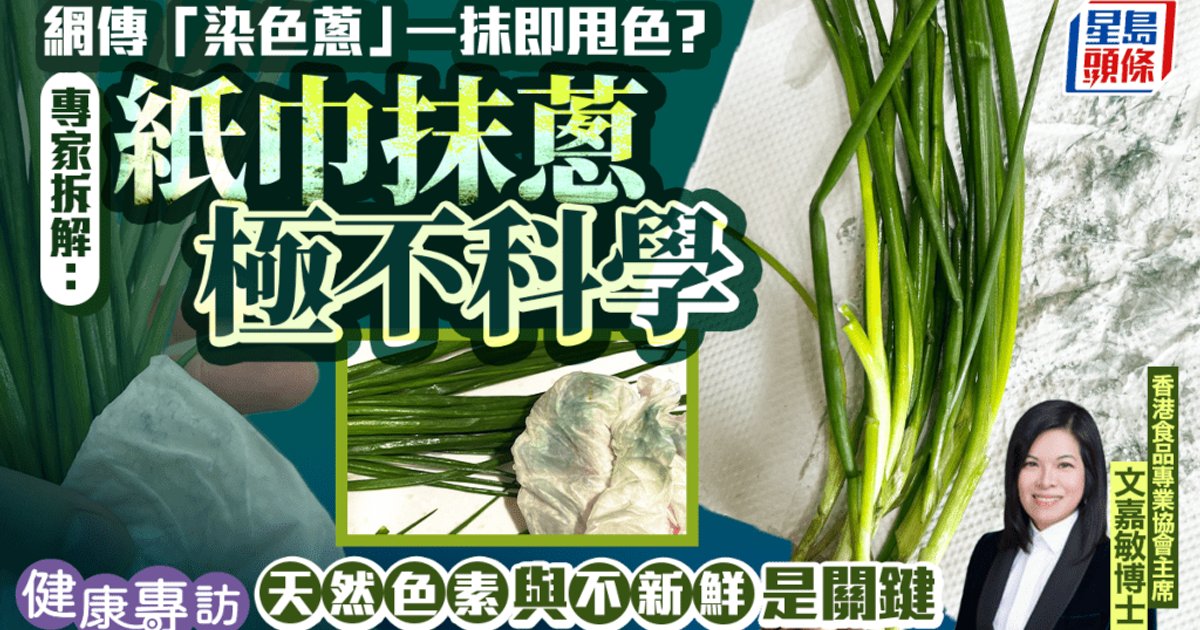
Recent social media posts have gone viral in Hong Kong, showing netizens wiping scallions with paper towels and claiming the blue-green residue proves the vegetables are "dyed" and potentially contaminated with harmful chemicals such as copper sulfate. The Hong Kong Food Professionals Association has responded with a clear scientific rebuttal. Dr. Man Ka-man, the association's chair, emphasized that the viral testing method is fundamentally flawed and unscientific. The expert explained that when scallions begin to decay, their cell structures break down, releasing natural pigments that appear blue-green in color. This is a normal process that occurs in aging produce and does not indicate artificial treatment.
Key Points
- Social media users have been wiping scallions with paper towels, claiming blue-green liquid proves artificial dyeing
- Dr. Man Ka-man, chair of the Hong Kong Food Professionals Association, stated the viral "test" lacks scientific basis
- The blue-green liquid is natural pigment released when decaying scallion cells break down
- If scallions are fresh and intact, rinsing should produce no color release; color during rinsing may indicate artificial dye
- Copper sulfate, used as a pesticide in agriculture, leaves water-soluble residues that can be removed by thorough washing
- The Food Safety Centre recommends rinsing vegetables under running water for approximately 10 minutes to remove most pesticide residues
Why It Matters
This incident highlights how easily misinformation can spread through social media platforms, potentially causing unjust harm to farmers and retailers while creating unnecessary fear among consumers. The expert's call for scientific literacy and verification of sources before sharing food safety claims is particularly relevant in an era where viral videos can quickly damage livelihoods and distort public perception of food quality .
This incident highlights how easily misinformation can spread through social media platforms, potentially causing unjust harm to farmers and retailers while creating unnecessary fear among consumers. The expert's call for scientific literacy and verification of sources before sharing food safety claims is particularly relevant in an era where viral videos can quickly damage livelihoods and distort public perception of food quality .