Priority Seat Conflicts Expose Rising Tensions in Hong Kong Public Transport
HK01 · 1 SOURCESabout 2 hours ago4 MIN
Summary
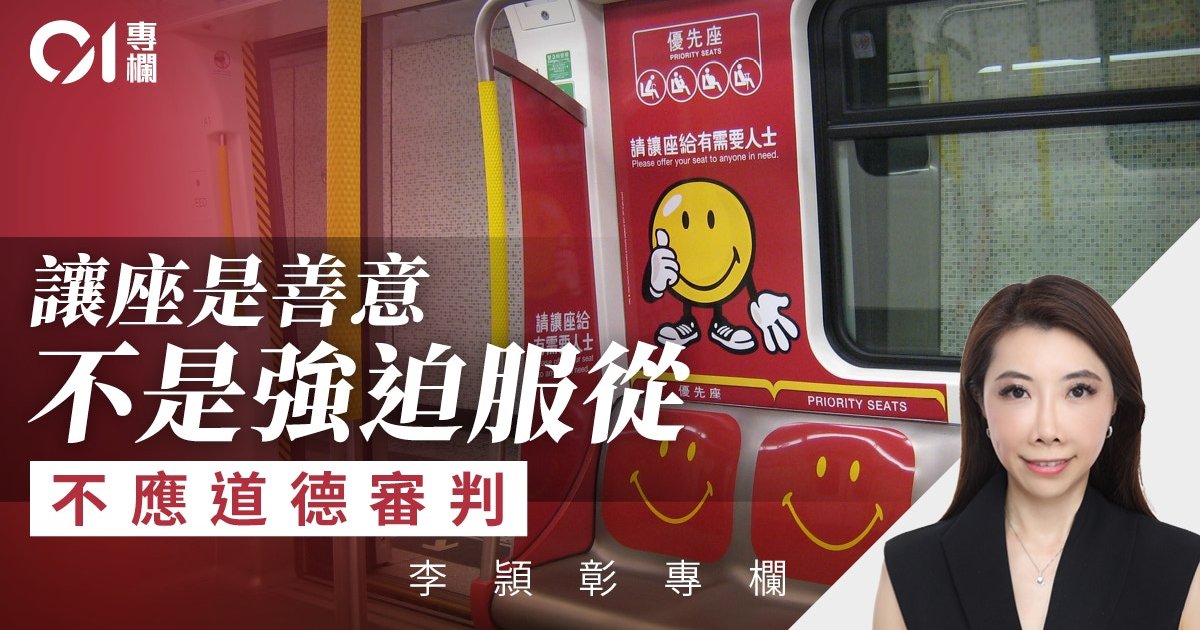
Recent viral videos have captured increasingly heated arguments and even physical altercations over priority seats on Hong Kong's public transport system. A column by lawyer Li Yingzhang published on HK01 examines why these well-intentioned seats have become sources of conflict rather than symbols of communal care.
Key Points
- Priority seats were designed as ethical reminders for passengers to prioritize those with greater physical needs when seating is limited .
- The first misunderstanding conflates "priority" with "exclusive rights," as seats are public resources where any passenger has legitimate use .
- Young passengers may have invisible conditions such as chronic pain, post-surgical recovery, or mental health struggles that are not visibly apparent .
- The second issue transforms voluntary courtesy into coerced compliance when passengers are bullied, intimidated, or publicly shamed into standing .
- Physical altercations in crowded train carriages risk causing falls and injuries due to sudden acceleration or deceleration .
Why It Matters
The priority seat disputes reveal how public morality built on shaming and coercion can backfire, potentially driving passengers away from the very culture of consideration these seats were meant to foster. Clearer public education emphasizing "need-based priority" rather than identity-based allocation could help restore these seats to their original purpose as reminders of mutual体谅 in Hong Kong's densely populated transit system .
The priority seat disputes reveal how public morality built on shaming and coercion can backfire, potentially driving passengers away from the very culture of consideration these seats were meant to foster. Clearer public education emphasizing "need-based priority" rather than identity-based allocation could help restore these seats to their original purpose as reminders of mutual体谅 in Hong Kong's densely populated transit system .