Lawmaker Proposes Handwashing Sinks in Toilet Cubicles, Government Flags Space and Safety Concerns
SingTao · 3 SOURCESabout 4 hours ago6 MIN
Summary
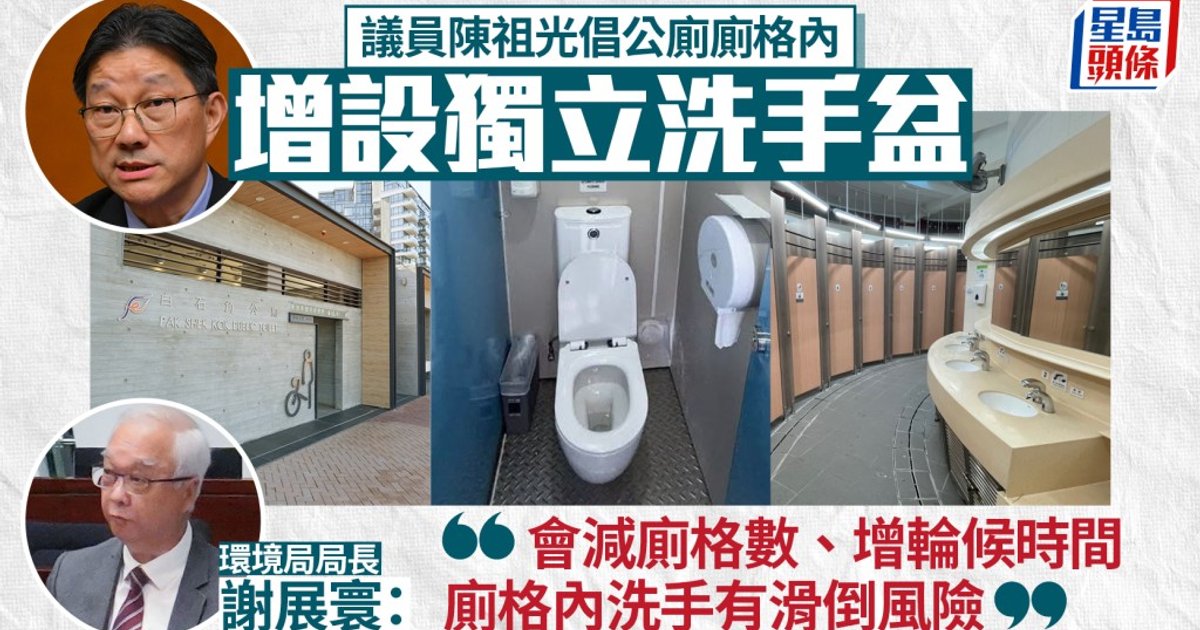
Legislative Council member Chan Jo-kwok (陳祖光), a former chairman of the Police Junior Officers' Association representing the Election Committee constituency, raised a written question on October 7, 2026, urging the government to consider installing handwashing sinks inside individual toilet cubicles at tourist hotspots and city center public restrooms . The proposal aimed to enhance user privacy and allow people to wash their hands before touching door handles, thereby reducing cross-infection risks .
In a written response, Secretary for Environment and Ecology Tse Chin-wan (謝展寰) outlined multiple practical concerns that led the government to retain its reservations about the proposal . Tse noted that most urban public toilets and country park restrooms have limited total floor area, meaning expanding cubicles to accommodate sinks would reduce the overall number of cubicles available . Furthermore, users washing hands inside cubicles would increase waiting times for others, while water splashing on floors could create slip hazards for users . If a sink malfunctioned, the entire cubicle would need to be closed for repairs even if the toilet remained functional, directly impacting public service experience .
Key Points
- Chan Jo-kwok proposed installing handwashing sinks in individual toilet cubicles at tourist hotspots and city center public toilets
- Tse Chin-wan said expanding cubicles for sinks would reduce total cubicle numbers and increase waiting times for other users
- The government cited slip risks from wet floors when users wash hands inside cubicles, plus maintenance complications if sinks break down
- Since August 2024, a pilot smart toilet system has been running in country park restrooms with sensors for cubicle usage, foot traffic, septic tank levels, and air quality
- Over 130 public toilets have new air purification systems installed, and 15 toilets now feature IoT-based odor monitoring systems
Why It Matters
The debate highlights the tension between hygiene ideals and practical constraints in Hong Kong's dense urban environment. With the city relying heavily on tourism and public facilities serving millions annually, any redesign must balance privacy benefits against reduced capacity and maintenance burdens. The government's focus on smart technology suggests a preference for incremental improvements over structural changes to existing infrastructure .
The debate highlights the tension between hygiene ideals and practical constraints in Hong Kong's dense urban environment. With the city relying heavily on tourism and public facilities serving millions annually, any redesign must balance privacy benefits against reduced capacity and maintenance burdens. The government's focus on smart technology suggests a preference for incremental improvements over structural changes to existing infrastructure .