Bird's Nest Myth: How Swallow Saliva Became a Luxury Beauty Staple
Bastillepost · 1 SOURCESabout 3 hours ago2 MIN
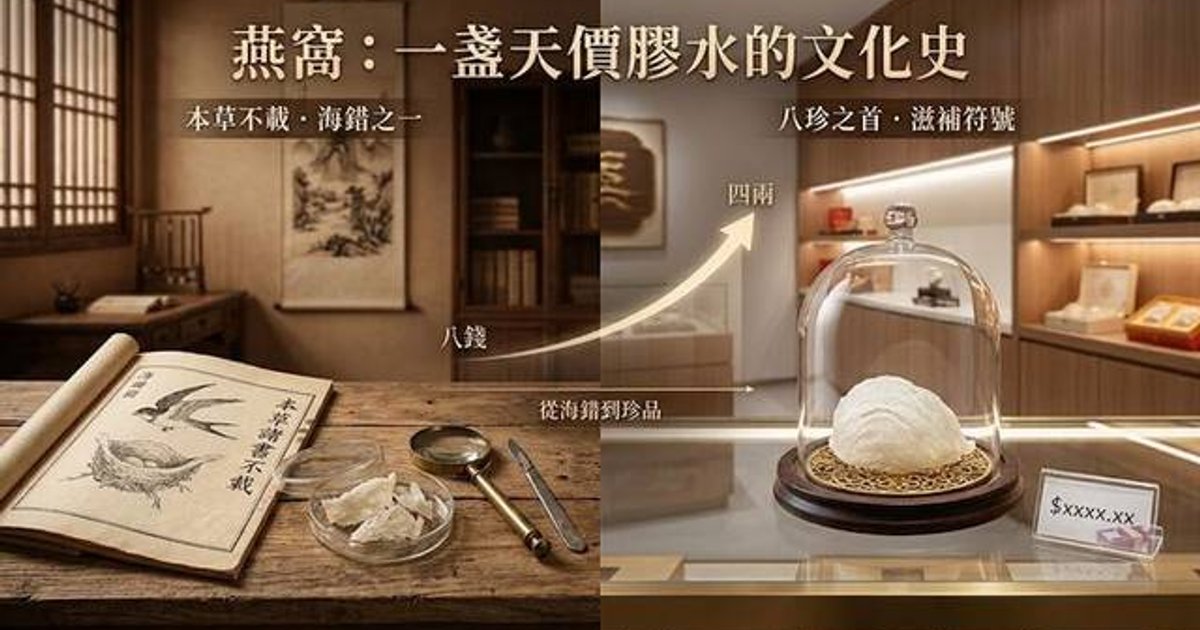
Summary
This article traces the remarkable ascent of bird's nest from an unrecorded sea product to one of Asia's most coveted luxury foods. Historical records from the Ming and Qing dynasties reveal a gradual transformation driven by imperial tribute systems and elite social dynamics rather than nutritional evidence. Contemporary nutritional science confirms that while bird's nest contains 50-70% protein, it lacks essential amino acids and cannot compete with common protein sources like eggs or milk. The piece argues that bird's nest's enduring appeal represents a triumph of cultural mythology over medical fact.
Key Points
- Ming dynasty records show bird's nest was treated as ordinary "sea fare" until the Qing dynasty, when prices surged fivefold from 0.8 taels to 4 taels per jin
- The popular legend of Zheng He discovering bird's nest during a storm has no supporting documentation in official Ming archives or contemporaneous accounts
- Qing Dynasty artist Nie Huang documented in his "Sea Creatures Scroll" that bird's nest was "not recorded in any herbal texts," then deduced it came from swiftlet saliva through his own investigation
- Classic works like "Dream of the Red Chamber" feature bird's nest over ten times, and even the frugal Zeng Guofan regularly consumed and gifted bird's nest
- Modern analysis reveals bird's nest provides only 2-3 grams of protein per serving, compared to 6-7 grams from a single egg and 7-8 grams from a cup of milk
Why It Matters
For Hong Kong consumers who routinely spend thousands on bird's nest as gifts or health supplements, this investigation challenges the scientific basis of a deeply ingrained cultural practice. The article demonstrates how luxury pricing in the city's wellness industry often reflects social status signaling rather than actual nutritional value, a dynamic that extends to cosmetics and beauty products marketed with bird's nest extracts worth far more than their ingredient content .
For Hong Kong consumers who routinely spend thousands on bird's nest as gifts or health supplements, this investigation challenges the scientific basis of a deeply ingrained cultural practice. The article demonstrates how luxury pricing in the city's wellness industry often reflects social status signaling rather than actual nutritional value, a dynamic that extends to cosmetics and beauty products marketed with bird's nest extracts worth far more than their ingredient content .