Hong Kong Public Housing Unit Stuns Netizens With Clever Renovation
SingTao · 1 SOURCESabout 4 hours ago2 MIN
Summary
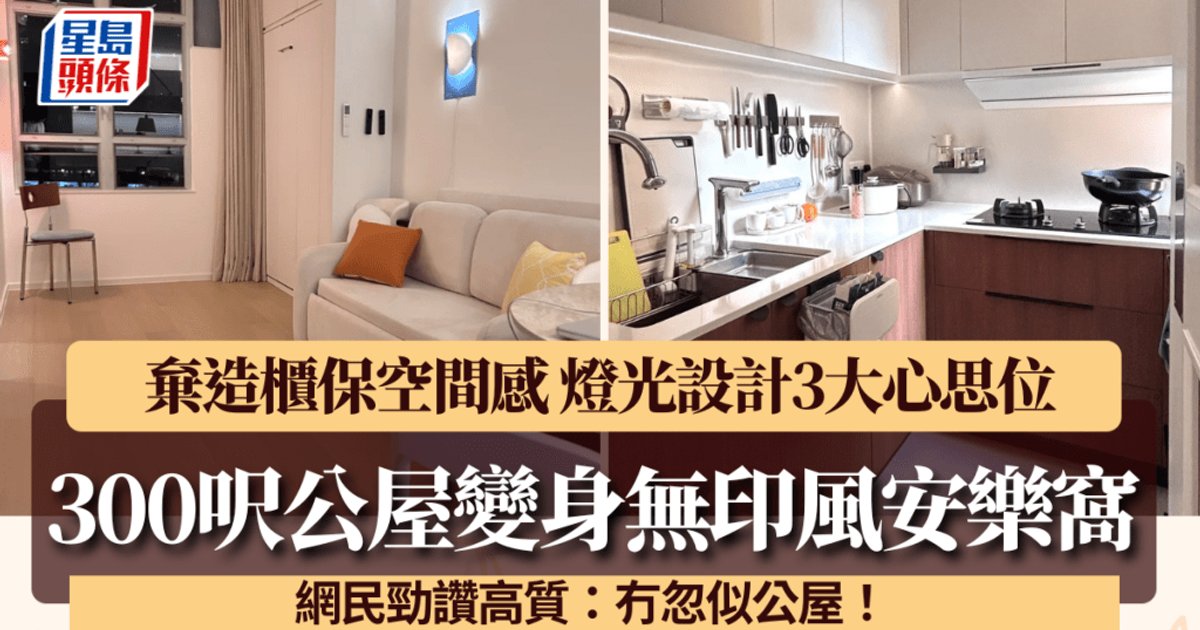
A Hong Kong public housing resident has captured online attention after sharing photos of their meticulously renovated 300 sq ft flat, which the household waited ten years to be allocated . Breaking from conventional small-space design wisdom that prioritizes storage, the owner chose to minimize built-in cabinets in favor of maintaining a spacious, airy feel throughout the unit . The resulting home, featuring a warm cream-white and light wood palette with a sophisticated three-tier ambient lighting system, has been widely praised by netizens as the "most comfortable Hong Kong small-unit renovation" they have ever seen .
Key Points
- The flat, a 3-to-4-person public housing unit of approximately 300 sq ft, was allocated after a 10-year waiting period
- Renovation took over three months, with the owner deliberately limiting built-in storage to preserve openness
- Design follows Japanese "Muji" aesthetics using cream-white walls paired with light wood flooring throughout
- Lighting scheme employs a "high-medium-low" three-layer approach with concealed LED strips and wall fixtures
- More than one month after moving in, one-third of available cabinet space remains unused, proving ample storage
Why It Matters
This renovation challenges prevailing assumptions about maximizing storage in Hong Kong's notoriously cramped living spaces, demonstrating that perceived spatial limitations can be overcome through thoughtful design choices . The viral response highlights a growing appetite among Hong Kong residents for aesthetic living environments over pure functionality, potentially influencing future public housing design considerations and renovation trends across the city .
This renovation challenges prevailing assumptions about maximizing storage in Hong Kong's notoriously cramped living spaces, demonstrating that perceived spatial limitations can be overcome through thoughtful design choices . The viral response highlights a growing appetite among Hong Kong residents for aesthetic living environments over pure functionality, potentially influencing future public housing design considerations and renovation trends across the city .