Hong Kong Student Inspired by First Local Astronaut Gains Entry to Tsinghua Aerospace Program
SingTao · 1 SOURCESabout 3 hours ago2 MIN
Summary
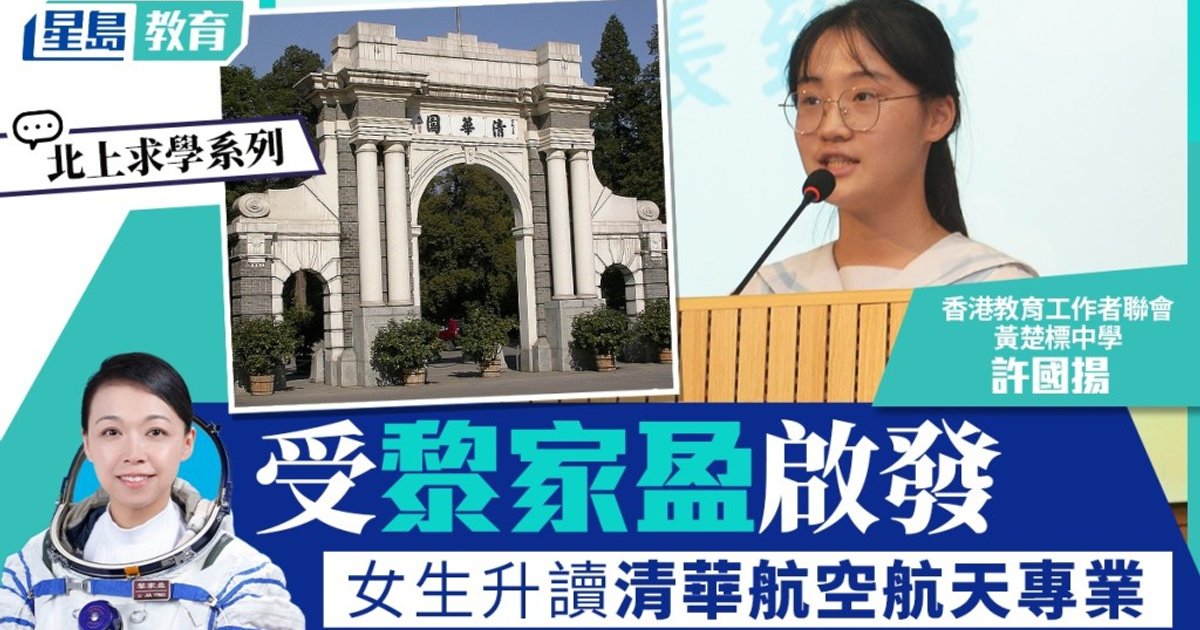
A graduate of EC Heung Chung Chi Secondary School named Xu Guoyang has been admitted to Tsinghua University's School of Aerospace Engineering through the Principal's Recommendation Scheme. Her decision was inspired by Hong Kong's first homegrown astronaut, Lai Jia-ying, who participated in the Shenzhou-20 crewed mission in May 2026. Despite also receiving an offer from the University of Hong Kong's Research Talent Nurture Programme, Xu chose to pursue her aerospace dreams on the mainland where industry connections and research opportunities are more extensive. She is preparing for the transition by self-studying mathematics and physics while maintaining an open mindset about potential setbacks.
Key Points
- Mainland universities continue climbing global rankings, with Tsinghua at 14th place and Fudan rising to 26th in the 2027 QS World University Rankings
- Lai Jia-ying, Hong Kong's first homegrown astronaut, said space exploration is not as distant as it seems, urging young people not to limit themselves
- Xu Guoyang, who received her offer from Tsinghua in April 2026, will study in the Engineering Experimental Class covering mechanical, aviation, and propulsion tracks
- The School of Aerospace Engineering connects students to national programs including the Long March rockets, crewed space missions, and lunar exploration projects
- The secondary school provides comprehensive support including interview workshops, Greater Bay Area study tours, and alumni mentorship networks
- Students must clarify their learning motivations and showcase long-term goals during mainland university admissions interviews rather than showing fleeting interest
Why It Matters
Mainland universities now rank among the world's best, while Hong Kong's own astronauts participate in national space missions, signaling that boundaries between Hong Kong and the mainland are dissolving in high-tech sectors. This case illustrates how Hong Kong students can access world-class research infrastructure and directly contribute to national scientific priorities, potentially reshaping career pathways for an entire generation of young people in the city.
Mainland universities now rank among the world's best, while Hong Kong's own astronauts participate in national space missions, signaling that boundaries between Hong Kong and the mainland are dissolving in high-tech sectors. This case illustrates how Hong Kong students can access world-class research infrastructure and directly contribute to national scientific priorities, potentially reshaping career pathways for an entire generation of young people in the city.