Etihad A380 Emergency Diverts to Hong Kong After 81-Year-Old Passenger's Suspected Stroke
HK01 · 5 SOURCESabout 20 hours ago2 MIN
Summary
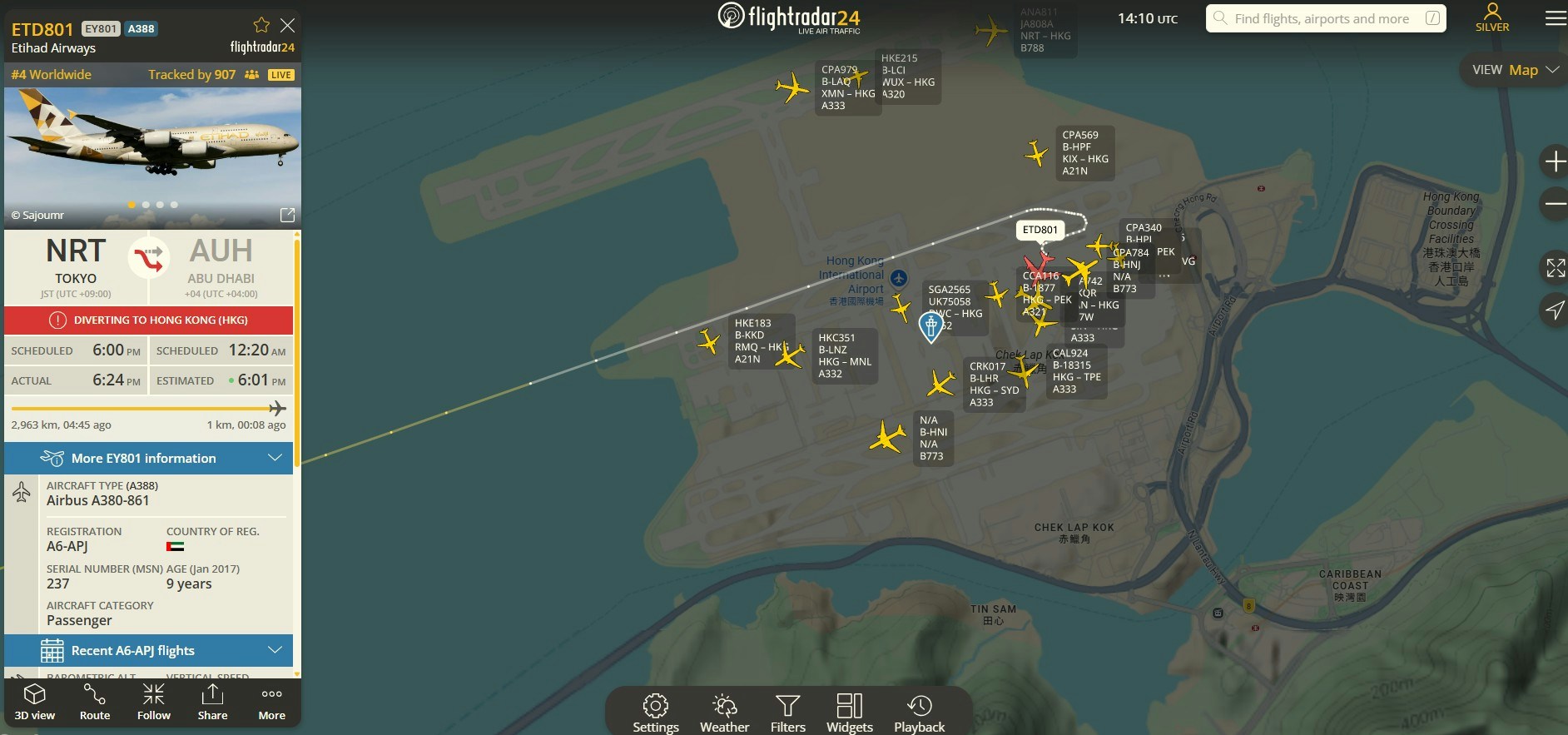
An Etihad Airways Airbus A380 operating Flight EY801 from Tokyo to Abu Dhabi was forced to divert to Hong Kong International Airport on Tuesday evening after an 81-year-old male passenger suffered a suspected acute stroke while flying over mainland China. The aircraft, carrying approximately 500 passengers, landed safely on the centre runway at around 10pm, with emergency crews standing by due to concerns that the fuel-laden aircraft might exceed its maximum landing weight. Medical personnel treated the passenger upon landing, and the flight resumed its journey to Abu Dhabi approximately two hours later, arriving nearly four hours behind schedule.
Key Points
- Flight EY801, operated by an Airbus A380-800, departed Narita Airport around 6:24pm on September 24 with approximately 500 passengers on board
- An 81-year-old male passenger suffered suspected acute stroke symptoms while the aircraft was flying over Wuhan airspace, prompting cabin crew to notify the pilots immediately
- Due to the long-haul route's fuel requirements, the aircraft likely exceeded Maximum Landing Weight (MLW), prompting pilots to request fire services and ambulances on standby
- The aircraft touched down safely on Hong Kong International Airport's centre runway at approximately 10pm, with fire and ambulance crews providing first aid at the gate
- After a two-hour turnaround, the flight departed Hong Kong at around 12:21am on September 25, arriving in Abu Dhabi approximately four hours behind its original schedule
Why It Matters
This incident underscores Hong Kong International Airport's critical function as a regional aviation hub equipped to handle emergency diversions at a moment's notice. The coordination between Etihad Airways, the Airport Authority, and Hong Kong emergency services demonstrates the importance of rapid response protocols for in-flight medical emergencies, particularly on long-haul routes where elderly passengers face elevated health risks .
This incident underscores Hong Kong International Airport's critical function as a regional aviation hub equipped to handle emergency diversions at a moment's notice. The coordination between Etihad Airways, the Airport Authority, and Hong Kong emergency services demonstrates the importance of rapid response protocols for in-flight medical emergencies, particularly on long-haul routes where elderly passengers face elevated health risks .