Hong Kong Stocks Slide as Mainland Capital Absent, Hang Seng Falls 251 Points
SingTao · 2 SOURCESabout 2 hours ago5 MIN
Summary
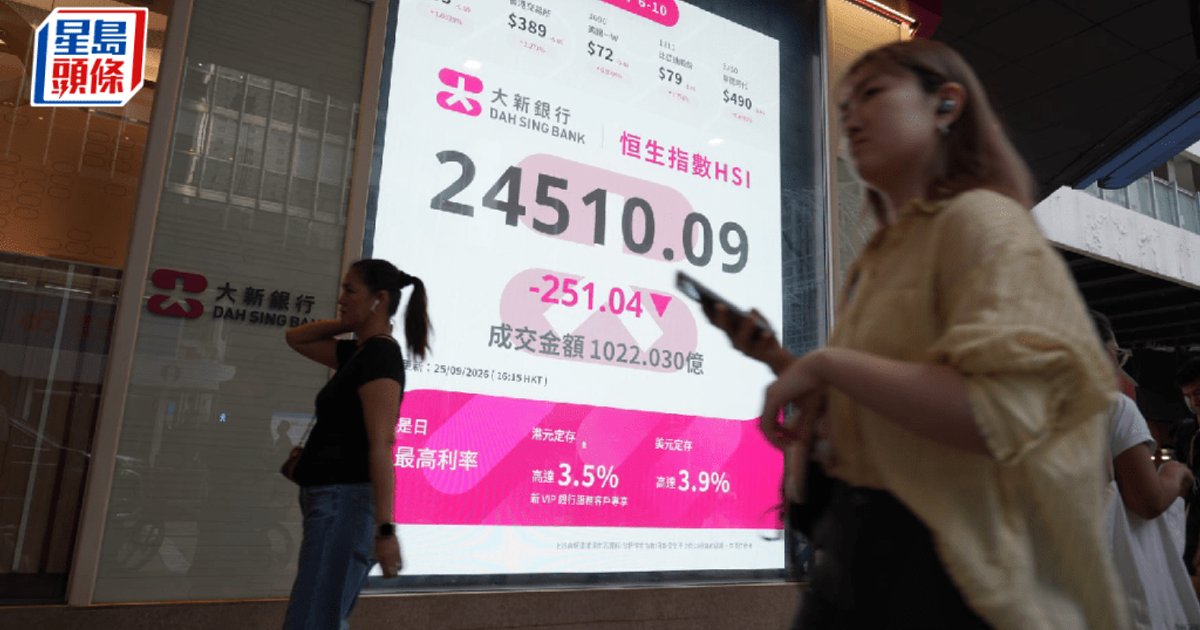
Hong Kong equities retreated on Friday as mainland trading capital took a break for the Mid-Autumn Festival, leaving the market without its usual support. The Hang Seng Index closed at 24,510, down 251 points or 1%, extending its losing streak to three consecutive sessions with a cumulative decline of 577 points . US Treasury yields surged above 5.2% to their highest level in nearly two decades, creating additional pressure on risk assets globally . Meanwhile, Japan emerged as a regional outperformer, with the Nikkei 225 adding 850 points or 1.3% to close at 66,364, rising for five straight sessions .
Key Points
- The Hang Seng Index fell 251 points to close at 24,510, marking a 1% decline and its third consecutive losing session
- Trading turnover contracted to 102.2 billion yuan, the lowest since February 16, as mainland water (北水) stayed absent during the holiday
- US 10-year Treasury yield climbed 10.9 basis points to 5.225%, the highest since 2007, while the 30-year yield rose to 5.491%, levels not seen since 2004
- Lenovo (stock code: 992) bucked the trend, rising 3.2% to close at 37.16 yuan, making it one of the best-performing blue chips
- Mainland capital has been the sole pillar of support for Hong Kong stocks, with cumulative net purchases this year reaching 435 billion yuan
Why It Matters
The absence of mainland capital during the holiday exposed the vulnerability of Hong Kong's market, which has relied heavily on southbound flows to sustain valuations. With foreign investors repeatedly cutting earnings forecasts and the strong dollar environment threatening capital outflows, the market faces structural challenges that go beyond temporary holiday-related liquidity issues. The recent focus of mainland capital on just a handful of AI-related stocks also suggests increasingly selective positioning that may not be sufficient to lift broader market sentiment.
The absence of mainland capital during the holiday exposed the vulnerability of Hong Kong's market, which has relied heavily on southbound flows to sustain valuations. With foreign investors repeatedly cutting earnings forecasts and the strong dollar environment threatening capital outflows, the market faces structural challenges that go beyond temporary holiday-related liquidity issues. The recent focus of mainland capital on just a handful of AI-related stocks also suggests increasingly selective positioning that may not be sufficient to lift broader market sentiment.