Hong Kong signs farm export pacts with three regions
SingTao · 1 SOURCESabout 2 hours ago2 MIN
Summary
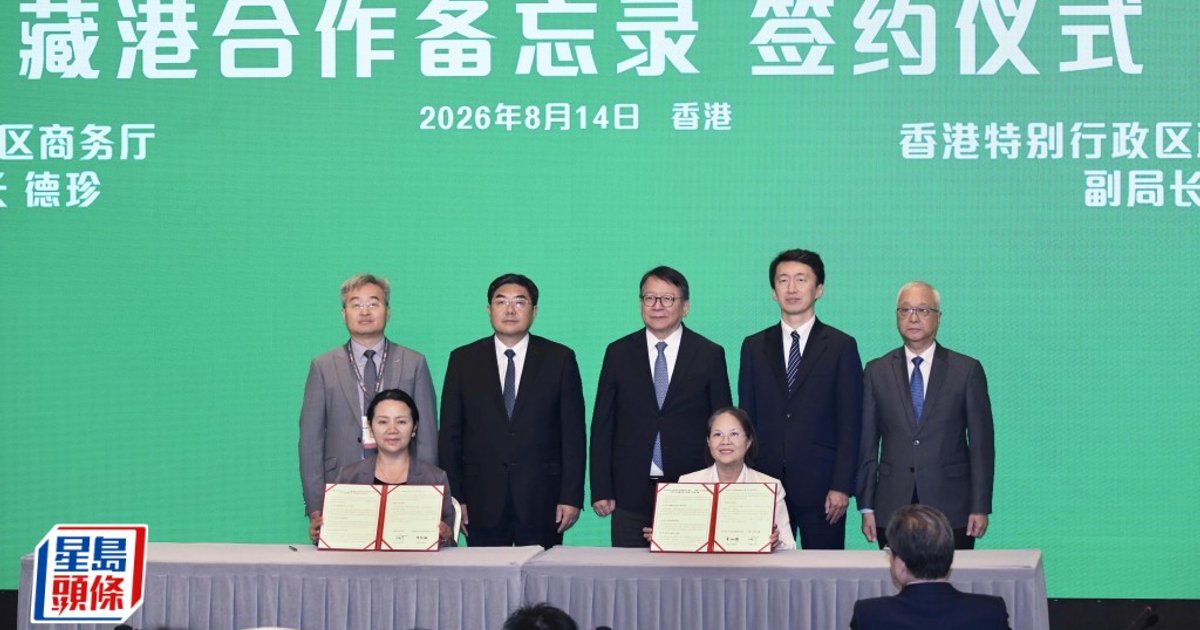
Hong Kong’s Environment and Ecology Bureau signed memorandums of cooperation with Hunan province, the Tibet Autonomous Region and Shandong province at an exchange and business-matching event in Wan Chai on August 14, marking the first time the Hong Kong government has signed agriculture- and food-related cooperation documents with different provincial-level governments.
The event was jointly organised by the Agricultural Trade Promotion Center of the Ministry of Agriculture and Rural Affairs, the Hong Kong SAR government’s Environment and Ecology Bureau, and the Hong Kong Trade Development Council.
Chief Secretary Eric Chan Kwok-ki said premium agricultural products and food need an efficient international trading platform, professional marketing services and seamless alignment with international standards to expand overseas, and that these are areas where Hong Kong has clear advantages.
Secretary for Environment and Ecology Tse Chin-wan said this year’s event was larger than last year’s and estimated procurement intentions reached more than HK$1.8 billion, more than double last year’s HK$700 million.
Key Points
- The exchange meeting was held at the Hong Kong Convention and Exhibition Centre in Wan Chai on August 14 and has now entered its fourth year.
- Chan said 2025 is the opening year of the national 15th Five-Year Plan, after the State Council released an agricultural modernisation plan in June.
- He also cited this year’s No. 1 central policy document, which calls for internationally competitive agricultural enterprises and expanded exports of strong specialty products.
- Tse said mainland China remains Hong Kong’s main supplier of food and fisheries-agriculture products, with annual imports to Hong Kong exceeding HK$10 billion.
- He said companies setting up in Hong Kong can use the city as a springboard to ASEAN, the Middle East and wider Belt and Road markets.
Why It Matters
For Hong Kong, the agreements support its push to become the preferred platform for mainland companies going global by linking trade, logistics and professional services with food exports.
They also point to a practical way for the city to deepen integration with national development while attracting more mainland food businesses to establish a presence in Hong Kong.