China Climate Center: Super El Niño Forms, Could Be Strongest on Record
Crhk · 4 SOURCES1 day ago2 MIN
Summary
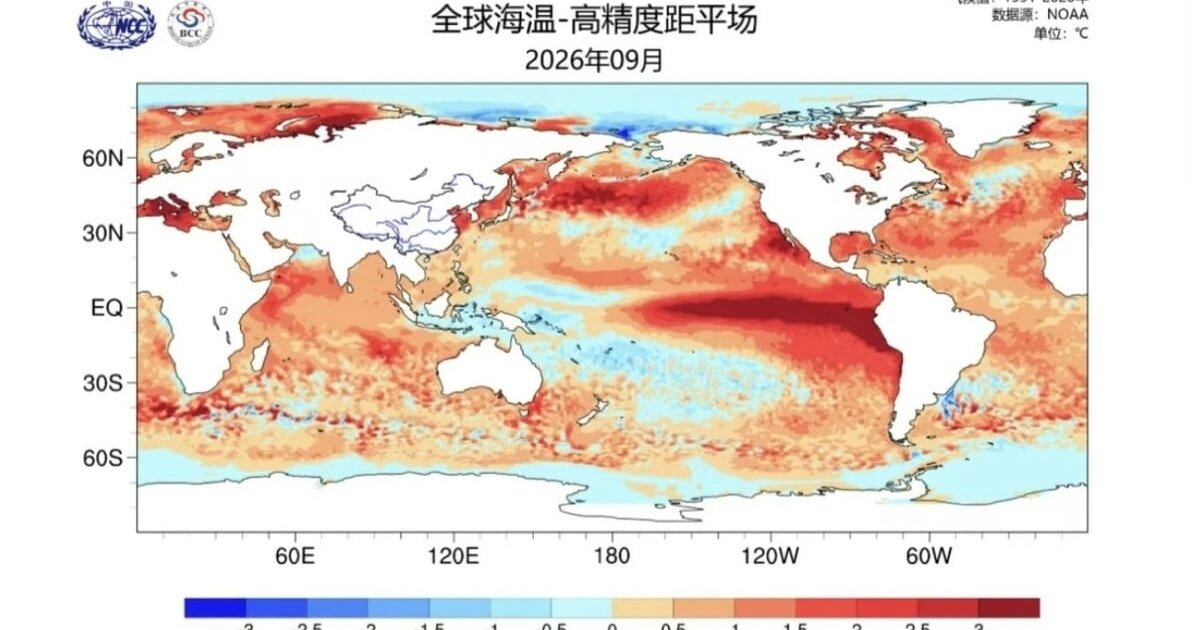
China's National Climate Center announced on October 9 that a super El Niño event officially formed in September 2026, with sea surface temperatures in key monitoring areas exceeding 2.5°C above normal. The event, classified as an eastern-type El Niño with its warm center in the equatorial eastern Pacific, is expected to peak in late autumn to early winter and may become the strongest since systematic monitoring began. The World Meteorological Organization indicates the phenomenon will strengthen further before peaking in December and likely persist through February 2027.
Key Points
- The National Climate Center's chief forecaster Zhao Junhu stated that since May 2026, the central and eastern equatorial Pacific entered El Niño conditions, with the three-month sliding average from July to September reaching 2.54°C above normal, meeting super event standards
- September sea surface temperature in the monitoring area registered at 2.94°C, marking a 0.35°C increase from August, with the eastern Pacific warm water center exceeding 3°C above normal
- The World Meteorological Organization projected that this El Niño will peak in December and continue through February 2027 with near 100% probability, potentially ranking among the strongest since 1950
- El Niño disrupts global atmospheric circulation, causing prolonged drought in Australia and Southeast Asia while triggering floods in major grain-producing regions, with Central America and southern Africa facing the most severe impacts
- The UN World Food Programme estimates this El Niño could push an additional 49 million people into acute food insecurity, raising the global total to 274 million
Why It Matters
The convergence of this powerful El Niño with ongoing geopolitical tensions—particularly the US-Iran conflict affecting the Strait of Hormuz and Black Sea shipping disruptions from the Ukraine situation—is driving global food prices to near four-year highs. JPMorgan's August analysis warns that food inflation could surge from 2.8% in the first half of 2026 to 5% in the first half of 2027, with emerging markets facing the heaviest burden .
The convergence of this powerful El Niño with ongoing geopolitical tensions—particularly the US-Iran conflict affecting the Strait of Hormuz and Black Sea shipping disruptions from the Ukraine situation—is driving global food prices to near four-year highs. JPMorgan's August analysis warns that food inflation could surge from 2.8% in the first half of 2026 to 5% in the first half of 2027, with emerging markets facing the heaviest burden .