ICAC Launches Integrity Standards for Government Computer Systems
SingTao · 5 SOURCES1 day ago3 MIN
Summary
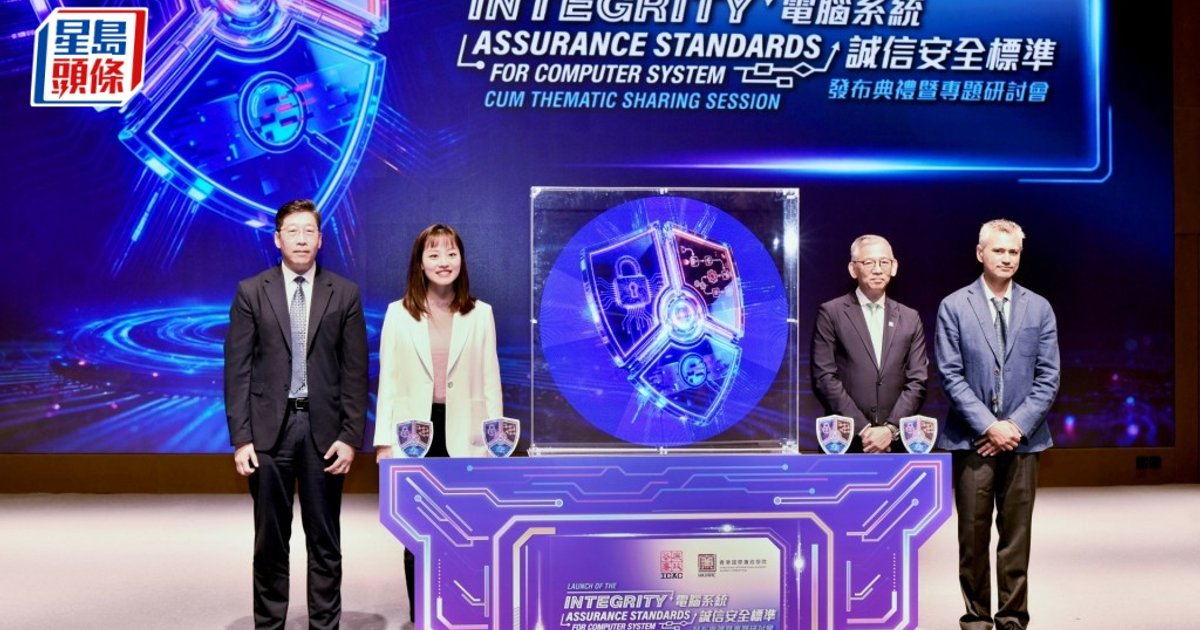
The Independent Commission Against Corruption (ICAC) has issued a Computer System Integrity and Security Standard for Hong Kong government bureaux and departments, covering 12 core control measures to embed anti-corruption safeguards into digital systems from the design stage. The framework was developed based on control weaknesses uncovered during corruption investigations and departmental reviews, with the Digital Policy Office requiring self-assessments for departments seeking computerisation funding since July. Acting Secretary for Innovation, Technology and Industry Cheung Man-lai said the standard offers a practical mechanism to build integrity governance into technology projects early, warning that system loopholes can enable corruption and damage public trust.
Key Points
- ICAC Commissioner Woo Ying-ming said the standard addresses control gaps found in past corruption investigations and reviews of government systems, with over 100 directorate-level officers and IT heads attending its launch to demonstrate commitment.
- The 12 control measures cover user authentication to prevent unauthorised access to confidential data, built-in conflict-of-interest declarations and approval workflows, plus access logs and anomaly alerts.
- Under a new Digital Policy Office arrangement effective July, departments must verify whether new systems can incorporate appropriate controls under the standard when applying for related funding, with ICAC providing support.
- The Hong Kong International Academy Against Corruption hosted seminars after the launch, with the Environmental Protection Department, Census and Statistics Department, and Hong Kong Applied Science and Technology Research Institute sharing implementation examples
- Tencent Group participated as a technology industry representative to share how digital tools can strengthen internal controls, while Woo noted global public and private sectors are increasingly integrating anti-corruption measures into computer systems.
Why It Matters
By requiring integrity assessments during the funding application process, the standard makes anti-corruption controls a mandatory consideration in government technology procurement rather than an afterthought. Woo warned that system loopholes can lead to corruption, breach of regulations, and reputational damage affecting citizens' interests, noting that prevention through proper controls is more cost-effective than investigations and system repairs later.
By requiring integrity assessments during the funding application process, the standard makes anti-corruption controls a mandatory consideration in government technology procurement rather than an afterthought. Woo warned that system loopholes can lead to corruption, breach of regulations, and reputational damage affecting citizens' interests, noting that prevention through proper controls is more cost-effective than investigations and system repairs later.