Australia Returns Two Song Dynasty Tomb Statue Heads to China
SingTao · 4 SOURCES1 day ago2 MIN
Summary
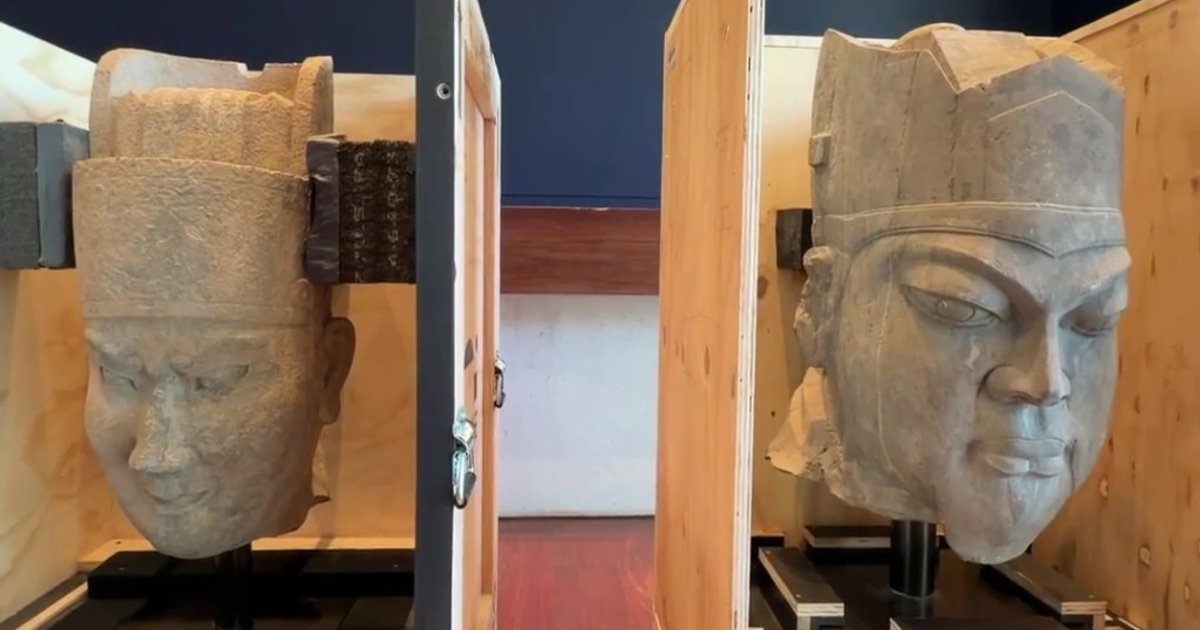
Australia returned two significant Chinese cultural artifacts to their homeland on October 28, 2026. The National Cultural Heritage Administration of China formally received the limestone heads of civil and military official statues from Northern Song Dynasty imperial tombs at the National Gallery of Australia in Canberra. These artifacts, originally from the Yongchangling and Yongyuling mausoleums in Henan Province's Gongyi, had been separated from their bodies for over a century after being stolen by grave robbers in the early 1900s .
Key Points
- The civil official statue head originates from Yongchangling, the mausoleum of Zhao Kuangyin, founding emperor of the Northern Song Dynasty, standing 70 cm tall and weighing 223 kg .
- The military official statue head comes from Yongyuling, the mausoleum of Emperor Shenzong Zhao Xu, measuring 68 cm in height and weighing 132 kg .
- The statue bodies have remained standing alone in the wheat fields of Gongyi for a thousand years, earning them the poetic nickname "watchers in the wheat fields" .
- The heads were sawed off and stolen by tomb robbers in the early 20th century, subsequently entering the collection of the National Gallery of Australia .
- China's National Cultural Heritage Administration, together with the Ministry of Public Security, submitted a formal memorandum to the Australian National Gallery last year requesting the return of these artifacts .
Why It Matters
This successful repatriation demonstrates strengthened international cooperation in protecting cultural heritage under the UNESCO 1970 Convention, of which both China and Australia are signatories . The return also comes shortly after China's revised Cultural Heritage Protection Law took effect in March 2025, which stipulates that the nation retains perpetual rights to recover looted cultural artifacts . For Hong Kong, this advancement in cross-border cultural heritage enforcement sets a precedent that could facilitate the return of other historically significant Chinese artifacts currently held abroad, enriching local museums and educational resources.
This successful repatriation demonstrates strengthened international cooperation in protecting cultural heritage under the UNESCO 1970 Convention, of which both China and Australia are signatories . The return also comes shortly after China's revised Cultural Heritage Protection Law took effect in March 2025, which stipulates that the nation retains perpetual rights to recover looted cultural artifacts . For Hong Kong, this advancement in cross-border cultural heritage enforcement sets a precedent that could facilitate the return of other historically significant Chinese artifacts currently held abroad, enriching local museums and educational resources.