Shanxi Coal Firm Fined 1 Million Yuan for Razing Ming Dynasty Great Wall Section
AM730 · 2 SOURCES1 day ago2 MIN
Summary
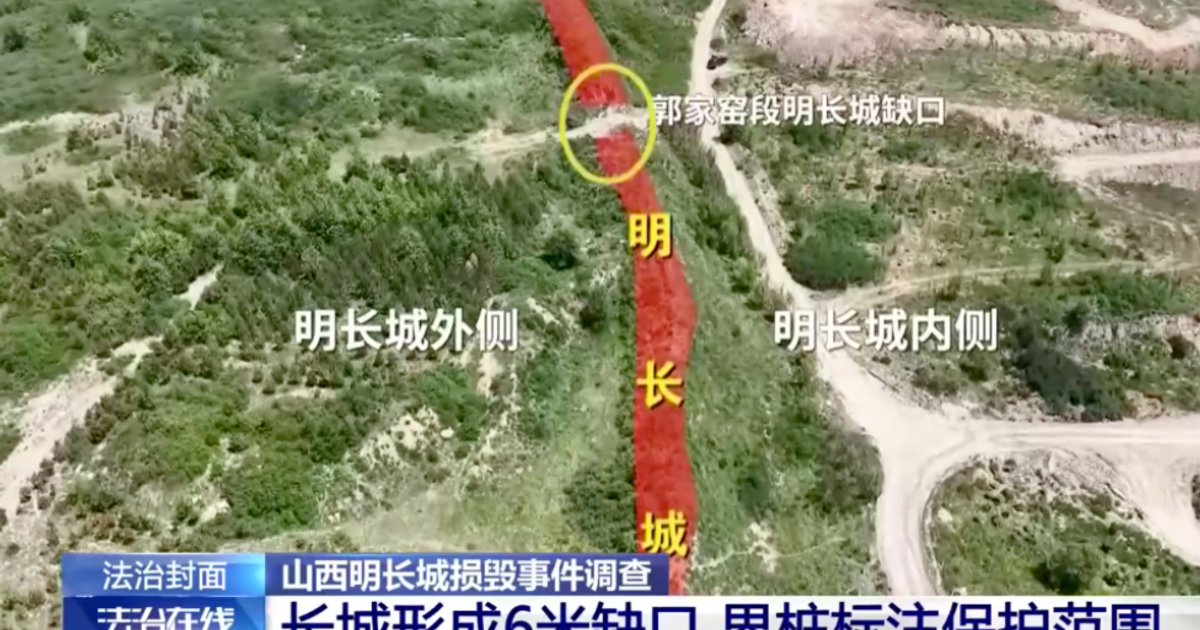
Shanxi authorities have imposed a 1 million yuan penalty on coal company Shenda Chaokai and placed two executives under criminal detention for systematically destroying a protected section of the Ming Dynasty Great Wall to cut costs. The Guojianyao section in Ningwu County, Xinzhou, was deliberately breached around 2007 to create a shortcut for dumping mining waste, with the gap expanding to 18 meters before the company attempted to conceal the damage. Despite five to six formal complaints filed between 2015 and 2025, local cultural heritage officials failed to take enforcement action, allowing the destruction to continue for nearly twenty years.
Key Points
- The Guojianyao section of the Ming Great Wall in Ningwu County, Shanxi, was breached by Shenda Chaokai Coal Industry to dump waste, creating a permanent 6-meter gap
- The company, which began mining in 2007, deliberately cut through the wall to avoid transportation costs for removing slag and debris from its operations
- Satellite imagery confirmed the wall showed signs of deliberate damage as early as September 2007, with the breach expanding to 18 meters at its worst before partial backfilling
- From 2015 to 2025, whistleblowers submitted five to six formal complaints to local authorities, who responded that "no danger existed" and refused to investigate
- The actual controller Tang (Tang Moumou) and former chairman Wang (Wang Moumou) face charges of illegal mining and damaging cultural relics
- Eleven individuals are now under investigation for negligence and dereliction of duty related to the prolonged failure of regulatory oversight
Why It Matters
The case exposes systemic failures in China's cultural heritage protection framework, where profit-driven enterprises brazenly destroyed a provincial-level protected monument for nearly two decades while regulators ignored repeated warnings. As Shanxi initiates restoration and ecological remediation work, the incident raises broader concerns about the adequacy of supervision for mining operations near archaeological sites across the country .
The case exposes systemic failures in China's cultural heritage protection framework, where profit-driven enterprises brazenly destroyed a provincial-level protected monument for nearly two decades while regulators ignored repeated warnings. As Shanxi initiates restoration and ecological remediation work, the incident raises broader concerns about the adequacy of supervision for mining operations near archaeological sites across the country .