Hong Kong joins ICH as full drug regulator member
HK01 · 1 SOURCESabout 21 hours ago11 MIN
Summary
Hong Kong has been admitted as the 20th regulatory member of the International Council for Harmonisation, after the decision was passed at the body’s assembly in the Czech Republic last week. The upgrade from observer to regulatory member came within three years of the 2023 policy push to build a primary evaluation mechanism for drug registration.
Key Points
- The International Council for Harmonisation approved Hong Kong as its 20th regulatory member at an assembly held in the Czech Republic last week.
- The government said Hong Kong moved from the 2023 policy goal and ICH observer status to full regulatory membership in three years.
- Hong Kong launched its “1+” new drug approval mechanism in November 2023, later extending it to all new drugs.
- By October this year, 23 new drugs had been approved through the “1+” pathway, with eight added to the Hospital Authority drug formulary.
- A new Centre for Medical Products Regulation will be established next month, and a related bill was introduced into the Legislative Council on November 25.
- Hong Kong’s health authorities said ICH sets technical guidelines on drug safety, efficacy and quality, helping regulators align registration requirements and reduce unnecessary duplication in research and approval work. Membership means Hong Kong can not only align with international standards but also directly take part in drafting and revising them alongside regulators including China’s National Medical Products Administration, the US Food and Drug Administration, and counterparts in Europe, Switzerland and the United Kingdom.
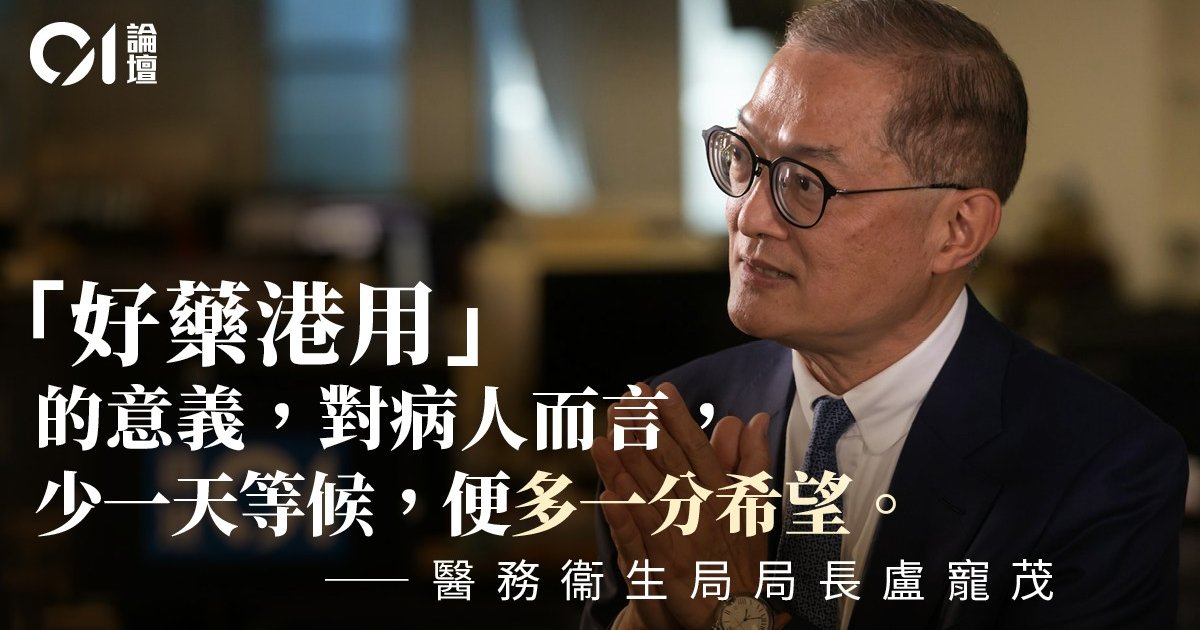
- The article by Secretary for Health Lo Chung-mau (盧寵茂) said the current administration had accelerated reform of drug and medical device regulation. Under the “1+” mechanism introduced in November 2023, applicants who provide qualifying local clinical data and obtain recognition from local experts need only one reference drug regulator’s registration approval, instead of the previous two, to apply for registration in Hong Kong. The government said the arrangement helps bring new drugs to Hong Kong while building local review experience for an eventual first-tier approval system.
- Hong Kong had already joined the Pharmaceutical Inspection Co-operation Scheme in January 2016, giving it an internationally recognised platform in pharmaceutical manufacturing quality oversight. The government said holding both ICH regulatory membership and PIC/S membership shows that Hong Kong’s drug development and regulatory standards have gained international recognition.
- The policy case for reform was framed around patient access. According to the article, eight of the 23 drugs approved under the “1+” route had entered the Hospital Authority formulary by October, and six of those were listed as special drugs, including targeted cancer therapies. Eligible patients prescribed those medicines under specified clinical conditions pay the standard charge of HK$20 for every four weeks, easing financial pressure. The Hospital Authority also negotiated lower prices, including a cut of nearly 40 per cent for a formulary-listed medicine used to treat paroxysmal nocturnal haemoglobinuria.
- The Hospital Authority set up an Office for the Introduction of Innovative Drugs and Medical Devices in June this year to work with the Department of Health on speeding up registration of clinically needed new products. In the first phase, the measure targets cancer drugs and aims to shorten the relevant registration review time from up to 150 working days to within 100 days.
- Hong Kong began phased implementation of first-tier approval on March 31 this year, initially covering extended applications of drugs containing chemical entities already registered locally, such as new indications and new dosage forms. The government’s target is to expand that coverage to all pharmaceutical products on or before 2030.
Why It Matters
For Hong Kong patients, the practical test is whether international recognition translates into earlier access to advanced medicines without weakening checks on safety, efficacy and quality. For the city’s medical innovation ambitions, direct participation in global rule-setting gives Hong Kong a stronger platform to attract drug research, clinical trials and registration work.