Housing Authority Apologizes After Arranging Fire Drill on Deadly Blaze Anniversary
HK01 · 3 SOURCESabout 2 hours ago2 MIN
Summary
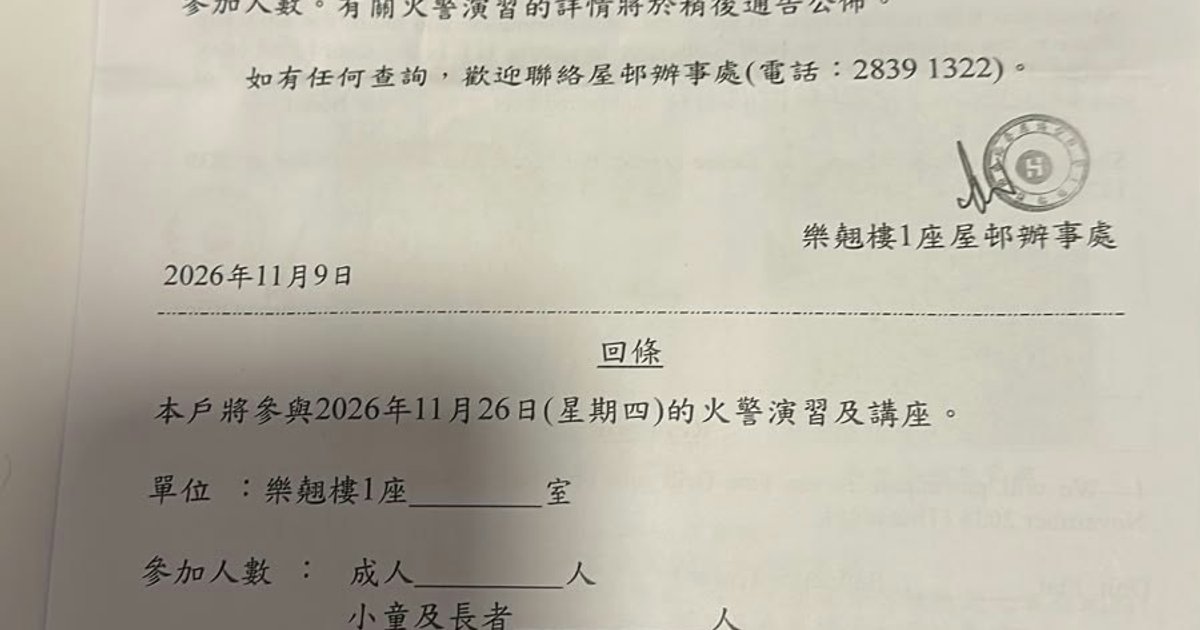
The Hong Kong Housing Authority has apologized and agreed to postpone a fire drill after residents condemned the timing of the exercise on the first anniversary of the devastating Wang Fuk Estate fire. The drill, scheduled for November 26 at 2:30 PM, would have taken place at Lok Kiu Building in Hung Shui Kiu, where 570 households displaced by last year's blaze have been temporarily rehoused. Affected residents took to social media to denounce the scheduling, calling it cruel and insensitive, while the Housing Authority apologized for causing distress and pledged to reschedule the activity .
Key Points
- A fire drill and fire safety seminar were scheduled for November 26 at 2:30 PM and 3:00 PM respectively at Lok Kiu Building, where most of the 570 displaced Wang Fuk Estate households have been relocated .
- The 2:30 PM timing coincides precisely with when the devastating fire broke out approximately one year ago, triggering widespread criticism from affected residents .
- Residents posted on social media questioning why the drill could not be scheduled on any other day, with one describing the move as pouring salt on wounds .
- The Housing Authority responded by commenting on residents' posts, apologizing for the distress caused and stating the event would be rescheduled with updated notices to follow .
- When questioned multiple times about whether memorial activities would be permitted, authorities have not given a clear answer, prompting speculation that the drill may have been intended to divert public attention .
Why It Matters
This incident highlights a significant gap between bureaucratic procedural compliance and genuine sensitivity toward trauma survivors. The fact that 570 families who lost their homes in the fire must now relive that experience on its anniversary—despite authorities being fully aware of the resident composition of the relocation site—raises serious questions about decision-making processes within government housing agencies. The public backlash and subsequent apology underscore growing expectations that official bodies must consider the psychological impact of their actions on vulnerable communities, particularly when scheduling activities that may trigger collective trauma responses.
This incident highlights a significant gap between bureaucratic procedural compliance and genuine sensitivity toward trauma survivors. The fact that 570 families who lost their homes in the fire must now relive that experience on its anniversary—despite authorities being fully aware of the resident composition of the relocation site—raises serious questions about decision-making processes within government housing agencies. The public backlash and subsequent apology underscore growing expectations that official bodies must consider the psychological impact of their actions on vulnerable communities, particularly when scheduling activities that may trigger collective trauma responses.