Consumer Council Tests 35 Baby Shampoo-Body Wash Products, Nearly Half Score Full Marks
SingTao · 3 SOURCESabout 3 hours ago2 MIN
Summary
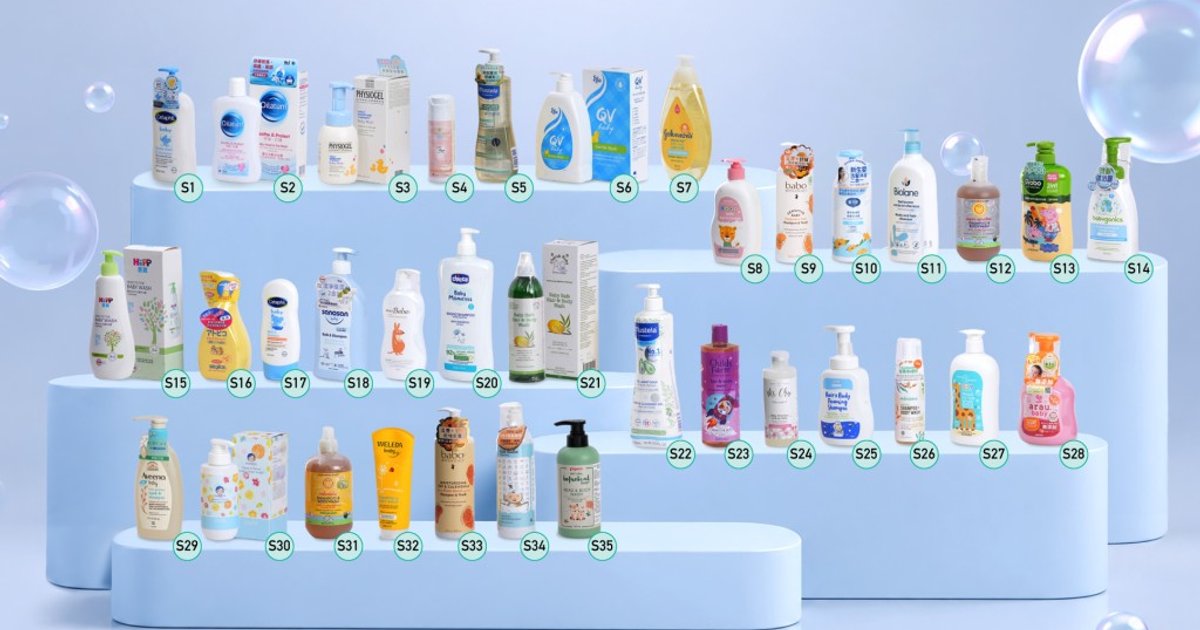
The Consumer Council conducted comprehensive testing on 35 baby 2-in-1 shampoo and body wash products available in the Hong Kong market between March and May 2026. The samples, priced from HK$32 to HK$462 per bottle, were purchased from department stores, supermarkets, pharmacies, personal care stores, and baby product specialty shops. All products passed microbial safety assessments with bacterial counts well below current and upcoming standards effective January 2027. Sixteen samples earned the top rating of 5 points, while 33 samples received 4 points or above. Nevertheless, nearly half of the tested products (17 samples) contained fragrance allergens that may pose sensitivity risks to susceptible infants.
Key Points
- Testing covered 35 samples from March to May 2026, priced between HK$32 and HK$462 per bottle, with prices per millilitre ranging from HK$0.06 to HK$1.30
- All samples passed microbial tests with bacterial counts below 10 CFU/g, no E. coli, Staphylococcus aureus, or Pseudomonas aeruginosa detected
- Seventeen samples contained 1 to 9 fragrance allergens, with limonene most common (14 samples, 0.0014%-0.1912%) and linalool second (11 samples, 0.0026%-0.2214%)
- Mannings Guardian baby shampoo-body wash contained CMIT and MIT at 0.001273%, below the legal limit but with a 2:1 ratio instead of the required 3:1
- Manbino Organics claimed "no allergenic fragrances" yet contained 0.0774% limonene; the case was referred to Hong Kong Customs for follow-up
- Four samples had pH levels outside the recommended 4.5-8.5 range: HiPP and Sanosan were too acidic; Manbino Organics and Arau Baby were too alkaline
Why It Matters
For Hong Kong parents navigating an increasingly crowded baby care market, these findings underscore that marketing claims such as "hypoallergenic formula" or "gentle" do not guarantee absence of allergens. The detection of fragrance allergens in nearly half of tested products, combined with inconsistent labelling practices (only 1 of 11 products exceeding the 0.01% threshold properly declared allergens), highlights the need for greater transparency and regulatory vigilance to protect infants with sensitive skin or eczema .
For Hong Kong parents navigating an increasingly crowded baby care market, these findings underscore that marketing claims such as "hypoallergenic formula" or "gentle" do not guarantee absence of allergens. The detection of fragrance allergens in nearly half of tested products, combined with inconsistent labelling practices (only 1 of 11 products exceeding the 0.01% threshold properly declared allergens), highlights the need for greater transparency and regulatory vigilance to protect infants with sensitive skin or eczema .