Typhoon Dujuan May Strike Tokyo's Ogasawara, Izu Islands; Japan Weather Agency Warns Kanto of 200mm Downpour
SingTao · 2 SOURCESabout 5 hours ago5 MIN
Summary
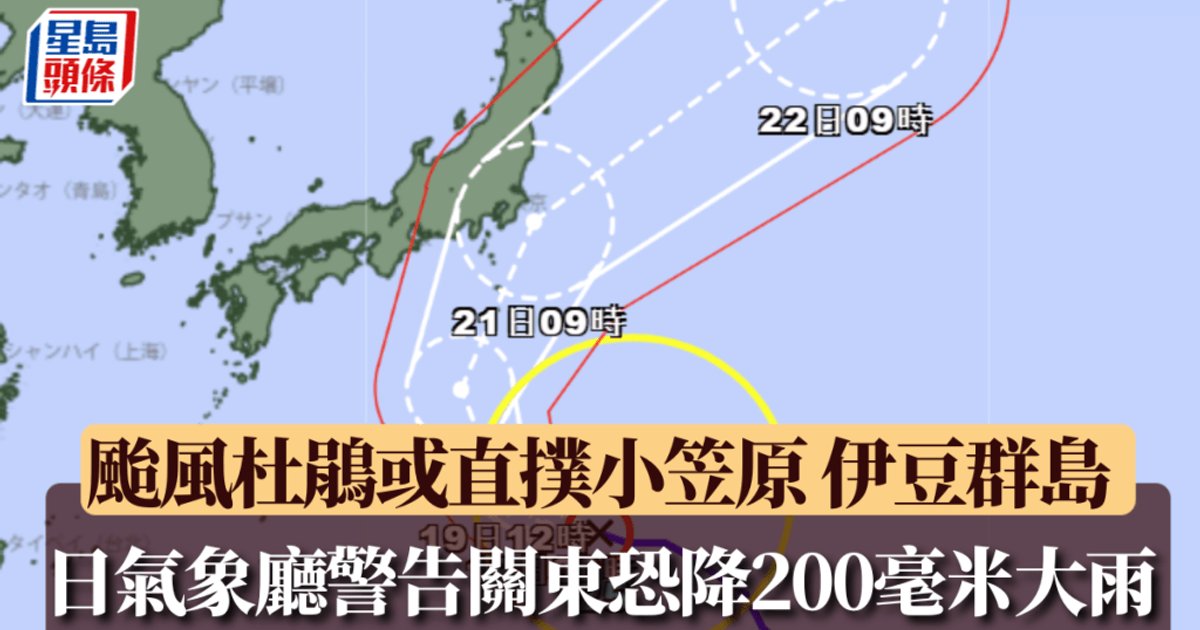
Typhoon Dujuan (杜鵑), the 25th typhoon of the year and classified as a large typhoon by the Japan Meteorological Agency, is on a trajectory that may directly affect Tokyo's outlying islands and the broader Kanto region during Japan's upcoming long weekend . As of 9:00 AM on September 18, the typhoon was located approximately 310 kilometers southeast of Chichi-jima in the Ogasawara Islands, moving northwestward at 40 km/h with a central pressure of 975 hPa . The Japan Meteorological Agency has warned that the Ogasawara and Izu island chains should prepare for giant waves, damaging winds, and extreme rainfall that could trigger landslides, flooding in low-lying areas, and rising river levels .
Key Points
- Typhoon Dujuan was positioned 310km southeast of Chichi-jima as of 9am September 18, moving northwest at 40 km/h with central pressure of 975 hPa
- Maximum sustained winds near the typhoon center reached 30 m/s with gusts up to 45 m/s
- By September 20, the storm is forecast to approach the Izu Islands after passing near the Ogasawara Islands on September 19
- Wave heights could reach 7 meters in the Ogasawara Islands and 5 meters in the Izu Islands
- Cumulative rainfall of 200mm is expected for Kanto and Izu regions between September 20-21
- The government established a liaison office at the Prime Minister's Official Residence Crisis Management Center
Why It Matters
This typhoon poses significant risks during Japan's three-day holiday weekend, potentially disrupting travel for millions and straining emergency services across a densely populated metropolitan area . With climate patterns intensifying Pacific typhoons, this event highlights Japan's continued vulnerability to severe weather impacts on critical infrastructure and public safety .
This typhoon poses significant risks during Japan's three-day holiday weekend, potentially disrupting travel for millions and straining emergency services across a densely populated metropolitan area . With climate patterns intensifying Pacific typhoons, this event highlights Japan's continued vulnerability to severe weather impacts on critical infrastructure and public safety .