Hong Kong's First Chinese Medicine Hospital: A Patient's Perspective on Service Quality
HK01 · 1 SOURCESabout 2 hours ago2 MIN
Summary
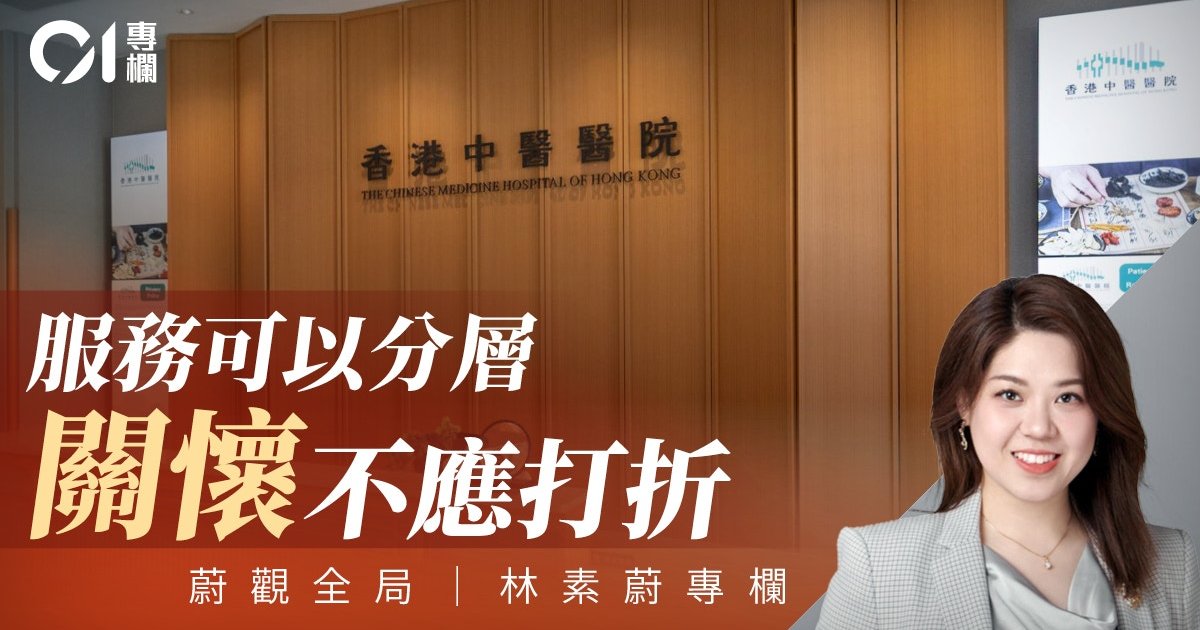
Hong Kong's inaugural Chinese medicine hospital in Tseung Kwan O has drawn significant public interest since opening. Legislative Council member Lam Suet-wai, who participated in drafting the Hospital Authority Chinese Medicine Ordinance, recently shared her firsthand experience as a patient at both subsidized and private outpatient clinics. Her observations reveal stark contrasts in consultation experiences between the two service tiers, raising concerns about whether reduced costs necessarily mean reduced quality of care for patients relying on government-subsidized services.
Key Points
- Hong Kong's first Chinese medicine hospital is located in Tseung Kwan O, serving an area Lam has represented for years in public service .
- Subsidized general outpatient consultation costs $180, with additional fees of $25 per dose for Chinese medicine and $5 per item for Western medicine, covering treatments like acupuncture and cupping .
- Despite booking more than two weeks in advance through a mobile application, available appointment slots remained limited, reflecting high demand for subsidized Chinese medicine services .
- In private outpatient consultations with senior Chinese medicine practitioners, Lam experienced attentive, thorough consultations with detailed history-taking and lifestyle inquiries .
- A contrasting subsidized consultation involved a physician who spent most of the time inputting computer records, with minimal eye contact and a rushed atmosphere .
- During one visit, a staff member escorting Lam in a wheelchair repeatedly asked to leave early due to insufficient manpower, creating an uncomfortable situation .
Why It Matters
As Hong Kong integrates Chinese medicine more formally into its healthcare system, Lam's account highlights a critical question: should patients accepting lower fees accept correspondingly lower standards of dignity and communication? Her recommendations for clearer language services, transparent disclosure of service differences between consultation types, and adequate staffing could shape how Hong Kong balances accessibility with quality care for its most vulnerable patients, including elderly residents and those with chronic conditions .
As Hong Kong integrates Chinese medicine more formally into its healthcare system, Lam's account highlights a critical question: should patients accepting lower fees accept correspondingly lower standards of dignity and communication? Her recommendations for clearer language services, transparent disclosure of service differences between consultation types, and adequate staffing could shape how Hong Kong balances accessibility with quality care for its most vulnerable patients, including elderly residents and those with chronic conditions .