Belt and Road Summit Draws 6,000+ Attendees, Hong Kong Secures US$30 Billion in Deals
Crhk · 15 SOURCESabout 17 hours ago3 MIN
Summary
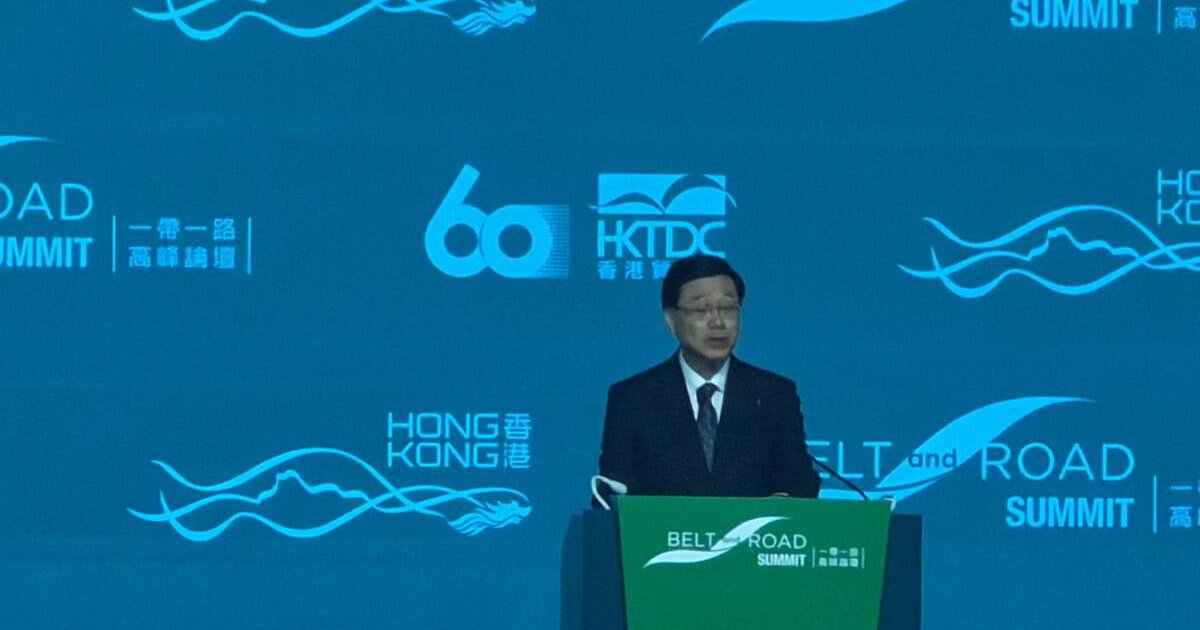
The 11th Belt and Road Summit opened in Hong Kong on September 9, 2026, drawing over 6,000 government leaders and high-profile professionals from more than 70 countries for a two-day forum. Chief Executive John Lee Ka-chiu delivered the opening address, announcing that more than 60 intergovernmental agreements and commercial memoranda of understanding (MOUs) would be exchanged during the event, with projects and deals exceeding US$30 billion in total value . Hong Kong signed an investment promotion and protection agreement with Bangladesh on the same day, while the Investment Promotion Agency inked a cooperation MOU with Zimbabwe's investment development authority . Ministry of Commerce Vice Minister Yan Dong reiterated Beijing's commitment to supporting Hong Kong's expanded participation in regional trade frameworks including the Regional Comprehensive Economic Partnership (RCEP) .
Key Points
- Hong Kong has signed trade agreements with 14 Belt and Road countries, investment pacts with 20 economies, and comprehensive double taxation avoidance agreements with 43 jurisdictions
- Merchandise trade with Belt and Road countries reached approximately US$323 billion in 2025, up nearly 17 percent year-on-year, with nearly 1,500 regional companies maintaining offices in Hong Kong
- Over 100 Belt and Road enterprises are listed on the Hong Kong Stock Exchange, with additional companies including Kazakhstan's national railway company preparing for IPOs
- A new Almaty direct flight service will launch in January 2027, enabling Hong Kong and Kazakhstan to develop hub-to-hub cooperation and strengthening Central Asia connectivity
- China-Belt and Road bilateral merchandise trade reached US$3.3 trillion in 2025, up 5.7 percent year-on-year, outpacing overall trade growth by 2.5 percentage points
Why It Matters
The summit's expanded focus on Central Asia and Middle East exhibition zones, combined with new programs like GoGlobal to help mainland enterprises access global markets through Hong Kong, demonstrates the city's evolving role as a strategic nexus amid shifting geopolitical trade patterns . Vice Minister Yan Dong's emphasis on leveraging Hong Kong's professional services—including legal consultation, financial insurance, and arbitration—to support Belt and Road projects signals Beijing's intent to deepen the city's integration with the initiative . The investment protection agreement with Bangladesh and the Zimbabwe MOU further expand Hong Kong's economic diplomacy network, extending the city's reach into South Asia and Africa while reinforcing its position as a two-way gateway for capital flows between the mainland and emerging markets .
The summit's expanded focus on Central Asia and Middle East exhibition zones, combined with new programs like GoGlobal to help mainland enterprises access global markets through Hong Kong, demonstrates the city's evolving role as a strategic nexus amid shifting geopolitical trade patterns . Vice Minister Yan Dong's emphasis on leveraging Hong Kong's professional services—including legal consultation, financial insurance, and arbitration—to support Belt and Road projects signals Beijing's intent to deepen the city's integration with the initiative . The investment protection agreement with Bangladesh and the Zimbabwe MOU further expand Hong Kong's economic diplomacy network, extending the city's reach into South Asia and Africa while reinforcing its position as a two-way gateway for capital flows between the mainland and emerging markets .