Hong Kong Startup Launches AI Pet Health Platform with 93% Accuracy
AM730 · 1 SOURCESabout 2 hours ago2 MIN
Summary
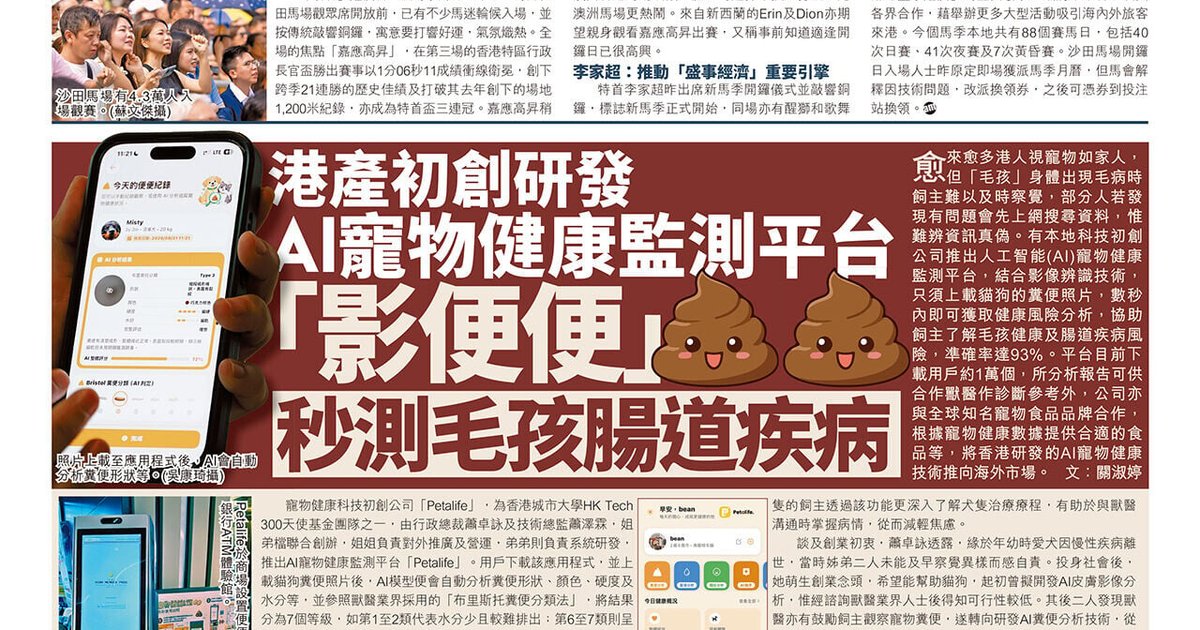
Hong Kong pet health tech startup Petalife, backed by City University of Hong Kong's HK Tech 300 angel fund, has launched an AI-powered pet health monitoring platform that analyzes photographs of cats and dogs' feces to assess intestinal health risks. Co-founded by siblings Siu Cheuk-wing (chief executive) and Siu Chak-lam (technical director), the platform achieves 93% accuracy in detecting over 60 types of intestinal diseases by referencing the veterinary-standard Bristol Stool Classification Scale. The platform, which has attracted approximately 10,000 downloads, has partnered with Nestlé Purina and local veterinary groups to expand its services.
Key Points
- Petalife AI model trained on over 10,000 veterinary-labeled health datasets, analyzing fecal shape, color, hardness, and moisture
- Platform classifies results across 7 Bristol Stool Scale levels, identifying conditions from constipation (levels 1-2) to diarrhea (levels 6-7)
- Database covers over 60 intestinal diseases including lower GI bleeding, parasitic infections, and intestinal inflammation
- Co-founders Siu Cheuk-wing and Siu Chak-lam developed the platform after their childhood dog died from undiagnosed chronic illness
- Company partnered with global pet food brand Nestlé Purina to recommend suitable products based on AI analysis results
- Future features include body condition scoring and integration with home security cameras for automatic image capture
Why It Matters
This technology addresses a critical gap in pet healthcare by enabling early detection of intestinal diseases, which are often difficult for pet owners to identify without veterinary expertise. As Hong Kong's pet ownership rates continue to rise, the platform's integration with veterinary services and international pet food brands positions it as a potential model for AI-driven pet health monitoring that could be exported to global markets .
This technology addresses a critical gap in pet healthcare by enabling early detection of intestinal diseases, which are often difficult for pet owners to identify without veterinary expertise. As Hong Kong's pet ownership rates continue to rise, the platform's integration with veterinary services and international pet food brands positions it as a potential model for AI-driven pet health monitoring that could be exported to global markets .