Tuen Mun Air Quality Reaches Severe Risk Level as Weak Winds Trap Pollutants
HK01 · 5 SOURCES1 day ago2 MIN
Summary
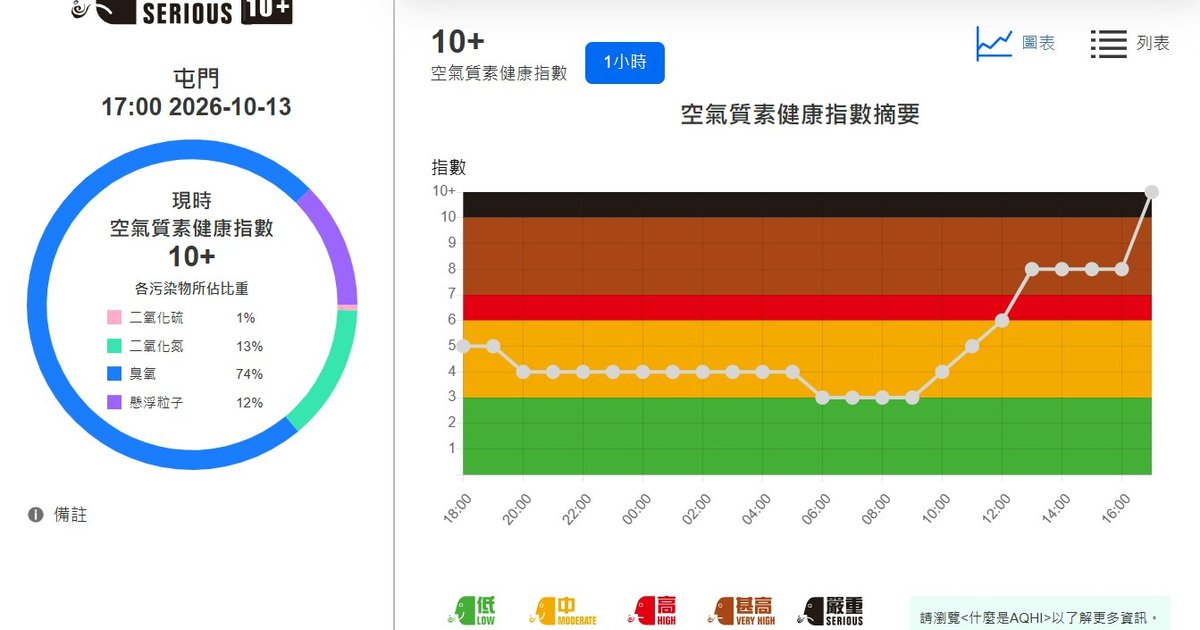
The Environmental Protection Department (EPD) reported Tuesday that Tuen Mun's Air Quality Health Index (AQHI) reached 10+ as of 5pm, the most severe risk level. Weak winds combined with strong sunshine triggered rapid formation of ozone and fine suspended particles across the Pearl River Delta, according to the department. Five of Hong Kong's 18 monitoring stations recorded AQHI levels of 8 or above. The department advised vulnerable groups to avoid outdoor activities and said improvement is expected Wednesday evening when a fresh easterly airstream arrives.
Key Points
- Tuen Mun general monitoring station recorded AQHI of 10+ at 5pm Tuesday, the severe risk level
- North District, Yuen Long, and Sha Tin recorded AQHI of 8 or above, classified as very high risk
- Central and Western, Southern, Eastern, Kwun Tong, and five other districts reached AQHI of 7 (high risk)
- Weak winds this afternoon prevented pollutant dispersion while sunshine promoted photochemical smog
- Education Bureau urged schools to implement protective measures for students
Why It Matters
This episode highlights how regional weather patterns can quickly deteriorate urban air quality, putting children, elderly residents, and those with cardiac or respiratory conditions at heightened health risk. With outdoor workers and students facing disrupted routines, the expected arrival of an easterly airstream Wednesday provides hope for relief, but underscores the need for Hong Kong's air quality monitoring and public health warning systems to remain vigilant during transitional weather periods.
This episode highlights how regional weather patterns can quickly deteriorate urban air quality, putting children, elderly residents, and those with cardiac or respiratory conditions at heightened health risk. With outdoor workers and students facing disrupted routines, the expected arrival of an easterly airstream Wednesday provides hope for relief, but underscores the need for Hong Kong's air quality monitoring and public health warning systems to remain vigilant during transitional weather periods.