HK Dispensary Fraud: 35 Online Shops Delisted as TCM Regulator Cracks Down
HK01 · 4 SOURCESabout 2 hours ago2 MIN
Summary
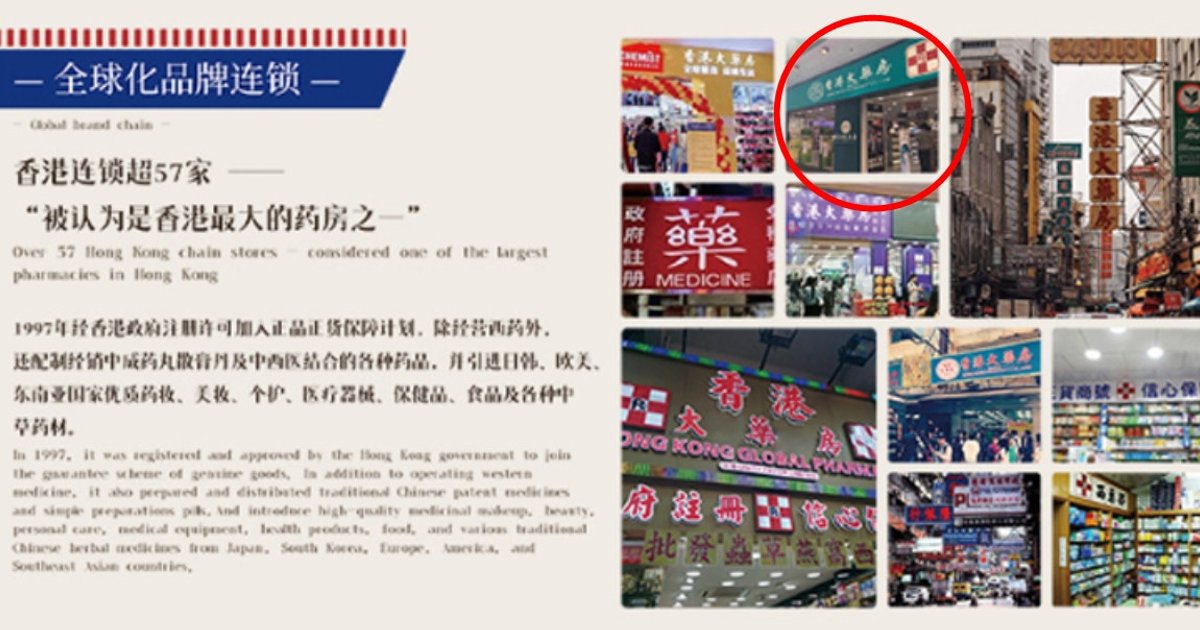
China's National Administration of Traditional Chinese Medicine has ordered five major e-commerce platforms to remove 35 online stores and over 3,300 product listings linked to the Hong Kong Dispensary brand, which was found selling daily-use items falsely marketed as therapeutic products. The investigation revealed nearly 200 Hong Kong companies registered under the brand name, with products bearing fabricated local addresses and claiming to be century-old Hong Kong heritage. Separately, Hong Kong's Health Department is investigating a medical center for allegedly providing an unregistered cancer-prevention vaccine.
Key Points
- The National Administration of Traditional Chinese Medicine identified Hong Kong Dispensary in a special enforcement campaign, with products like Tougu Ointment and Wetness-Removing Pills sold as daily items despite therapeutic claims
- Five major platforms—JD.com, Pinduoduo, Xiaohongshu, Douyin, and Kuaishou—removed 35 shops, 3,318 product links, 342 advertisements, and blocked 460 ad materials
- HK01 investigation revealed these products generated 1.408 million orders and over 106 million yuan in sales, with nearly 200 Hong Kong companies registered under the brand name
- Fines for mainland companies involved ranged from 1,900 yuan to 220,000 yuan, with production halted at one facility in Zhangshu, Jiangxi Province
- The Health Department conducted multiple surprise inspections of seven locations linked to Asia Pacific Medical Center after receiving complaints in July about an unregistered WT1 vaccine claiming cancer prevention
- Anyone supplying unregistered pharmaceutical products faces up to 10 months imprisonment and fines up to HK$242,000; the Health Department has referred the case to the Hong Kong Medical Council
Why It Matters
The dual cases underscore how mainland manufacturers exploit Hong Kong's reputation for quality healthcare products while raising questions about cross-border regulatory coordination in protecting consumers from deceptive marketing in the Greater Bay Area .
The dual cases underscore how mainland manufacturers exploit Hong Kong's reputation for quality healthcare products while raising questions about cross-border regulatory coordination in protecting consumers from deceptive marketing in the Greater Bay Area .