Chan Says Restaurants Must Upgrade Service and Experience
SingTao · 2 SOURCESabout 2 hours ago2 MIN
Summary
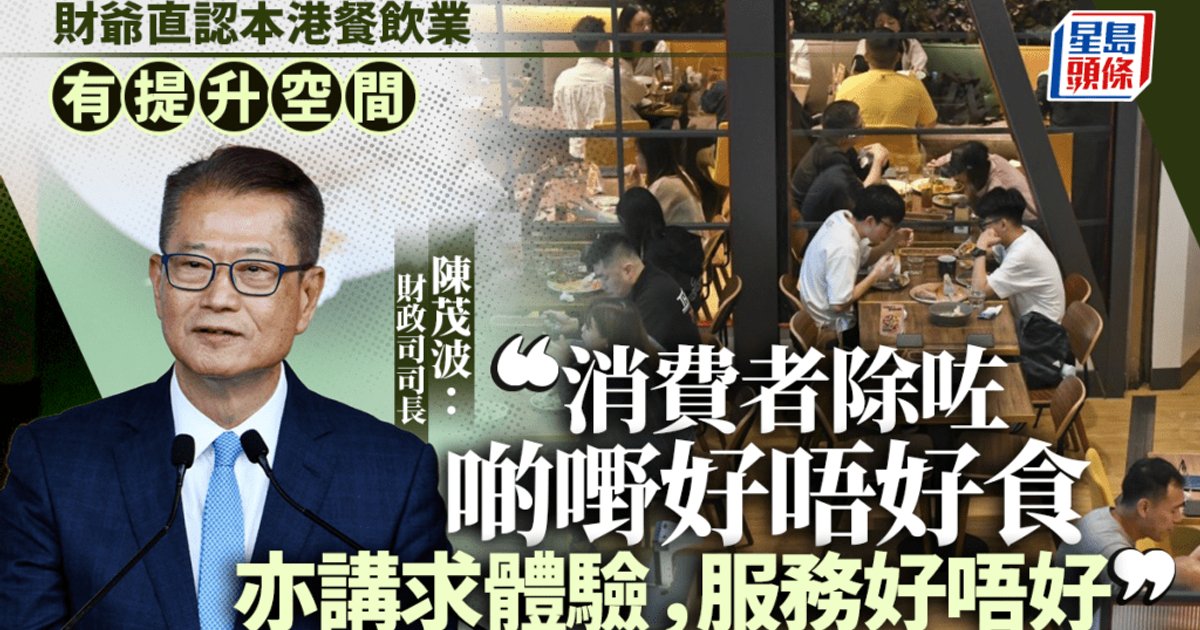
Financial Secretary Paul Chan Mo-po said Hong Kong’s economy performed “quite well” in the first half of 2026, prompting the government to raise its full-year real GDP growth forecast to 3.5% to 4.5% from 2.5% to 3.5%. He said exports were a major driver, domestic demand remained resilient, retail sales had risen for 14 straight months, and the catering sector had recently stabilized with slight year-on-year growth. Even so, Chan said restaurants are under greater pressure, as consumers now judge not only whether food tastes good but also whether the overall experience and service are good, leaving room for improvement in service quality. He added that risks from geopolitics and US interest-rate moves remain manageable, while the government is discussing support for the sector’s upgrading and transformation.
Key Points
- The government last week released the 2026 Half-Year Economic Report and revised second-quarter GDP figures, then raised full-year real GDP growth to 3.5% to 4.5%.
- Speaking on a radio programme on 16 August, Chan said first-half growth was supported by exports, resilient domestic demand, and 14 consecutive months of retail expansion.
- Chan said the catering trade had stabilized in recent months and posted slight year-on-year growth, but remained in an adjustment period amid northbound spending and transformation pressures.
- Hong Kong’s unemployment rate is hovering around 3.7%, with catering and construction among the harder-hit sectors, though construction is expected to steady as projects advance.
- Chan said the government is discussing incentives and funding with the trade to encourage restaurant upgrading, while businesses must keep pace with changing consumer expectations.
Why It Matters
For Hong Kong readers, Chan’s remarks suggest the city’s economic recovery is uneven, with consumer-facing sectors still under strain even as headline growth improves. The message to restaurants is that competing on price or food alone may no longer be enough, making service upgrades and experience-led offerings more important to retaining local spending.