Paul Chan meets mainland regulators and commerce officials in Beijing
Bastillepost · 2 SOURCES1 day ago6 MIN
Summary
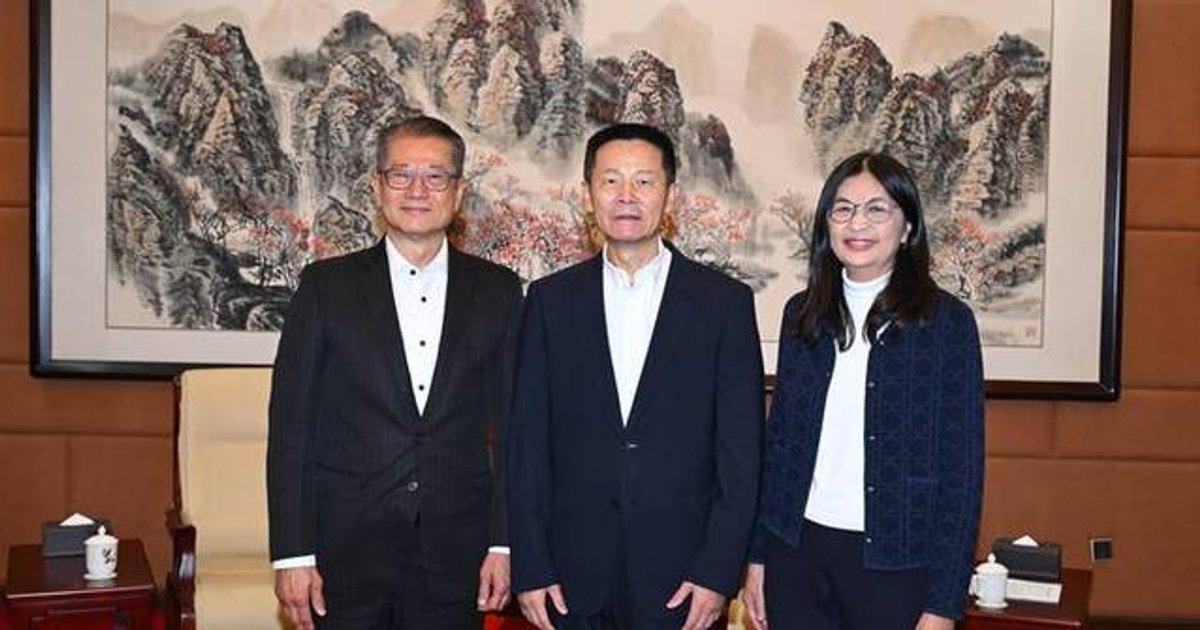
Financial Secretary Paul Chan Mo-po (陳茂波) began his Beijing visit by meeting senior officials from mainland financial and commerce authorities, including China Securities Regulatory Commission Chairman Wu Qing and Ministry of Commerce Assistant Minister Yuan Xiaoming. The discussions covered stronger coordination between Hong Kong and the mainland on securities market regulation and development, as well as deeper bilateral economic and trade cooperation. Secretary for Commerce and Economic Development Algernon Yau Ying-wah (丘應樺), who accompanied Chan, also signed two memorandums of understanding with Ministry of Commerce officials during the trip. Chan said the Hong Kong government would make fuller use of the city’s international business environment, professional services and global networks to reinforce its roles as a connector and value creator.
Key Points
- Chan first visited the China Securities Regulatory Commission in Beijing and met Chairman Wu Qing to discuss closer coordination on securities market regulation and development.
- He then met Ministry of Commerce Assistant Minister Yuan Xiaoming to exchange views on deepening economic and trade cooperation between Hong Kong and the mainland.
- Algernon Yau signed a memorandum under the mainland-Hong Kong Economic and Trade Cooperation Committee mechanism with Sun Yi of the ministry’s Taiwan, Hong Kong and Macao Department.
- Yau also signed a second memorandum with He Yongqian of the ministry’s Free Trade Zone and Port Development Coordination Department on strengthening exchange and cooperation involving free trade zones and ports.
- Chan thanked the Ministry of Commerce for supporting Hong Kong’s trade and economic development, and said he would leave Beijing and return to Hong Kong on Saturday, October 24.
Why It Matters
The meetings and memorandums point to continued official efforts to tie Hong Kong more closely into mainland regulatory and trade frameworks while preserving the city’s role in cross-border finance and commerce. For Hong Kong businesses and market participants, closer policy coordination could affect how the city positions itself as an international trade centre and as an intermediary linking mainland opportunities with global capital and services.