Greenpeace Survey Reveals 80% of Elderly Suffered Heat-Related Illness; Urges Government Support
On.cc · 2 SOURCESabout 2 hours ago2 MIN
Summary
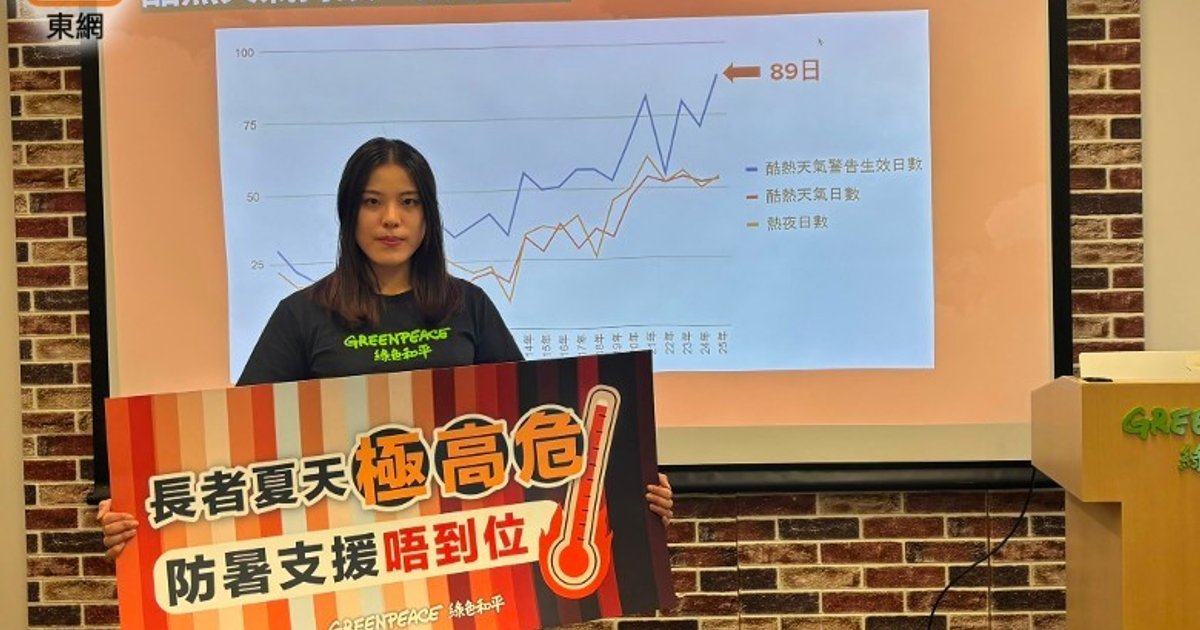
Greenpeace released survey results on August 24 showing that nearly 80% of 127 elderly respondents experienced physical discomfort, emotional distress, or sleep disturbances caused by extreme heat this summer. Hospitalizations for heat-related conditions among residents aged 65 and above increased dramatically by 16 times over the past decade, rising from just 4 cases in 2015 to 68 in 2024. The organization is urging the government to establish a comprehensive high-temperature action plan with cross-departmental coordination, citing gaps in current support systems.
Key Points
- Survey conducted June-July 2024 in seven districts including Kwun Tong, Wong Tai Sin, and Central and Western, interviewing 127 elderly aged 65 and above
- Nearly 80% of elderly experienced heat-related physical symptoms, mood changes, or sleep issues; 5.5% required hospitalization
- Heat-related hospitalizations for 65+ surged from 4 cases in 2015 to 68 in 2024, a 16-fold increase
- 35% of elderly rarely or never use air conditioning due to electricity costs; over 50% of subdivided unit residents avoid cooling
- 70% of elderly mistakenly believed staying indoors eliminates heat stroke risk
- 95% rarely or never used government temporary heat shelters; 80% received no heat-related community services
Why It Matters
The survey exposes a critical gap in Hong Kong's climate adaptation policies. While the government has established mechanisms for cold weather responses, including proactive outreach to vulnerable elderly, no equivalent system exists for heatwaves. This leaves frail elderly without early identification or intervention, placing enormous strain on the public healthcare system and risking preventable deaths .
The survey exposes a critical gap in Hong Kong's climate adaptation policies. While the government has established mechanisms for cold weather responses, including proactive outreach to vulnerable elderly, no equivalent system exists for heatwaves. This leaves frail elderly without early identification or intervention, placing enormous strain on the public healthcare system and risking preventable deaths .