Financial Secretary Paul Chan Urges Hong Kong-Singapore Cooperation to Strengthen Asia's Global Voice
RTHK · 3 SOURCESabout 3 hours ago2 MIN
Summary
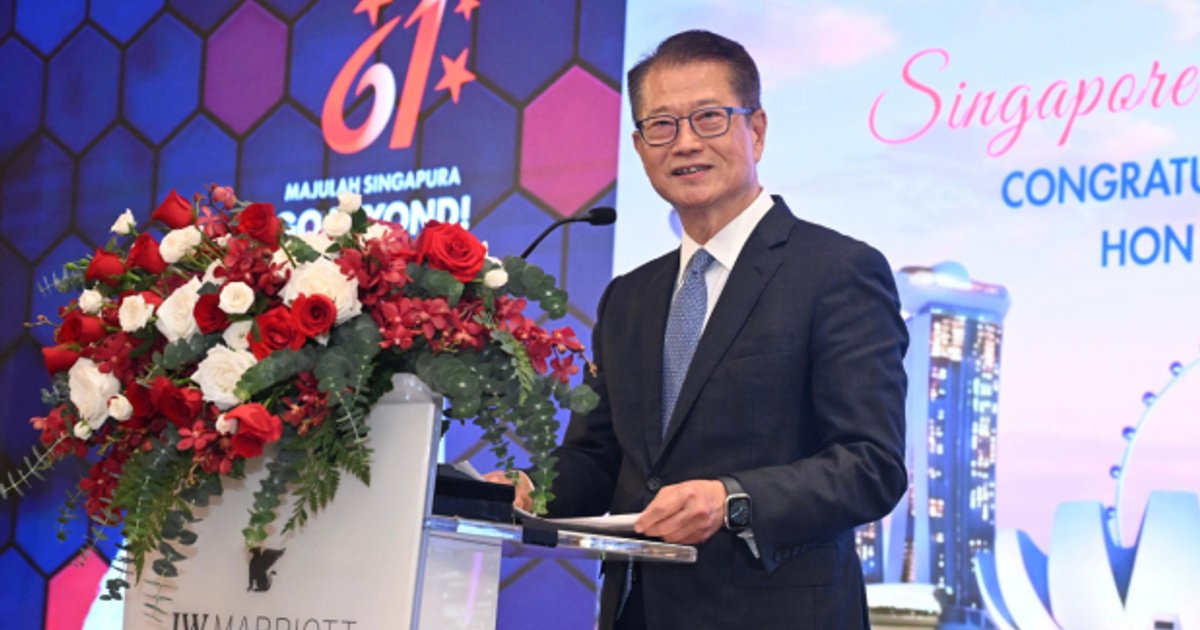
Financial Secretary Paul Chan Mo-po addressed Singapore's National Day dinner, highlighting the dynamic "co-opetition" relationship between Hong Kong and Singapore. While the two financial hubs maintain healthy rivalry, Chan emphasized the need for greater collaboration amid shifting geopolitical landscapes and global economic transformations. He announced substantial bilateral investment figures and outlined shared priorities including artificial intelligence governance, sustainable finance standards, and regional infrastructure development.
Key Points
- Singapore's investment in Hong Kong reached HK$310 billion, with over 28,000 Singaporeans residing in Hong Kong
- Hong Kong's investment in Singapore totaled approximately HK$340 billion, creating a combined bilateral investment exceeding HK$650 billion
- 590 Singapore companies operated in Hong Kong last year, a 14% year-on-year increase; two major Singapore financial institutions purchased Hong Kong offices for about HK$4 billion
- Hong Kong Science and Technology Parks' venture capital fund made a strategic investment in a Singapore technology company
- Both economies face common challenges and opportunities from AI and AI agents, including productivity gains and labor market adjustments
- Hong Kong is developing the Northern Metropolis as a gateway connecting the Greater Bay Area with Asia, inviting Singaporean participation
Why It Matters
The proposed coordination on green finance classification, AI governance frameworks, and cross-border data rules could position the two city-states as thought leaders shaping regional standards, potentially influencing how Asian economies navigate emerging technologies and sustainability requirements while reducing compliance costs for businesses across the region .
The proposed coordination on green finance classification, AI governance frameworks, and cross-border data rules could position the two city-states as thought leaders shaping regional standards, potentially influencing how Asian economies navigate emerging technologies and sustainability requirements while reducing compliance costs for businesses across the region .