FIFA Slams UEFA's US Court Evidence Request as 'Smear Campaign'
SingTao · 3 SOURCESabout 1 hour ago2 MIN
Summary
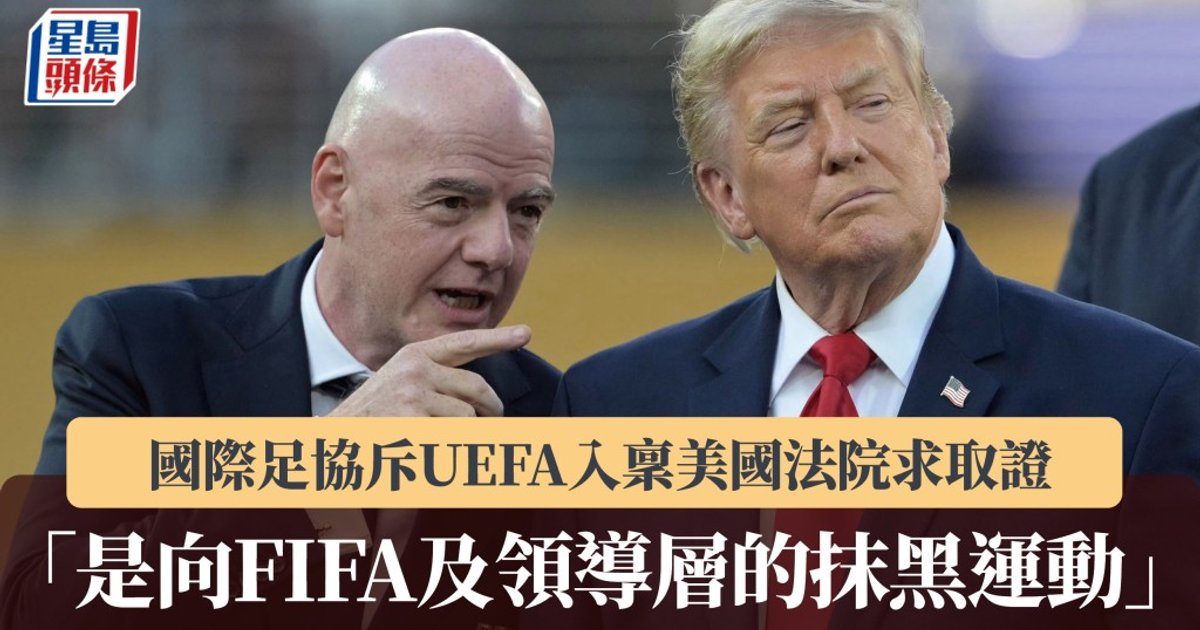
FIFA has escalated its war of words with UEFA by filing court documents in the United States that accuse its European counterpart of conducting a coordinated "smear campaign" against FIFA and its leadership. The dispute centers on FIFA President Gianni Infantino's proposed FIFA Forward Enterprise plan, which aims to sell World Cup equity to private investors for $4.2 billion. UEFA filed evidence-gathering requests in courts in New York, Florida, and Colorado last week, claiming the plan represents criminal mismanagement for personal gain. FIFA responded by labeling UEFA's legal actions as legally deficient and politically motivated.
Key Points
- FIFA President Gianni Infantino proposed the FIFA Forward Enterprise plan to sell World Cup equity to private equity investors for $4.2 billion .
- UEFA filed evidence-gathering requests in three US state courts—New York Southern District, Florida, and Colorado—targeting documents related to Josh Kushner's Thrive Capital, which participated in the FFE plan .
- FIFA's court filing stated that UEFA's requests are "nothing more than a press release" marking the beginning of a weeks-long smear campaign against FIFA and its leadership .
- UEFA's court documents allege that Infantino and his inner circle sought to obtain permanent stakes in FIFA's most valuable asset for personal profit while harming other stakeholders .
- FIFA contends that UEFA's opposition is economically motivated to prevent developing nations from gaining financial resources to compete with European football powers .
Why It Matters
This legal battle exposes deep fractures within global football governance, with FIFA arguing that UEFA's actions threaten the democratic rights of smaller member associations to develop their football programs through capital investment . The outcome could set a precedent for how international sports organizations handle disputes over commercial development initiatives and potentially reshape the balance of power between European and non-European football stakeholders.
This legal battle exposes deep fractures within global football governance, with FIFA arguing that UEFA's actions threaten the democratic rights of smaller member associations to develop their football programs through capital investment . The outcome could set a precedent for how international sports organizations handle disputes over commercial development initiatives and potentially reshape the balance of power between European and non-European football stakeholders.