Feng Shui Solutions for Elevator-Facing Doors to Retain Household Wealth
SingTao · 1 SOURCESabout 2 hours ago2 MIN
Summary
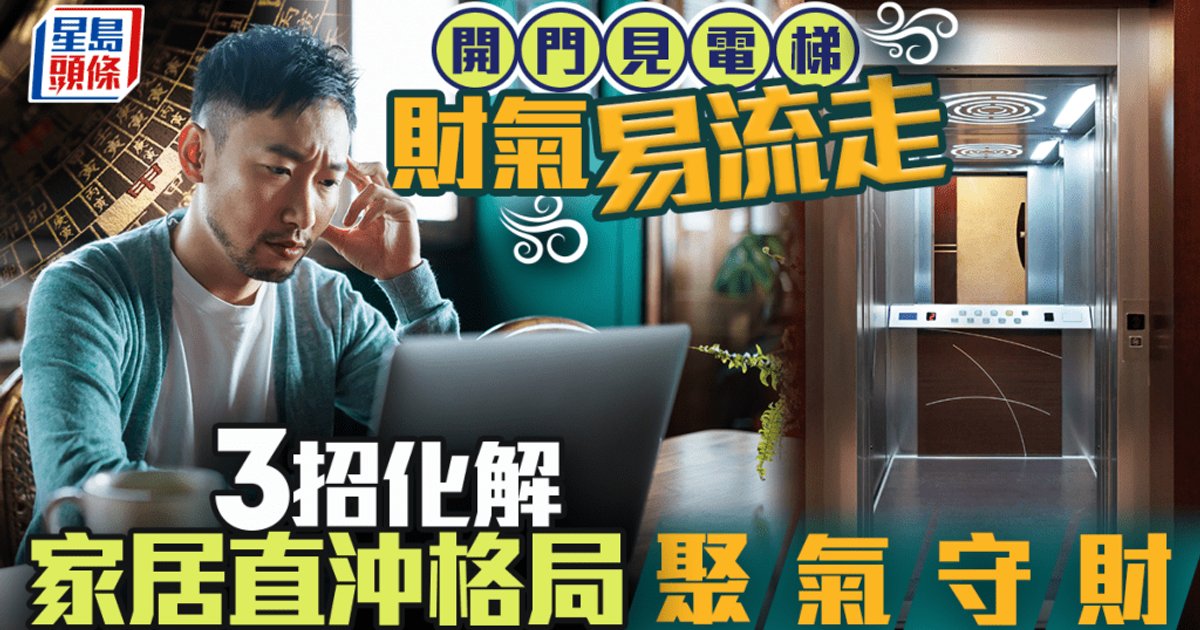
This article examines a feng shui consultation case in Tsuen Wan where an online shop owner named Ah Chun experienced persistent financial difficulties despite steady business growth. The feng shui practitioner identified that his front door directly faced the elevator, creating a "road impact" pattern that disperses positive energy. Combined with a large mirror in the entrance hall facing the door, these spatial arrangements were causing qi to flow out as quickly as it entered. Three practical solutions are proposed to address the issue without major renovations.
Key Points
- Ah Chun, a man in his forties, runs an online shop with his wife and daughter in a Tsuen Wan housing estate, where his front door directly faces the elevator .
- Despite monthly orders flowing in steadily, his bank balance never matches expectations, with funds described as "water over a duck's back" .
- Traditional feng shui principles state that "qi multiplies when curved, scatters when direct" and that entrances should face an open hall with circulating energy .
- The elevator creates constant movement, sound, and visual disturbance that directly penetrates the private living space when the door opens .
- Three remedies include installing a half-height screen or tall shoe cabinet inside the door, relocating the entrance mirror to a side wall, and adding green plants and stable decorative objects .
Why It Matters
For Hong Kong residents living in high-density developments where elevator proximity maximizes floor efficiency, understanding the impact of spatial arrangements on psychological well-being is valuable. The deeper principle—that environment influences psychology, which influences behavior and ultimately financial discipline—applies beyond traditional feng shui concepts to modern spatial psychology. These practical adjustments can help households achieve greater stability and security in their living environment.
For Hong Kong residents living in high-density developments where elevator proximity maximizes floor efficiency, understanding the impact of spatial arrangements on psychological well-being is valuable. The deeper principle—that environment influences psychology, which influences behavior and ultimately financial discipline—applies beyond traditional feng shui concepts to modern spatial psychology. These practical adjustments can help households achieve greater stability and security in their living environment.