Krakow Shooting Leaves Six Dead in Central Square Attack
SingTao · 2 SOURCESabout 3 hours ago2 MIN
Summary
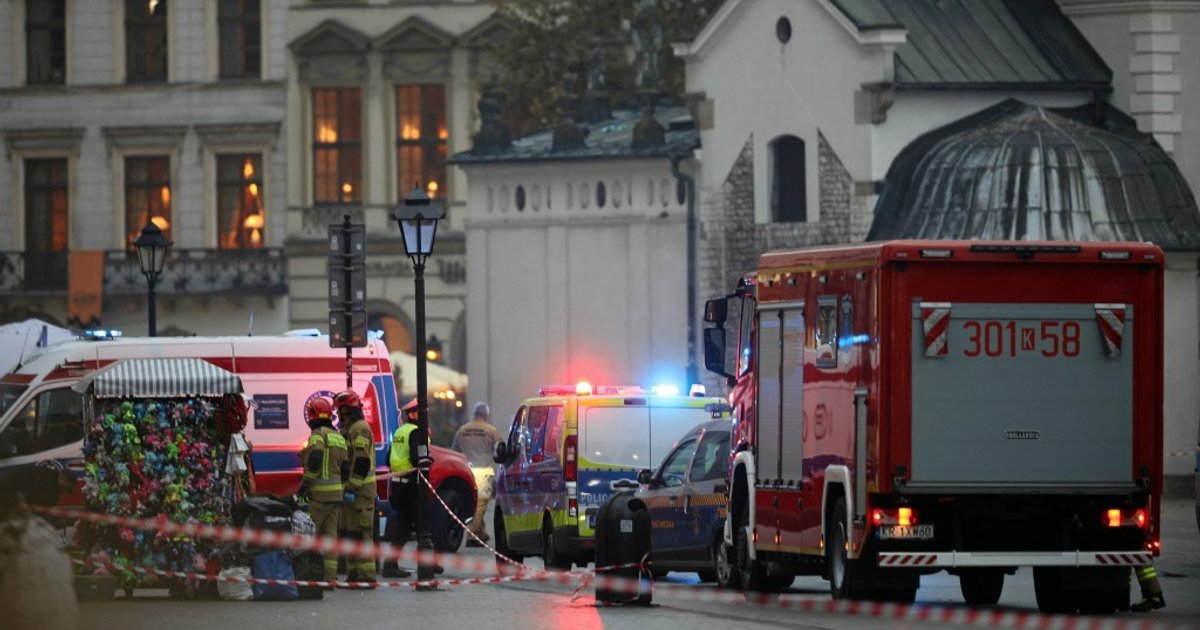
A mass shooting occurred in the main square of Krakow, Poland's southern city, on Saturday afternoon, November 7, leaving six people dead and 16 injured. Police shot and wounded the suspected attacker, a 25-year-old local man wearing military camouflage and body armor, during a confrontation. The defense minister described the attack as a terrorist act targeting civilians.
Key Points
- The shooting took place around 3 PM local time when the suspect drove into the central square and randomly fired at passersby using a military-style rifle
- Police intercepted the suspect at the intersection of Dietla Street and Stradom Street, where he was shot and injured before being hospitalized
- The suspect wore military camouflage uniform and a bulletproof vest, with additional weapons and ammunition recovered from his vehicle
- The interior minister stated the attacker was obsessed with far-right ideology, held radical views, and harbored extreme nationalist beliefs
- Polish President Karol Nawrocki and Prime Minister Donald Tusk both issued statements expressing condolences and promising full investigations
Why It Matters
This attack represents one of the deadliest mass shootings in Poland in recent years, raising serious concerns about domestic extremism and firearms accessibility. The suspected terrorist classification signals potential implications for Poland's security posture and counter-extremism policies, while the mayor's decision to keep the city open to tourists underscores the delicate balance between security and maintaining normalcy in a major European tourist destination .
This attack represents one of the deadliest mass shootings in Poland in recent years, raising serious concerns about domestic extremism and firearms accessibility. The suspected terrorist classification signals potential implications for Poland's security posture and counter-extremism policies, while the mayor's decision to keep the city open to tourists underscores the delicate balance between security and maintaining normalcy in a major European tourist destination .