Customs Seizes HK$1.4 Billion Drugs in Joint Crackdown
HK01 · 2 SOURCESabout 1 hour ago12 MIN
Summary
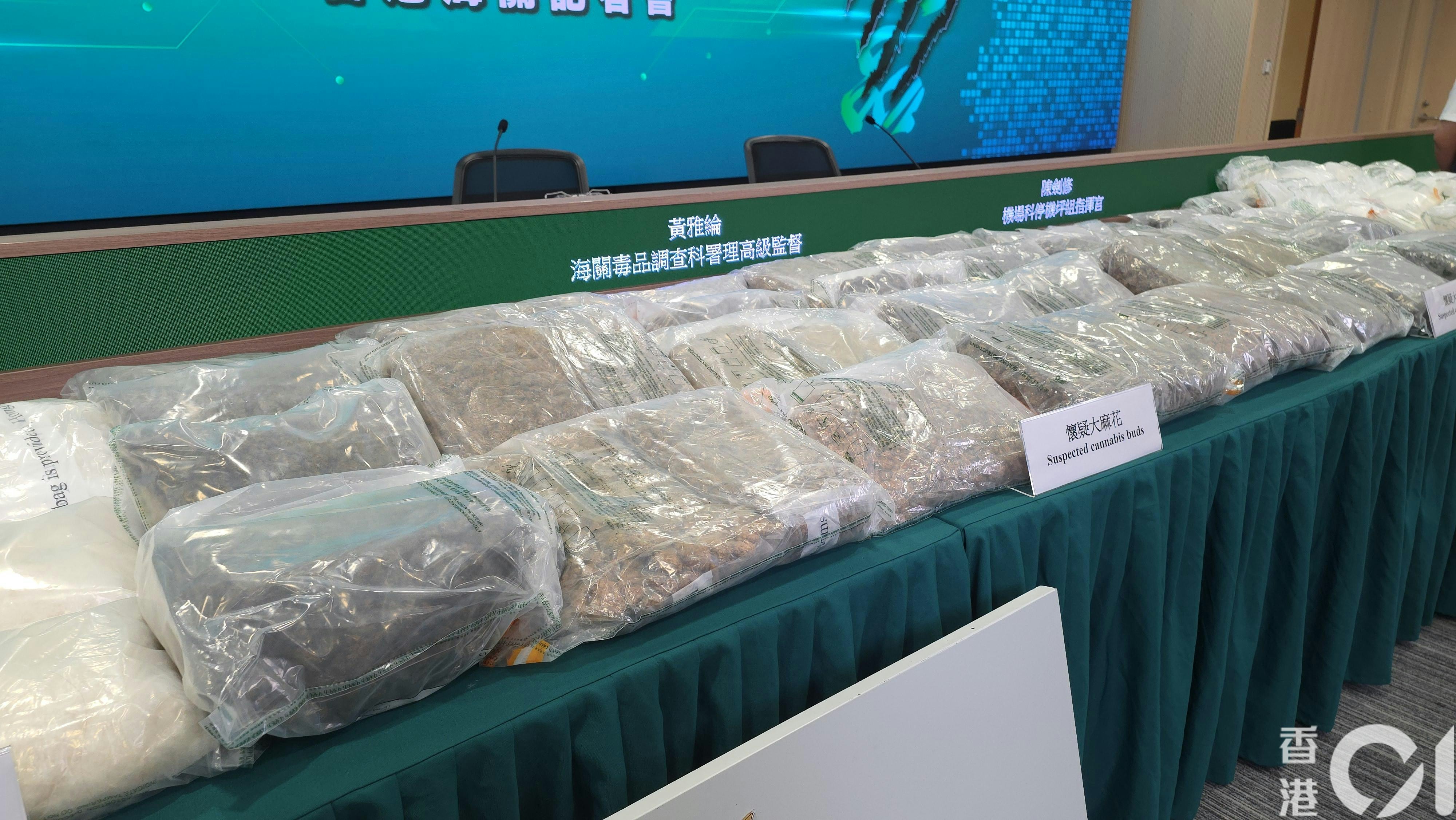
Hong Kong Customs said on Tuesday that a four-month joint operation with mainland and overseas law enforcement agencies dismantled 424 drug trafficking cases in and around Hong Kong International Airport and seized about 6.1 tonnes of suspected drugs worth roughly HK$1.4 billion. The department said traffickers used Hong Kong's aviation links as a transshipment hub and concealed narcotics in everyday items including statues, suitcases, paint tins and sugar-like blocks.
Key Points
- The operation, conducted from May to August during the summer travel peak, targeted smuggling through air cargo, passenger traffic and freight channels with mainland and overseas partners.
- Customs reported 424 cases, including 118 through passenger channels and 306 through cargo channels, with 150 arrests involving suspects aged 18 to 68.
- Seized drugs included about 3.6 tonnes of cannabis, 2.2 tonnes of ketamine, 199 kilograms of cocaine, 60 kilograms of heroin and 48 kilograms of methamphetamine.
- Airport-related cases during the operation involved drugs worth about HK$750 million, up about 90% year on year, with 327 cases and 3.3 tonnes seized.
- Customs said 104 of those arrested were aged 18 to 40, about 70% of the total, underscoring concerns that younger people were being drawn into cross-border trafficking.
- Customs said the operation was code-named “Blazing Formation” and was launched as summer passenger volumes rose and students travelled after public examinations or during school holidays. Among those arrested, about 80% were from Asia, 16% from Europe, 3% from the Americas and 1% from Africa.
- Officials disclosed four representative cases. On June 5, officers stopped a 23-year-old local woman arriving in Hong Kong from Sao Paulo via Istanbul. An X-ray scan found two dense objects in her suitcase, and officers later discovered two roughly made white statues hidden inside gift boxes under clothing. A Raman spectrometer test was positive for cocaine, and Customs said 3.4 kilograms of suspected cocaine worth about HK$2.7 million was found inside the statues.
- In another passenger case on August 25, officers intercepted a 40-year-old mainland Chinese man arriving from Kuala Lumpur. X-ray analysis showed abnormalities at the bottom of his suitcase. After removing his belongings, officers found the case unusually heavy, unzipped the lining and uncovered a wooden board concealing about 2 kilograms of suspected ketamine worth about HK$800,000.
- In an air cargo case on June 19, Customs used risk assessment to target a shipment from the Netherlands declared as paint. X-ray screening showed unusual density patterns in some cartons, and officers found that the metal tins looked like ordinary paint containers but had no liquid movement when shaken. Opening the tins revealed bagged white crystals, leading to the seizure of about 100 kilograms of suspected ketamine worth about HK$38 million.
- In another cargo case on July 14, officers targeted a shipment from Germany declared as sugar cubes. Customs said the sender was a German cleaning products company, making the declared goods commercially suspicious, especially given the high cost of air freight for low-value sugar. Officers identified 17 suspicious plastic containers and found white block-shaped suspected ketamine resembling sugar cubes, weighing about 131 kilograms and valued at about HK$51 million.
- Customs airport apron unit commander Chan Kim-sau (陳劍修) said traffickers kept changing their methods and tried to disguise drugs as daily necessities, gifts or food, but officers still detected the shipments. Acting Senior Superintendent Wong Nga-lun (黃雅綸) of the Drug Investigation Bureau said traffickers sought to buy drugs in lower-value source markets and route them through Hong Kong to higher-value overseas destinations for profit, but Customs had cut off that supply chain at the airport
- Customs said it also carried out multiple controlled delivery operations during follow-up investigations, arresting 25 more people and seizing an additional 20.5 kilograms of drugs in the city as it pursued local distribution networks behind the import cases
Why It Matters
For Hong Kong, the case load points to sustained pressure on the airport as both a gateway and a transit point for international narcotics movements. The emphasis on younger suspects and on concealed drugs in ordinary goods suggests enforcement is likely to stay focused on passenger screening, cargo risk analysis and follow-up action against local distribution networks.