People’s Daily Calls Tesla Roadster a Concept Show
SingTao · 2 SOURCES1 day ago2 MIN
Summary
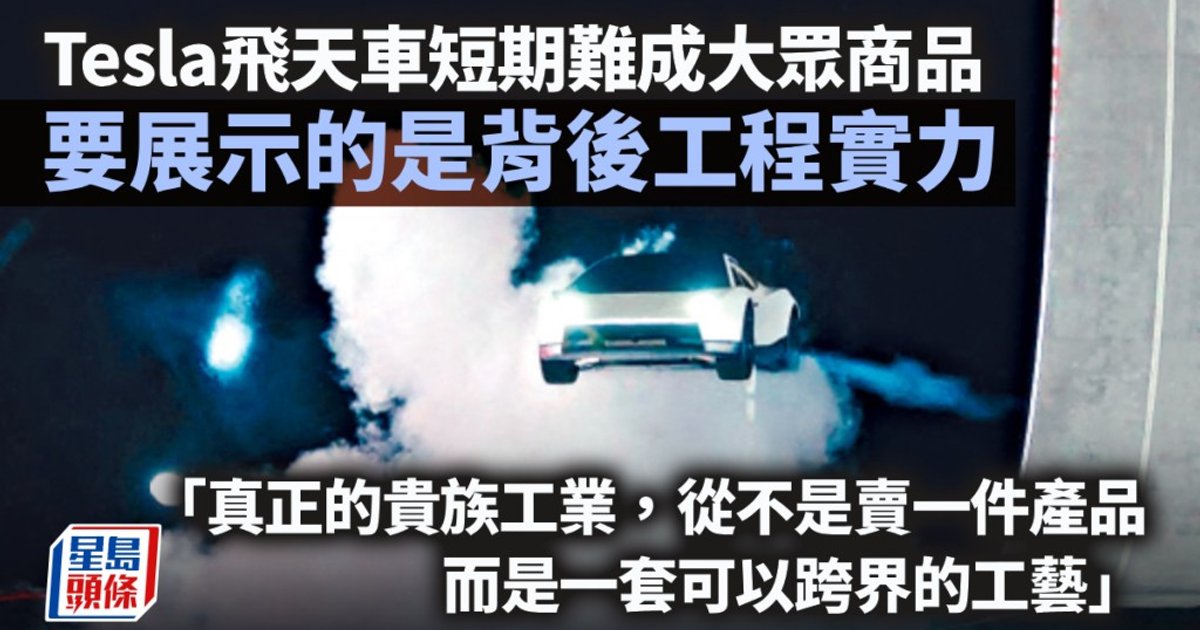
A commentary published on October 21 by Renmin Sharp Review, a channel under the People’s Daily, said Tesla’s new Roadster should not trigger either panic or dismissal in China’s electric-vehicle sector, describing the display as more of a “concept show” than a practical daily-use car. The piece said technology demonstrations do not mean a product is mature or ready for broad everyday deployment, and argued China’s EV industry should neither feel inferior nor reflexively belittle Tesla’s latest showcase. A separate analysis published on October 24 said the Rocket version of the Roadster is unlikely to become a mass-market product in the next few years because it would run into road, low-altitude, aviation and product-liability regulation. That analysis argued the real significance lies in Tesla’s underlying engineering, including active aerodynamics, electric drive systems and actuator technologies that could be applied across cars, robots, aircraft and industrial equipment
Key Points
- The People’s Daily-affiliated commentary on October 21 said reactions that China had been “left behind” or that the Roadster was just a toy were both too extreme
- It said the Roadster’s flying effect looked striking, but was closer to a polished concept demonstration than a vehicle ready for normal daily driving
- The commentary cited BYD, CATL and Huawei as examples of Chinese companies building innovation in speed, charging technology and intelligent driving
- It also cited data saying China accounts for 35.6% of global disclosed automotive patents, meaning more than one in three such patents comes from China
- SingTao’s October 24 analysis said the Rocket Roadster sacrifices the front passenger seat for a large compressed-gas system and faces multiple regulatory barriers
Why It Matters
For Hong Kong readers, the debate is less about whether a car can briefly “fly” and more about how to judge technology claims against regulation, commercial viability and real-world use. The two reports together suggest headline-grabbing demonstrations may shape investor and consumer sentiment, but the harder test remains whether the technology can clear safety rules and turn into profitable products.