US Treasury Buyback Disappoints Markets; 10-Year Yield Hits 3-Year High of 4.85%
SingTao · 4 SOURCESabout 2 hours ago2 MIN
Summary
US Treasury Secretary Scott Bessent announced an expanded bond buyback program on September 10, 2026, with the first operation purchasing up to $6 billion in long-term government bonds. While this represents a threefold increase from the initially announced $2 billion, the figure fell short of market expectations for $8-10 billion. The 10-year Treasury yield rose to 4.85%, reaching a three-year high, as investors expressed disappointment with the scale of intervention. The yield spread between US and Chinese 10-year bonds widened to a record 317 basis points. Treasury officials maintain that the buyback aims to improve market liquidity rather than directly manipulate bond prices.
Key Points
- Treasury's first expanded buyback operation will purchase up to $6 billion in long-term bonds, triple the original $2 billion announcement
- 10-year Treasury yield surged to 4.851%, a three-year high, while China's 10-year yield stood at 1.681%
- Morgan Stanley analysts suggested $10 billion represents a feasible upper limit for the buyback program
- Deutsche Bank strategist Steven Zeng remarked, "The Treasury has created a monster and now must keep feeding it"
- Treasury auctioned $39 billion in 10-year bonds with a winning yield of 4.834%, the highest since 2007
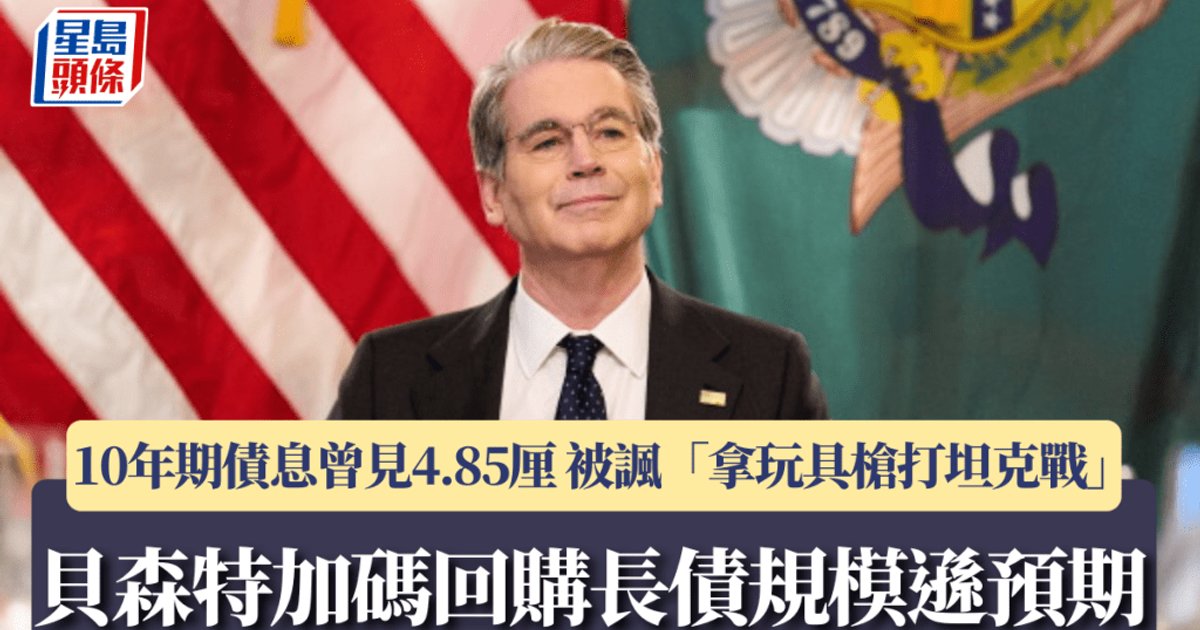
- Brown Brothers Harriman's Elias Haddad criticized the move: "The Treasury is bringing a toy gun to a tank fight"
- The US-China 10-year bond yield spread widened to a record 317 basis points
- Treasury officials stated that six remaining buyback operations this fiscal quarter will each be at least $4 billion
Why It Matters
The disappointing buyback scale signals that monetary authorities face limited tools to combat persistent inflation pressures and fiscal concerns. As US-China interest rate differentials expand to record levels, capital flow dynamics could shift significantly, affecting global investment patterns and currency valuations that directly impact Hong Kong's linked exchange rate system and financial market stability .
The disappointing buyback scale signals that monetary authorities face limited tools to combat persistent inflation pressures and fiscal concerns. As US-China interest rate differentials expand to record levels, capital flow dynamics could shift significantly, affecting global investment patterns and currency valuations that directly impact Hong Kong's linked exchange rate system and financial market stability .