Hong Kong Athletes Gear Up for Asian Games as Elite Sports System Delivers Results
SingTao · 1 SOURCESabout 2 hours ago2 MIN
Summary
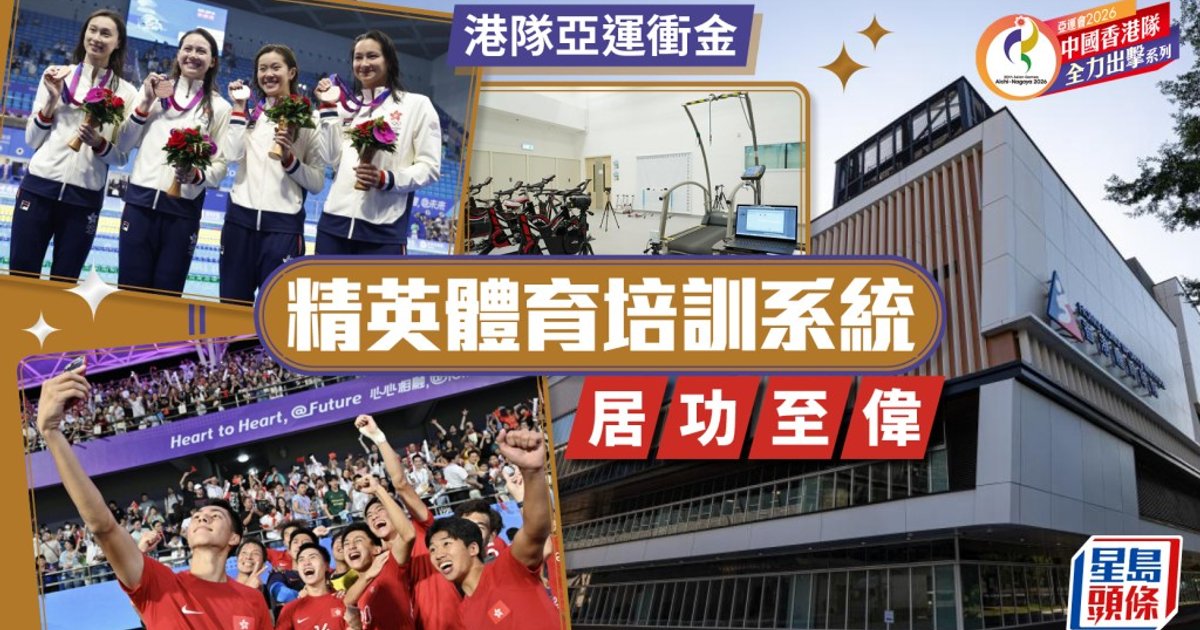
The Hong Kong elite sports training system has evolved significantly, with government investment and infrastructure upgrades positioning the city-state's athletes for success at major international competitions. The 2026 Asian Games, commencing next month, will test these enhanced capabilities as Hong Kong athletes enter their final preparations.
Key Points
- Hong Kong Sports Institute received nearly HK$1 billion in government funding for 2026-27, marking a 30% increase over five years
- A new institute building, constructed with over HK$1 billion in government funding, opened in late 2024, featuring expanded venues including a table tennis hall growing from 850 sqm to 1,400 sqm and a fencing hall doubling to nearly 1,700 sqm
- The HK$300 million Sports Science and Technology Funding Plan, jointly established by the government and Hong Kong Jockey Club Charity Trust in 2022, supports sports medicine, nutrition, and psychology services
- The table tennis team has arranged for the men's squad to train in Huangshi, mainland China, while Shanghai East China University of Science and Technology will visit Hong Kong in early September for simulation matches with the women's team
- Artificial intelligence has been integrated into training, reducing motion analysis time from one month to half a day for one second of footage
Why It Matters
The systematic investment in elite sports reflects Hong Kong's ambition to establish athletics as a viable professional career path, with expanded scholarship programs supporting dual development in sports and education. As Asian Games competition intensifies—with athletes competing for margins measured in hundredths of a second—Hong Kong's comprehensive support infrastructure could prove decisive in determining medal outcomes .
The systematic investment in elite sports reflects Hong Kong's ambition to establish athletics as a viable professional career path, with expanded scholarship programs supporting dual development in sports and education. As Asian Games competition intensifies—with athletes competing for margins measured in hundredths of a second—Hong Kong's comprehensive support infrastructure could prove decisive in determining medal outcomes .