Man Sells Coffee at Funeral Home, Netizens Dub Business 'Sweet Blood Funeral City'
AM730 · 2 SOURCESabout 3 hours ago2 MIN
Summary
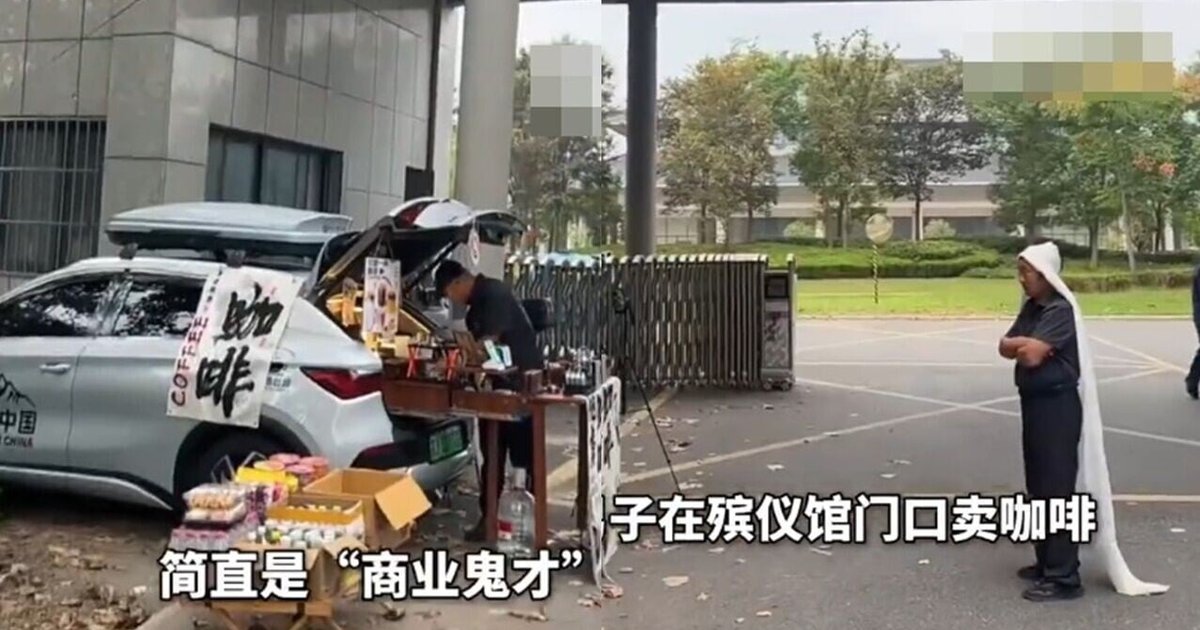
A 34-year-old man in Xiangshui County, Yancheng, Jiangsu Province, has become an internet sensation after setting up a coffee stall outside a local funeral home. The vendor, known online as Han Ge, operated from 5am to 9am daily, targeting grieving families who had stayed up all night keeping vigil at the mortuary. His unconventional business strategy drew widespread attention, with netizens playfully dubbing him a "business genius" and christening his coffee as "Sweet Blood Funeral City" and "Ancient Soul Coffee." Following backlash and intervention by funeral home staff, the vendor announced he would cease operations at the location.
Key Points
- The vendor, Han Ge, is a local post-80s generation resident of Xiangshui County, Yancheng, with over 5,000 social media followers
- He positioned himself as the "first person to sell coffee at a funeral home," operating from 5am to 9am near the mortuary entrance
- Han Ge explained that mourners staying up through the night needed coffee to "refresh themselves," and that "this place has good business, every day there are people"
- Netizens created mock coffee brand names including "Ancient Soul Coffee," "Sweet Blood Funeral City," and "Yin Yang Coffee Point"
- Funeral home staff confirmed the vendor was an outside mobile operator who appeared two to three times, and after receiving guidance, he promised not to return
Why It Matters
The incident highlights how some entrepreneurs in mainland China's smaller cities are pushing creative boundaries to find profitable niches in unexpected places. While the vendor's practical reasoning—serving exhausted mourners—showed genuine market awareness, the controversy underscores cultural sensitivities around death-related spaces in Chinese society. The swift intervention by authorities and the vendor's eventual compliance also illustrate how unconventional business ideas quickly face regulatory and social checks in China.
The incident highlights how some entrepreneurs in mainland China's smaller cities are pushing creative boundaries to find profitable niches in unexpected places. While the vendor's practical reasoning—serving exhausted mourners—showed genuine market awareness, the controversy underscores cultural sensitivities around death-related spaces in Chinese society. The swift intervention by authorities and the vendor's eventual compliance also illustrate how unconventional business ideas quickly face regulatory and social checks in China.