Subdivided Flat Temperatures Exceed 29°C at Night, Feels-like Hits 50°C
On.cc · 1 SOURCESabout 2 hours ago2 MIN
Summary
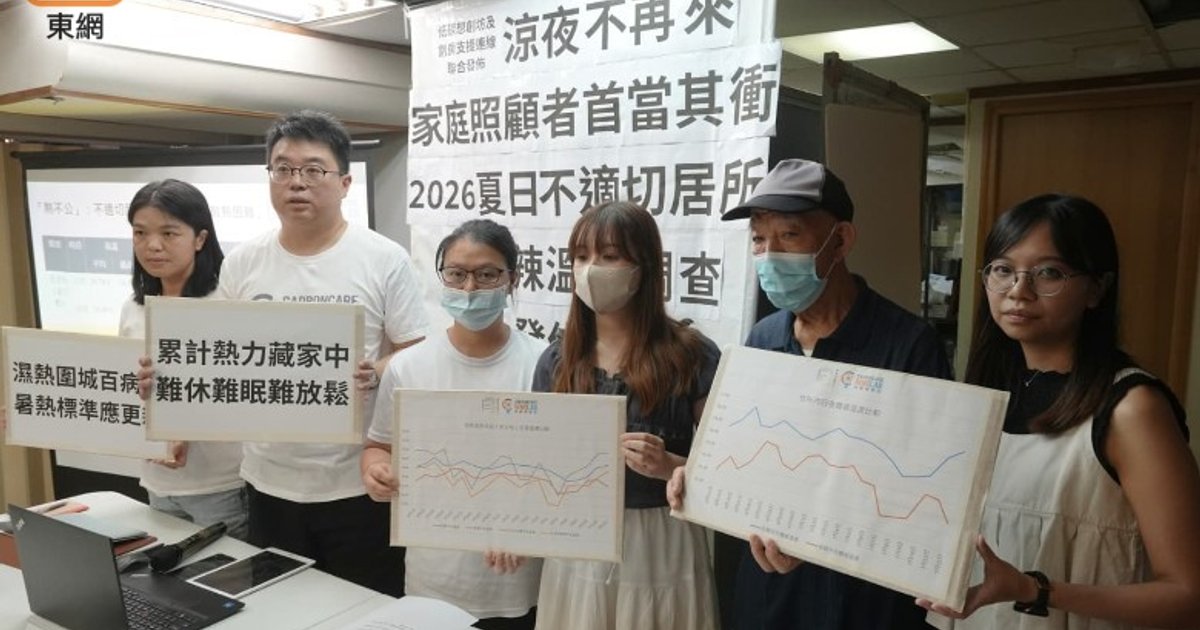
Two Hong Kong civil organizations—Low Carbon Greater China and the Subdivided Flat Support Network—released joint survey findings on July 16, revealing that inadequate housing units including subdivided flats, rooftop houses, and platform structures experienced nighttime temperatures exceeding the Hong Kong Observatory's 28°C "hot night" threshold. The study tracked 86 households across 78 units from June 22 to July 12, documenting extreme indoor heat conditions. Among the findings, 48% of respondents were family caregivers, 89% cited air-conditioning electricity costs as a heavy burden, and 80% reported at least one heat-related physical symptom. The organizations are calling for mandatory cooling equipment standards and comprehensive support measures.
Key Points
- Survey conducted June 22 to July 12 monitored 86 households in 78 inadequate housing units, recording daytime average temperatures of 29.93°C and nighttime averages of 29.42°C
- Daytime maximum temperature reached 44.4°C with feels-like of 52.21°C, while nighttime maximum feels-like temperature hit 50°C
- Among 73 surveyed residents, family caregivers comprised 48%, with 89% stating air-conditioning costs imposed a heavy burden
- A case study featured Ah Kam (pseudonym), a caregiver living with two family members in an 80 sq ft subdivided flat in Sai Wan Ho, paying over HK$400 monthly for summer electricity
- Ventilation deficiencies were widespread: 7.7% of units were completely windowless, 17.9% had only one openable window, and 19.2% lacked exhaust fans
Why It Matters
These findings expose a systemic "heat injustice" faced by Hong Kong's most vulnerable residents, who cannot escape extreme temperatures even at night and face difficult trade-offs between health and financial survival. As climate change intensifies, without mandatory housing standards and targeted support for high-risk groups like caregivers, the health risks and mortality rates among subdivided flat residents will likely escalate significantly.
These findings expose a systemic "heat injustice" faced by Hong Kong's most vulnerable residents, who cannot escape extreme temperatures even at night and face difficult trade-offs between health and financial survival. As climate change intensifies, without mandatory housing standards and targeted support for high-risk groups like caregivers, the health risks and mortality rates among subdivided flat residents will likely escalate significantly.