Mongolia Grassland Fire Approaches China Border; 2,000+ Deployed to Block Flames
AM730 · 3 SOURCESabout 3 hours ago2 MIN
Summary
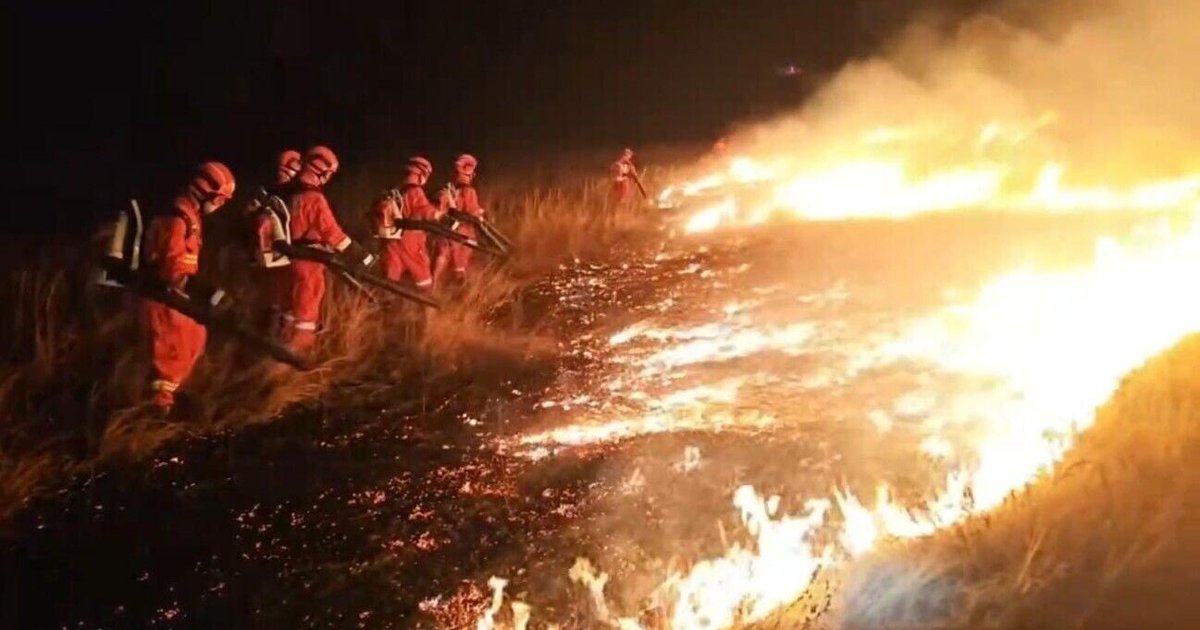
A grassland fire originating in Mongolia on October 9 has been advancing toward China's Inner Mongolia Autonomous Region, prompting the largest emergency response deployment of the year along the China-Mongolia border. Chinese authorities have mobilized more than 2,000 firefighters and emergency personnel to the frontier to prevent the wildfire from crossing into Chinese territory. While smoke has drifted across the border and local residents can smell burning, no open flames have yet entered China as of October 11 evening.
Key Points
- Fire broke out at approximately 1 PM on October 9 in Mongolia, near the East Uzhumuqin Banner area of Inner Mongolia's Xilin Gol League
- Over 2,000 firefighters deployed in the border zone, utilizing equipment patrol, monitoring, and pre-positioned defensive strategies
- As of October 11 at 9 PM, the fire remains on the Mongolian side; no direct damage to Chinese forests, grasslands, or casualties reported
- Smoke from the blaze has intermittently drifted into China with visible haze and burning odor in some border areas
- Key prevention measures include strengthening monitoring, protecting Baogeda Forest Farm, implementing controlled burning, and preparing reinforcements
Why It Matters
This cross-border fire highlights the growing frequency of regional environmental emergencies in East Asia, where climate conditions are increasing the risk of large-scale grassland fires. The successful containment of this blaze will test China's emergency response coordination mechanisms with neighboring countries and could establish protocols for future transboundary fire management. For Hong Kong, which imports meat and dairy products from Inner Mongolia, any significant damage to grassland ecosystems could affect regional agricultural supply chains and prices.
This cross-border fire highlights the growing frequency of regional environmental emergencies in East Asia, where climate conditions are increasing the risk of large-scale grassland fires. The successful containment of this blaze will test China's emergency response coordination mechanisms with neighboring countries and could establish protocols for future transboundary fire management. For Hong Kong, which imports meat and dairy products from Inner Mongolia, any significant damage to grassland ecosystems could affect regional agricultural supply chains and prices.