PolyU Launches InnoHK Smart Grid Centre to Address AI-Era Power Challenges
SingTao · 2 SOURCESabout 3 hours ago5 MIN
Summary
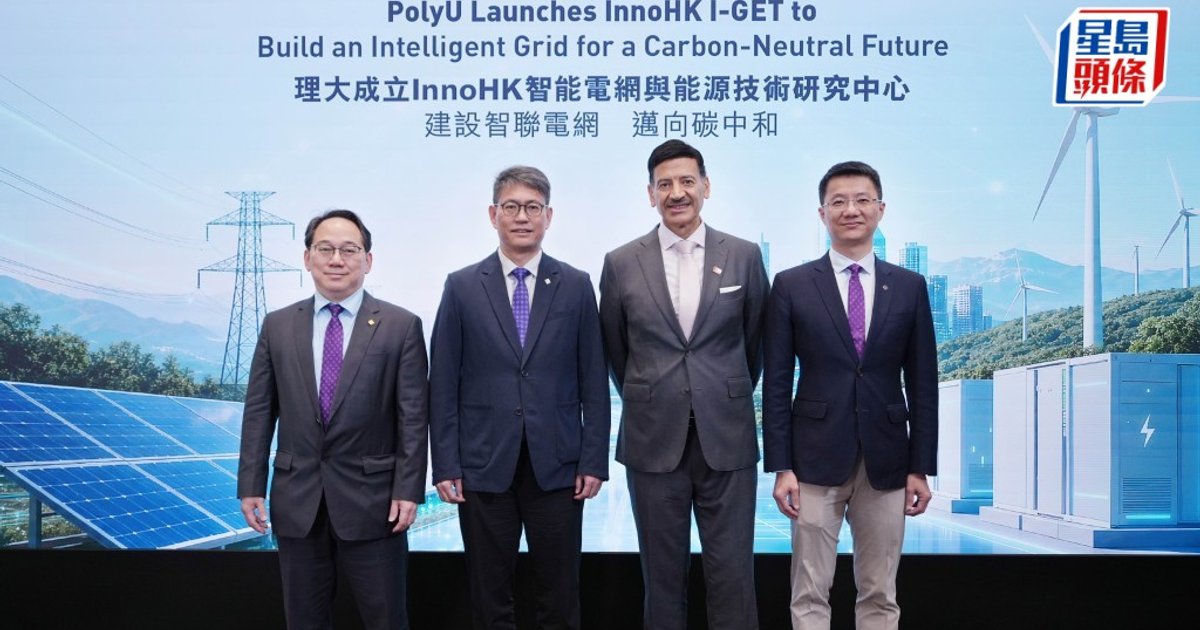
The Hong Kong Polytechnic University launched the InnoHK Intelligent Grid and Energy Technology Research Centre on September 3, 2026, marking a strategic response to mounting power challenges from AI infrastructure and climate extremes. The centre operates under the government's InnoHK innovation platform and brings together global academic and industry partners to modernise aging electrical infrastructure through artificial intelligence and real-time monitoring systems.
Key Points
- PolyU's InnoHK I-GET centre is housed within the SEAM@InnoHK facility, the third innovation hub under the government's InnoHK platform
- The centre has established partnerships with more than 60 electricity companies, including China Southern Power Grid (南方電網), to collaborate on grid modernisation
- A multidisciplinary research team comprising 70 professors from institutions such as King's College London, Tsinghua University and Gustave Eiffel University will conduct cross-border studies
- The centre aims to nurture 80 high-end research talents and engineers, with ambitions to translate findings into international standards
- Many of Hong Kong's power grid assets have been in service for 30 to 40 years, requiring AI and sensor monitoring to extend operational lifespan without large-scale reconstruction
- Four primary research pillars include autonomous energy management, green smart grid interfaces, grid-friendly electric transportation and emerging energy technologies
- Applications span microgrids, electrified transportation, smart buildings, cybersecurity and quantum technologies
Why It Matters
As Hong Kong accelerates its technology industry development, AI-driven data centres are placing unprecedented strain on power infrastructure already burdened by aging equipment and increasingly frequent extreme weather events . The centre's work on energy storage during off-peak periods and intelligent load distribution could determine whether the city can sustain its digital economy ambitions without compromising grid reliability for residential and commercial users alike .
As Hong Kong accelerates its technology industry development, AI-driven data centres are placing unprecedented strain on power infrastructure already burdened by aging equipment and increasingly frequent extreme weather events . The centre's work on energy storage during off-peak periods and intelligent load distribution could determine whether the city can sustain its digital economy ambitions without compromising grid reliability for residential and commercial users alike .