The Starch Divide: How Noodles Became a Marker of Regional Identity in China
Bastillepost · 1 SOURCESabout 3 hours ago5 MIN
Summary
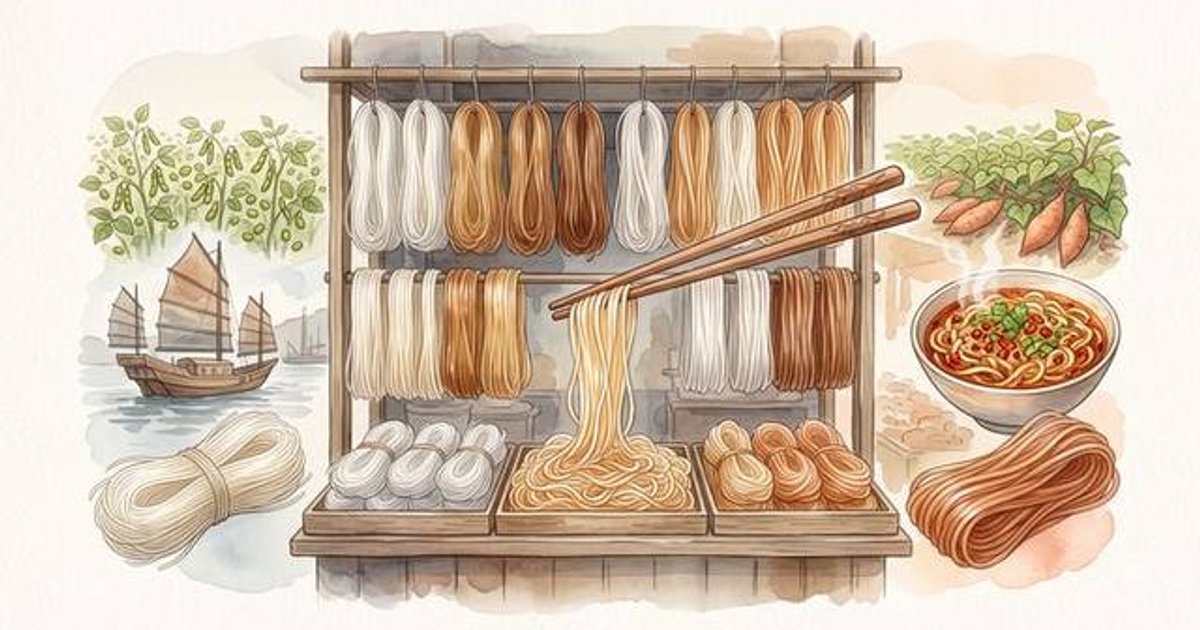
This article explores the historical and cultural significance of starch-based noodles in Chinese cuisine, tracing the development of regional specialties from their agricultural origins. The story follows Longkou fen si (龍口粉絲), the prized mung bean noodles from Shandong province, and the sweet potato varieties favored in southern China. Through the lens of this humble ingredient, the piece examines how geography, trade, and migration have shaped Chinese food culture and identity.
Key Points
- Chinese starch processing techniques date back at least 1,400 years, with documented methods in the Northern Wei dynasty text Qimin Yaoshu (齐民要术), Volume 9 .
- The term "suo fen" (索粉) first appeared in Song dynasty chef Chen Dayou's vegetarian cookbook Bensin Zhai Shushi Pu (本心斋疏食谱), marking the earliest written reference to string-like starch products .
- Longkou fen si emerged in Zhaoyuan, Shandong during the late Ming and early Qing dynasties, with the 1860 Treaty of Beijing opening Longkou port to foreign trade and establishing the brand's commercial identity .
- Mung bean starch contains approximately 30-40% amylose, producing noodles that are fine, smooth, white, and highly durable—qualities that earned Longkou fen si the title "crown of all noodles" .
- Hong Kong's immigrant society displays both Longkou fen si and sweet potato noodles in the same market stalls, with "fen si" sometimes even referring to rice vermicelli in local commercial usage .
Why It Matters
The article demonstrates that even a simple ingredient like noodles can embody complex narratives of geography, trade, and identity. For Hong Kong readers, this culinary history reflects the city's role as a meeting point for northern and southern Chinese traditions, where immigrants from different regions have preserved their own food memories while adapting to local ingredients .
The article demonstrates that even a simple ingredient like noodles can embody complex narratives of geography, trade, and identity. For Hong Kong readers, this culinary history reflects the city's role as a meeting point for northern and southern Chinese traditions, where immigrants from different regions have preserved their own food memories while adapting to local ingredients .