Art Centre Urges Originality Over Drill for School Assessments
SingTao · 1 SOURCESabout 2 hours ago5 MIN
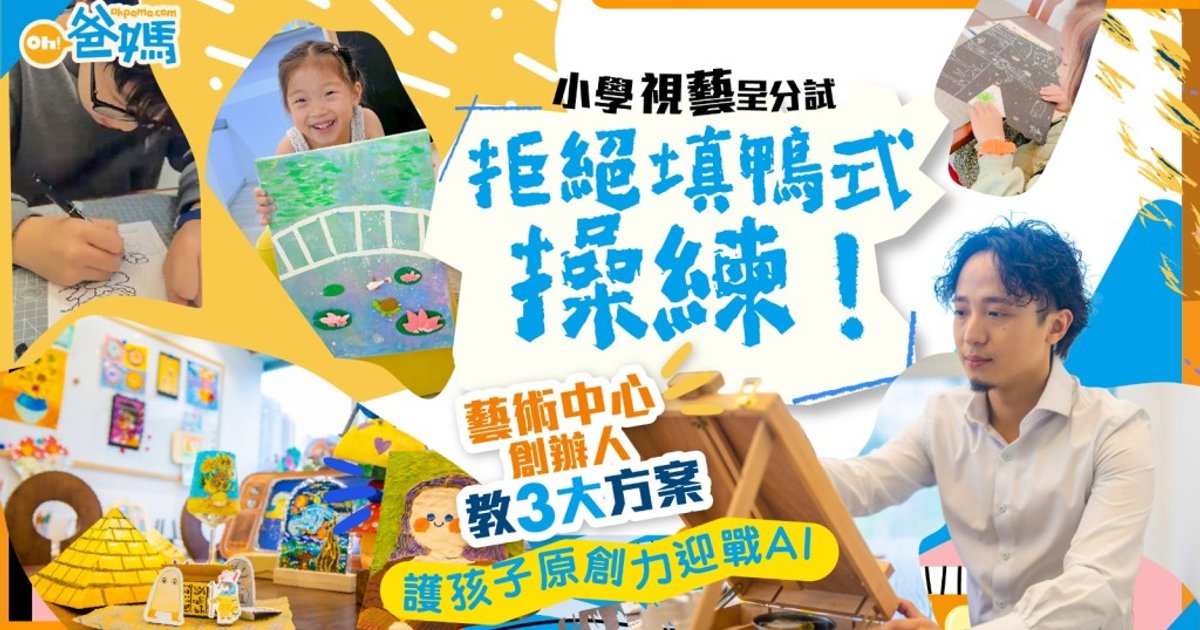
Summary
A Hong Kong children’s art centre, Artlas Artistry, says many pupils have come to treat visual arts as another exam subject rather than a creative practice under the city’s education system . Founder Brian Chan Pak-ting (陳柏廷), who graduated from the Department of Painting and Calligraphy Arts at National Taiwan University of Arts and has more than a decade of industry experience, said the centre was set up to help children build independent aesthetic thinking instead of chasing model answers . He said the school’s approach is especially relevant as generative AI can produce refined images within seconds, while human creativity still depends on lived experience, emotion and reflection .
Key Points
- Artlas Artistry has been open for more than half a year, with a studio design featuring floor-to-ceiling glass, a minimalist interior and an open layout .
- Brian Chan said some traditional studios overemphasise technical copying and result-driven teaching, pushing children to produce adult-approved works that look “best” or most realistic .
- The centre says its curriculum draws on Harvard Project Zero’s Artful Thinking, K-12 visual arts frameworks on elements and principles of design, and art therapy principles .
- For Hong Kong parents worried about school-based visual arts assessments, Brian Chan said families should first understand each school’s requirements before building ideas from daily observation and life experience .
- For late starters facing assessments without systematic training, the centre says it begins with individual evaluation of strengths and weaknesses rather than intensive copying drills .
Why It Matters
For Hong Kong families, the report points to a different way of preparing for primary school assessment pressure without reducing art to repetition and imitation . It also suggests that, in an era of fast-improving image-generation tools, schools and parents may place greater value on children’s ability to observe, interpret and express personal experience .