Saving Shop Values Alone Won’t Revive Hong Kong
HK01 · 1 SOURCESabout 3 hours ago2 MIN
Summary
A commentary published on October 21 argues that Hong Kong’s debate over “saving shops” has exposed a structural blind spot shared by landlords, government and the public: the city long prioritized growth in asset values over how wealth is distributed through the real economy. It says the current downturn, combined with cross-border e-commerce and Hong Kong residents spending more in Shenzhen and elsewhere north of the border, has made that imbalance harder to hide. The piece contends that rescuing the economy should not be equated with defending shop prices, because street shops have both asset value and a public economic function. Its central argument is that policy should focus on preserving shops as channels for jobs and local cash circulation, not merely as private assets.
Key Points
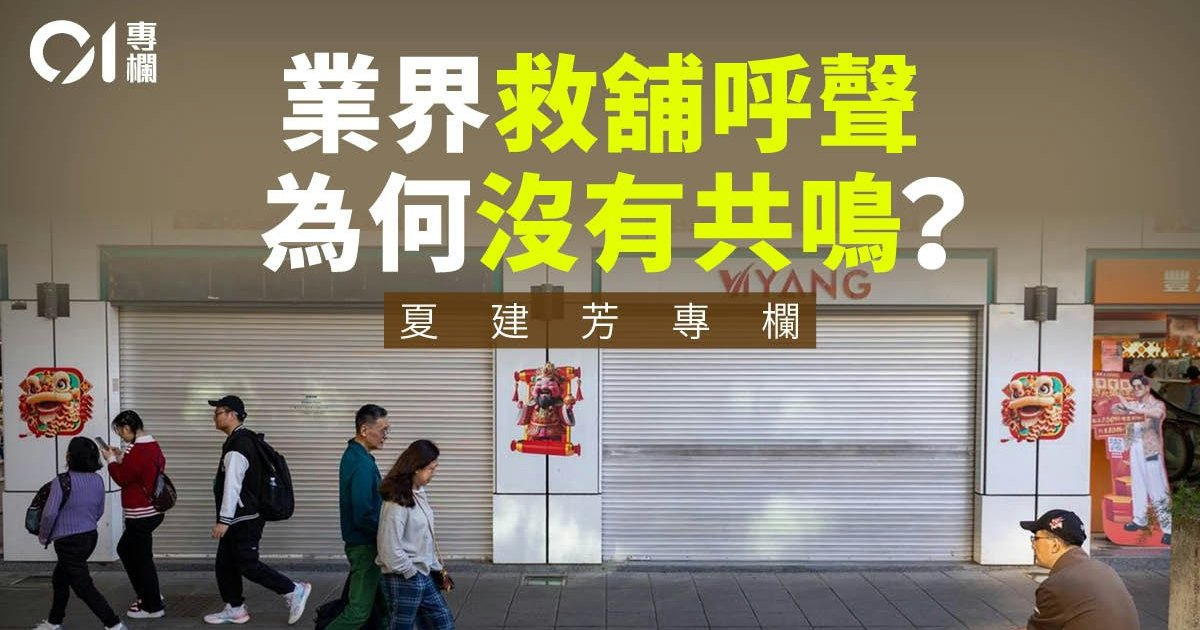
- The article contrasts property-sector calls to “save shops” with Mong Kok banners reading “lease expired, closing-down clearance,” calling the gap between industry urgency and public indifference deeply ironic.
- It argues Hong Kong’s problem is a long-running structural debt of “valuing expansion over distribution,” masked in boom years but exposed when the economic pie shrinks.
- The commentary says high rents and rigid property rights are now strangling frontline tenants, while landlords under bank pressure are reluctant to cut rents.
- It describes community shops as economic “capillaries” that channel money to employees, logistics workers, wholesalers and service providers across districts such as Sham Shui Po and Mong Kok.
- The proposed way forward is “business-format restructuring”: shifting from standard goods retail to experience-led services, mixed-use shop models and targeted support for labour-intensive local operators.
Why It Matters
For Hong Kong readers, the argument reframes emptying shopfronts as more than a property-market problem: it links them to the resilience of neighbourhood employment and the circulation of spending through local supply chains. If policy remains focused on defending valuations rather than restoring commercial function, the city risks weakening the small-business networks that support everyday livelihoods.