Scientists Blame Giant Ice Avalanche for Deadly China-Nepal Mudslide
AM730 · 2 SOURCESabout 2 hours ago2 MIN
Summary
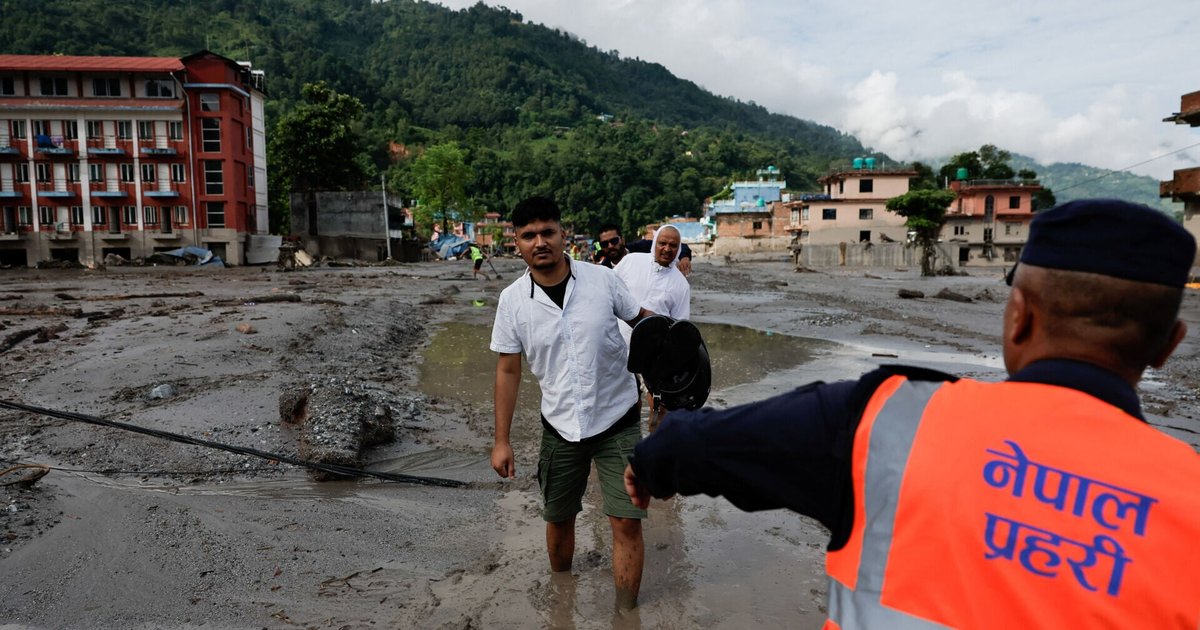
Scientists analyzing satellite imagery have determined that the catastrophic mudslide on the China-Nepal border was most likely triggered by a massive ice avalanche, rather than an earthquake as initially suspected. A 600-meter-wide ice block broke free from a glacier at approximately 5,181 meters altitude and plummeted over 1,219 meters into a valley below, creating destruction that one researcher compared to bomb damage. The disaster has resulted in at least 168 deaths and nearly 1,400 missing persons, with scientists warning that accelerating glacial melt linked to climate change is making such events more frequent and severe in the Himalayan region.
Key Points
- A 609-meter-wide ice block detached from a glacier and fell from roughly 5,181 meters altitude, dropping approximately 1,219 meters before hitting the valley floor
- The U.S. Geological Survey initially reported a magnitude 4.4 earthquake but later clarified the tremor was caused by the mudslide itself, equivalent to a magnitude 5.2 earthquake
- University of Calgary geologist Daniel Shugar described the valley floor as resembling bomb damage, covered in shattered glacier debris
- ICIMOD warned in March 2024 that glacier thinning could reach up to 27 meters since 1975, with retreat rates doubling since 2000
- The Hindu Kush Himalayan region contains over 63,700 glaciers supplying water to nearly 2 billion downstream users, yet only 7 of 38 monitored glaciers meet international standards
Why It Matters
The disaster highlights the growing danger of climate change-induced glacial instability in the Hindu Kush Himalayan region, where 78% of glaciers sit between 4,500 and 6,000 meters altitude and face accelerating warming. With existing monitoring systems having severe gaps—particularly in the Karakoram, Sikkim, Zanskar, and Bhutan regions—scientists warn that similar catastrophic events could occur without adequate warning, threatening communities and ecosystems that depend on these glaciers as a critical water source.
The disaster highlights the growing danger of climate change-induced glacial instability in the Hindu Kush Himalayan region, where 78% of glaciers sit between 4,500 and 6,000 meters altitude and face accelerating warming. With existing monitoring systems having severe gaps—particularly in the Karakoram, Sikkim, Zanskar, and Bhutan regions—scientists warn that similar catastrophic events could occur without adequate warning, threatening communities and ecosystems that depend on these glaciers as a critical water source.