Macau-Hengqin University Town Phases Out to 2030, Offers Experience to Hong Kong
Bastillepost · 1 SOURCESabout 2 hours ago9 MIN
Summary
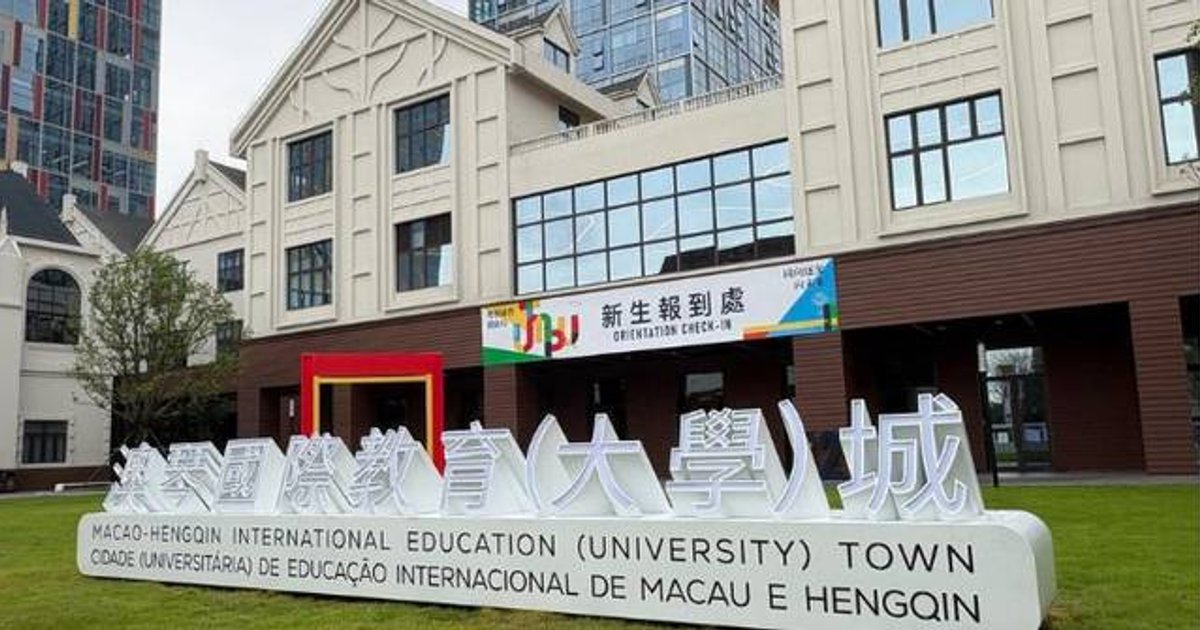
The Macau-Hengqin International Education (University) Town project reached a milestone on August 27, 2025, when a joint press tour visited the site to assess progress on education, technology, and talent integration between Macau and Hengqin. The first phase of the university town has already begun operations, marking a significant step in the national strategy to deepen cooperation between Macau and the mainland. Officials from Macau's Education and Youth Development Bureau provided detailed insights into the project's phased development timeline and its broader implications for regional collaboration. The initiative represents a novel approach to educational extension, treating mainland campuses not as branches but as integral parts of Macau's existing academic framework.
Key Points
- The university town is being developed in three phases, with Phase 1 already operational since August 2025 and hosting three Macau public universities
- Current enrollment stands at over 1,400 students across the University of Macau, Macao Polytechnic University, and Macao Institute of Tourism
- Phase 2 is scheduled for full completion in 2029, led by the University of Macau; Phase 3 will finish in 2030 under Macao Tourism and Polytechnic universities
- The project uses a unique "soft connectivity" model where campus networks and academic systems mirror those in Macau, allowing free teacher and student movement
- All programs offered in the university town are new disciplines not currently available at the same institutions in Macau, including medicine, AI, and robotics
- Cross-institutional course selection is now available, with micro-certification courses also counting toward students' academic credits
- Officials describe the arrangement as "Macau universities' classroom in Hengqin" rather than a traditional branch campus model
Why It Matters
The Macau-Hengqin model demonstrates how Hong Kong and Macau can leverage their unique status under "one country, two systems" to contribute to national development. As Hong Kong prepares to build its own Northern Metropolis university hub, Macau's experience with extended schooling policies and cross-border academic mobility offers valuable lessons. Professor Li Shutang, a member of the Chinese Academy of Sciences, noted that China's technological development has shifted from "catching up" to "surpassing," providing vast opportunities for Hong Kong and Macau youth in frontier research fields like OLED display technology.
Professor Li Shutang (李述湯), Director of the Macau Materials and Engineering Research Institute at Macau University of Science and Technology, emphasized the collaborative potential: "Hong Kong possesses numerous advantages in innovation and technology development, including its geographic location, international environment, and talent attraction capabilities. Macau and Hengqin can learn from Hong Kong's successful experiences while avoiding less effective approaches." The visit included a tour of the Smart Micro-Display and Advanced Light Source Laboratory at the Macau University of Science and Technology's Hengqin Innovation Technology Research Institute, which focuses on organic light-emitting diode (OLED) device manufacturing. PhD student Pan Yong, studying electromechanical engineering at the University of Macau, noted that proximity to startups in Hengqin allows students to observe the entire production chain from robot manufacturing to deployment—an experience that keeps academic research connected to industry realities.
The Macau-Hengqin model demonstrates how Hong Kong and Macau can leverage their unique status under "one country, two systems" to contribute to national development. As Hong Kong prepares to build its own Northern Metropolis university hub, Macau's experience with extended schooling policies and cross-border academic mobility offers valuable lessons. Professor Li Shutang, a member of the Chinese Academy of Sciences, noted that China's technological development has shifted from "catching up" to "surpassing," providing vast opportunities for Hong Kong and Macau youth in frontier research fields like OLED display technology.
Professor Li Shutang (李述湯), Director of the Macau Materials and Engineering Research Institute at Macau University of Science and Technology, emphasized the collaborative potential: "Hong Kong possesses numerous advantages in innovation and technology development, including its geographic location, international environment, and talent attraction capabilities. Macau and Hengqin can learn from Hong Kong's successful experiences while avoiding less effective approaches." The visit included a tour of the Smart Micro-Display and Advanced Light Source Laboratory at the Macau University of Science and Technology's Hengqin Innovation Technology Research Institute, which focuses on organic light-emitting diode (OLED) device manufacturing. PhD student Pan Yong, studying electromechanical engineering at the University of Macau, noted that proximity to startups in Hengqin allows students to observe the entire production chain from robot manufacturing to deployment—an experience that keeps academic research connected to industry realities.